💰 Budget
Kaolack is inexpensive. It has a modest range of hotels aimed at traders and travellers breaking a journey rather than at holidaymakers, food in local eating houses costs very little, and taxis around town are cheap. Costs rise only for a hired car and driver for the delta or the surrounding towns.
- Daily Budget Midrange
- USD 70–150 (comfortable hotel, restaurant meals, a car and driver for day trips)
- Daily Budget Shoestring
- USD 20–45 (basic hotel or auberge, local eating houses, shared taxis)
Agree taxi fares before setting off, and book ahead when a large religious gathering is expected, as rooms fill across the city.
📅 Best Time to Visit
November to February, when the weather is dry and the harvest and trading season is at its height. March to June is fiercely hot, regularly above 40°C before the rains. July to October is humid, with heavy storms, mosquitoes and flooded streets in the low quarters.
⏳ Suggested Number of Days
A day covers the city itself, which most travellers see as a stop between Dakar, the delta and the south. Two or three days make sense for anyone interested in its religious life or using it as a base for the surrounding towns and the peanut country.
- First Visit
- 1 day
- With Surroundings
- 2–3 days
🚆 Transportation
Kaolack is a road junction, and its transport stands, or garages, send sept-place taxis and minibuses to Dakar, Tambacounda, Ziguinchor and the Gambian border. Within the city, shared yellow taxis, minibuses, motorcycle taxis and horse carts cover short distances cheaply. Heavy freight traffic passes through on the way to Mali and The Gambia.
Each transport garage serves one direction, so ask for the right one, and set off in the morning when vehicles fill fastest.
🛬 Airport & Station Connections
The city sits about 190 km south-east of Dakar on the main road, roughly three to four hours by sept-place taxi or bus, and is the natural stop on the routes to Tambacounda and Mali, to the Gambian border at Karang and towards the Casamance. Passenger trains stopped running on the Dakar–Niger line in 2010, and although Kaolack has an airport, whose runway was lengthened in 2020, visitors arrive by road.
🚶 Walkability
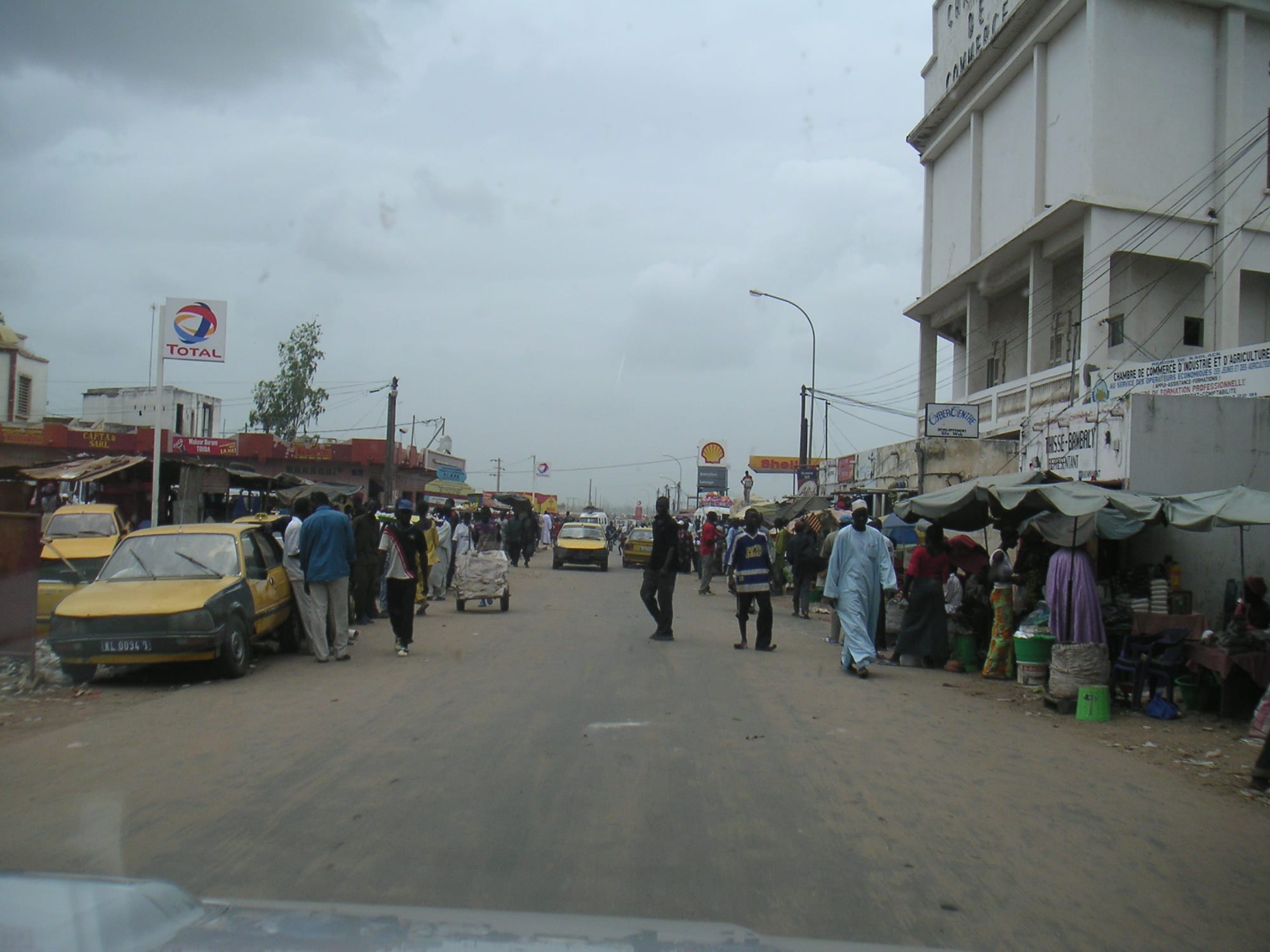
The centre and the market can be covered on foot, and that is the best way to see the trading streets, though pavements are crowded or missing and carts, taxis and lorries compete for the same space. Medina Baye, Léona Niassène and the river flats are too far apart to link on foot in the heat, so short taxi rides fill the gaps.
🛡️ Safety
Kaolack is generally safe, with petty theft in the crowded market the main risk to visitors and pickpocketing around the transport stands. The larger dangers are traffic — the city carries heavy through freight on roads shared with carts and pedestrians — and heat, along with malaria, which is present year-round and worse after the rains.
Don't walk the Corniche or empty beaches after dark or carry valuables, be firm with touts, take malaria precautions, and check current advice for the far east near Mali and rural Casamance. Watch the traffic on the main roads and keep bags closed in the market. Check current official travel advice before travelling.
🌦️ Climate
Hot tropical savanna, well inland of the cooling Atlantic breeze. A long dry season runs from November to June, with harmattan dust and extreme pre-rain heat, followed by a humid rainy season from roughly July to October that turns the surrounding farmland green.
- Summer
- hot and humid, around 26–35°C, with heavy storms; often above 40°C in April and May before the rains
- Winter
- dry and warm, around 18–34°C, with cooler nights and dusty haze
🤝 Local Customs
Kaolack is Wolof-speaking and strongly Muslim, with the Tijaniyya brotherhood shaping much of public life. Dress modestly, particularly around Medina Baye and Léona Niassène, where visitors should ask before entering mosque grounds and remove shoes where required. Greetings come before business, and bargaining in the market is normal and good-humoured.
Ask permission before photographing people, mosques or religious gatherings, dress to cover shoulders and knees, and do not expect alcohol to be served in most of the city.
💳 Common Payment Methods
The currency is the West African CFA franc (XOF). Banks and cash machines are available in the centre, and a few hotels take cards, but the market, taxis, carts and small eating houses are cash only. Mobile money is widely used, and small notes are essential for daily transactions.