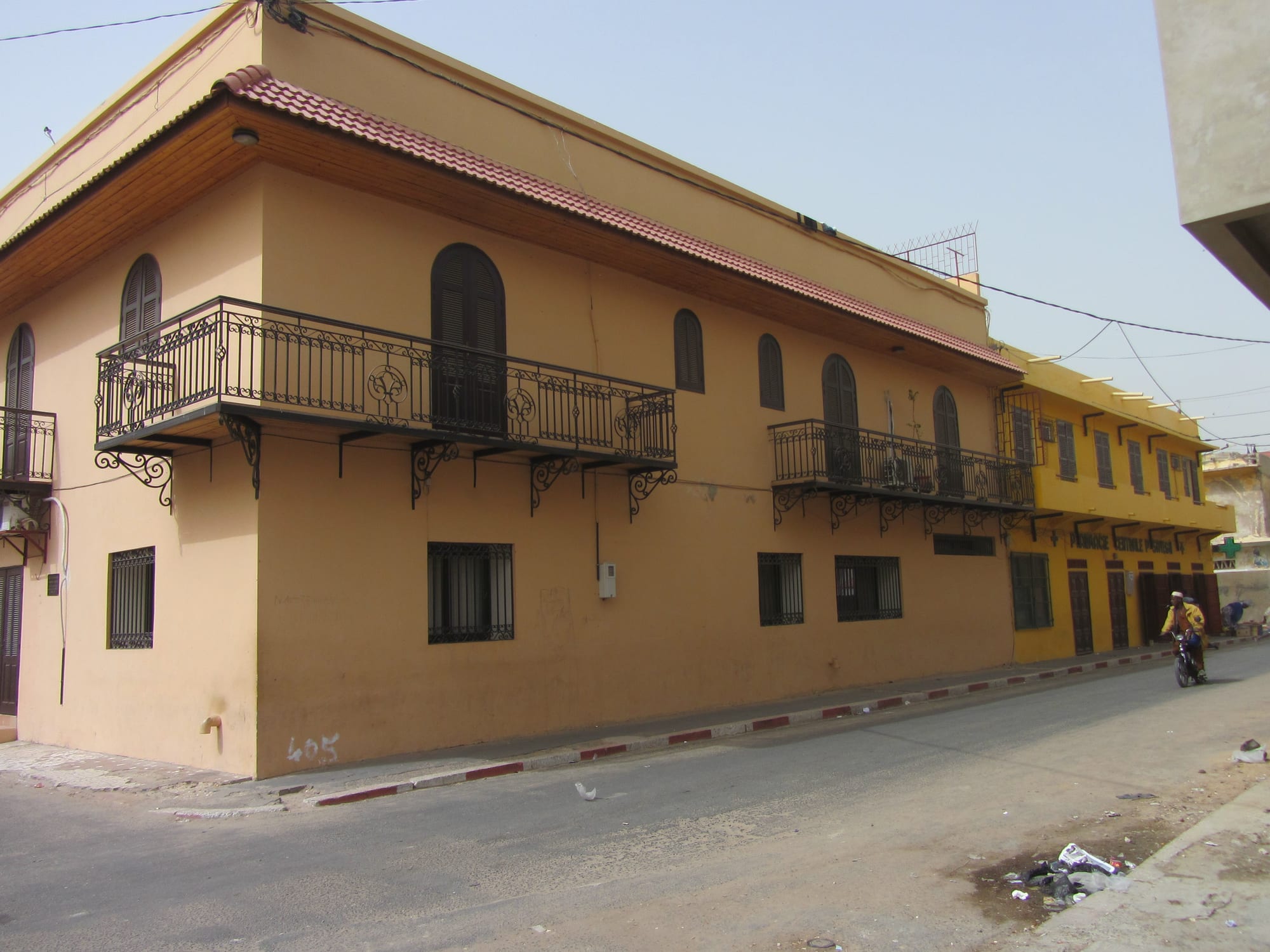
A two-storey ochre colonial house with wrought-iron balconies and arched shuttered windows on a quiet street corner

Saint-Louis & the North, Senegal

Saint-Louis

A balconied merchant house on the island of Saint-Louis. (HaguardDuNord / Wikimedia Commons · CC BY-SA 3.0)

Senegal's old northern capital, built on a narrow island in the Senegal River near its mouth. Founded by French traders in 1659, it was the capital of the French colony of Senegal and, from 1895 to 1902, of French West Africa, and its grid of balconied merchant houses is a UNESCO World Heritage Site. The city still lives from fishing, a university and a jazz festival.

Neighbourhoods

  • The island
    • First-time visitors
    • Historic district
    • Architecture

    The long, narrow island of Ndar, a regular grid of two-storey merchant houses with wooden shutters, iron balconies and inner courtyards. The cathedral, the governor's palace, the old barracks and most guesthouses and restaurants are here, and it is small enough to cross on foot in minutes.

    Open in Maps
  • Guet Ndar
    • Local life
    • Fishing beach
    • Markets

    The fishing quarter on the sand spit west of the island, reached by a short bridge. It is tightly built and crowded, with hundreds of painted pirogues drawn up on the ocean beach, nets spread to dry and fish laid out to smoke and salt.

    Open in Maps
  • Sor
    • Local life
    • Transport connections
    • Markets

    The mainland half of the city, across the Faidherbe Bridge, where most residents live and where the main market, the bus garages, the hospital and much of the university's life are found. Busier and plainer than the island.

    Open in Maps
  • The Langue de Barbarie south of the city
    • Beaches
    • Quiet and residential
    • Birdwatching

    The continuation of the sand spit towards Gandiol, with a scatter of small hotels and camps between the ocean and the river channel. It is quiet, exposed to strong surf, and the way to the national park at the spit's southern end.

    Open in Maps

Things to do

The island and the bridge

  • Faidherbe Bridgelandmark

    The long iron bridge of arched spans linking the island to the mainland, opened in July 1897 and given a major rehabilitation in the 2000s; it is the city's best-known structure and a walkway as well as a road.

    Open in Maps
  • St Louis Cathedrallandmark

    One of the oldest churches in Senegal, opened in 1828 on the island and still the seat of the Catholic diocese of Saint-Louis.

    Open in Maps
  • Guet Ndar fishing beachbeach

    The ocean beach beside the fishing quarter, where pirogues are launched through the surf and the catch is landed, sorted and dried within sight of the houses.

    Open in Maps

The river and the coast

  • Langue de Barbariepark

    The sand spit that separates the Senegal River from the Atlantic, with a national park at its southern end protecting nesting seabirds and a beach used by sea turtles.

    Open in Maps
  • Guembeul Natural Reservepark

    A small fenced reserve about ten kilometres south of the city in the Gandiol area, used for the reintroduction of Sahelian gazelles and home to African spurred tortoises.

    Open in Maps

Short trips from the city

  • Djoudj National Bird Sanctuarypark

    A wetland of lakes and channels in the river delta north of the city, a UNESCO World Heritage Site where great white pelicans, flamingos and wintering European ducks and waders gather in very large numbers.

    Open in Maps
  • Richard-Tollneighborhood

    A sugar town upriver, named after the colonial garden laid out there in the 1820s, and the gateway to the irrigated farmland of the lower Senegal valley.

    Open in Maps

Seasonal events

  • Saint-Louis Jazz Festivallate spring

    The city's international jazz festival, held since 1993, with concerts on the island and free stages in the streets; it is the busiest week of the year for hotels.

  • FanalsDecember, around Christmas

    Processions of large illuminated lanterns built as models of ships and houses, a custom that grew out of the colonial-era signare households and is revived in the city at Christmas.

  • Tabaskimoves with the Islamic calendar

    The feast of the sacrifice, the year's main family occasion, when the city fills with visiting relatives and grilling mutton.

  • Migratory bird seasonNovember to March

    The months when European and Sahelian migrants crowd the delta wetlands around the city, and the reason most birdwatchers come.

Eat and drink

Long-standing places and food districts in Saint-Louis. Hours, ratings and directions come from your maps app, always current.

Saint-Louis classics

  • Ceebu jënrestaurant

    Saint-Louis claims the invention of the fish, vegetable and broken-rice dish that became Senegal's national plate, and its cooks take the local version seriously.

    Open in Maps
  • Grilled fish from Guet Ndarrestaurant

    Fish landed on the spit is grilled over charcoal or cooked in yassa with lemon and onions in the small restaurants of the island and the quays.

    Open in Maps
  • Yeet and dried fishmarket

    The fermented sea snail and dried fish that season Senegalese sauces are prepared along the shore here and sold in the city markets.

    Open in Maps

Markets and cafés

  • The island's restaurants and barsneighborhood

    The grid of streets between the two bridges holds most of the city's restaurants, terraces and music bars, several of them in restored merchant houses.

    Open in Maps
  • Sor marketmarket

    The main food market on the mainland side, selling river and sea fish, rice, vegetables from the irrigated fields and Fula dairy produce.

    Open in Maps

Experience Saint-Louis

History

The French set up a trading post in 1659 on the island of Ndar, a sandbank in the Senegal River sheltered behind the spit, and named it for Louis XIV. From there companies traded gum arabic from the interior, hides, gold and captives, and the post grew into a town of two-storey houses built to the depth of a narrow plot, with courtyards behind and balconies over the street. A distinctive society formed around the signares, African and mixed-race women traders who married European merchants under local arrangements and held property and influence of their own.

Saint-Louis became the capital of Senegal and, from 1895, of French West Africa, and one of the four communes whose inhabitants held French citizenship and voted. Under Governor Louis Faidherbe in the 1850s it was the base for the conquest of the river valley, and the town acquired a bridge to the mainland in 1897, a water supply, a hospital and schools. The transfer of the federal capital to Dakar in 1902, and of the Senegalese capital by independence in 1960, ended its primacy, though the town served as the capital of neighbouring Mauritania from 1920 to 1957; the railway and the port went too, and the city settled into a long decline.

What survived was the fabric. The island's grid of merchant houses, largely intact, was inscribed on the UNESCO World Heritage list in 2000, and restoration work, tourism, a university founded in 1990 and the jazz festival have given the city a second life. The environment has been less kind: a channel cut through the Langue de Barbarie in 2003 to relieve flooding widened into a permanent breach that has reshaped the river mouth and forced coastal communities to move.

Culture & Customs

Saint-Louis carries itself as a former capital. Old families take pride in the city's manners, its French-speaking schooling and its signare inheritance, and the fanals — huge illuminated lanterns, built as models of ships and houses and carried through the streets at Christmas — descend directly from that world. The mixture of a Muslim majority and an old Catholic community is visible in the calendar, with Tabaski and Christmas both marked publicly.

Music is the city's modern signature. The jazz festival, running since 1993, fills the island with concerts and street stages each year and has made Saint-Louis a fixture on the West African music circuit; local groups mix jazz with Wolof and Pulaar traditions, and the bars on the island keep live music going outside the festival.

Guet Ndar is a world of its own: a tightly packed Wolof fishing community whose men crew pirogues far down the coast and into Mauritanian waters, whose women run the trade in fresh, dried and smoked fish, and whose disputes over fishing rights are national news. Across the city, the ordinary Senegalese courtesies hold — long greetings, tea in three rounds, eating from a shared bowl — and hospitality towards visitors is a point of local pride rather than a service.

Daily Life

About 250,000 people live in the city, most of them on the mainland at Sor rather than on the island, which has a few thousand residents and a growing number of restored houses used as guesthouses. Guet Ndar, on the spit, is extraordinarily dense, with families squeezed into a narrow strip between the ocean and the river.

Fishing is the largest employer and the most contested activity: catches have fallen, competition with foreign industrial fleets is bitterly resented, and agreements governing where Saint-Louis crews may fish in Mauritanian waters shape household incomes. Beyond it, the economy is the university and its students, administration, the hospital, irrigated agriculture along the river, tourism concentrated on the island, and the Greater Tortue Ahmeyim gas project on the maritime boundary with Mauritania.

Days begin before dawn on the beach, when the pirogues go out, and the city slows at midday for the main meal. The pressing problems are coastal erosion and flooding: the breach in the Langue de Barbarie has swallowed houses and forced the relocation of families to sites inland, the island's older buildings need expensive repair, and unemployment pushes young men towards the pirogue crossing to the Canary Islands.

Food

Saint-Louis claims ceebu jën as its own invention, the dish of fish stuffed with a herb paste and simmered with tomato, cassava, carrot and cabbage, served over broken rice cooked in the same sauce. The local version is argued over in detail — the cut of fish, the depth of the tomato, the crust of rice at the bottom of the pot — and it is eaten at midday from a shared platter.

The sea supplies the rest. Fish from Guet Ndar is grilled whole over charcoal or cooked as yassa with lemon, mustard and onions, and the drying racks on the spit produce the salted and fermented ingredients that season sauces across Senegal, including yeet, a fermented sea snail with a pungent smell and a deep flavour. Upriver farming adds rice from the irrigated fields and vegetables, while the Fula herders of the valley bring kossam, soured milk, drunk plain or poured over millet couscous.

Lakh, millet porridge with sweetened curds, is the everyday sweet dish, and street stalls sell ndambé bean stew in a baguette, accara fritters and fataya pastries. Drinks are bissap from hibiscus, bouye from baobab fruit, ginger juice and ataya tea poured in three rounds; the island's bars and restaurants, developed around the festival, are the main place in the north where wine and beer are part of an evening out.

Planning tools

Budget

Saint-Louis is considerably cheaper than Dakar, with a wide range of guesthouses from simple auberges to restored colonial hotels on the island. The main extra costs are a vehicle and guide for the bird sanctuary and pirogue trips on the river; prices and availability tighten sharply around the jazz festival.

Daily Budget Midrange
USD 70–170 (colonial-house hotel, restaurants, a car and driver to Djoudj, a pirogue trip)
Daily Budget Shoestring
USD 25–50 (auberge, local eateries, shared taxis and calèches)

Sharing a vehicle to the bird sanctuary with other travellers cuts the largest single cost, and rooms need booking well ahead for the festival.

Best Time to Visit

November to April is dry, mild and the season for migratory birds in the delta, which is when most visitors come. Late spring brings the jazz festival and rising heat; the short rains fall between July and September, when the city is humid and much quieter.

Suggested Number of Days

Two days suit the island, the fishing quarter and the riverfront; three or four allow the bird sanctuary, the spit and a stretch of the valley upstream. Visitors on a Dakar–north loop often stay longer than planned because the pace is slow.

First Visit
2 days
With Surroundings
3–4 days

Transportation

The city is covered on foot, by taxi and by calèche, the horse-drawn cart that still works as local transport between the island, Sor and Guet Ndar. Sept-place taxis and buses leave Sor for Dakar, Louga and the river towns. Djoudj, the Langue de Barbarie park and the delta are reached by hired vehicle and then by pirogue.

Agree the fare for a taxi or calèche before setting off, and arrange transport to the reserves the day before rather than on the morning.

Airport & Station Connections

Saint-Louis is roughly 320 km north of Dakar, four to five hours by road through Louga, served by sept-place taxis, minibuses and coach services from the capital's garages. The city has its own small airport with limited scheduled flights, and the Rosso crossing into Mauritania is about 100 km upriver.

Walkability

The island is one of the most walkable places in Senegal: flat, gridded, about two kilometres long and barely a few hundred metres wide, with the main sights within a short stroll. Crossing to Guet Ndar or over the Faidherbe Bridge to Sor is also easily done on foot, though the bridge is busy and the spit is crowded.

Safety

Saint-Louis is calm, and the usual problems are persistent unofficial guides offering tours and boat trips, and petty theft in crowded places and on the beach. The Atlantic off the Langue de Barbarie is rough with strong currents and is not a safe place to swim, and the breach in the spit has made the river mouth dangerous for small boats.

Don't walk the Corniche or empty beaches after dark or carry valuables, be firm with touts, take malaria precautions, and check current advice for the far east near Mali and rural Casamance. Check current official travel advice before travelling.

Climate

A coastal Sahelian climate, tempered by the ocean and the trade winds and more comfortable than the valley inland. The dry season runs from November to June, with a short, light rainy season from July to September.

Summer
warm and humid, generally around 25–32°C, with occasional heavy showers from July to September
Winter
mild and dry, generally around 17–28°C, with cool nights and harmattan dust on some days

Local Customs

The city is almost entirely Muslim with a long-established Catholic minority, and the two calendars share the streets. Modest dress is expected, particularly in Guet Ndar, and greetings are formal and unhurried. Photographing people at work on the fishing beach without asking causes offence. Alcohol is served in island restaurants and bars but is not part of ordinary life elsewhere in the city.

Ask before taking photographs in the fishing quarter, use registered guides rather than the young men who offer tours at the bridge, and take off shoes when entering a home or mosque.

Common Payment Methods

The currency is the West African CFA franc (XOF), pegged to the euro. Larger hotels and some restaurants on the island take cards; markets, taxis, calèches and small eateries are cash only. ATMs are on the island and in Sor, and mobile money is used everywhere.