💰 Budget
Novi Sad costs a little less than Belgrade and is inexpensive by European standards. Bakeries, grill food and market produce keep daily costs low; rooms are dearer and scarcer on big event weekends.
- Daily Budget Midrange
- USD 90–160 (central hotel, kafana or riverside dinners, museums, a Fruška Gora trip)
- Daily Budget Shoestring
- USD 40–65 (hostel or private room, bakeries and Index sandwiches, city buses)
The fortress, Danube Park, the Štrand and the old-centre streets cost nothing; the high-speed train makes a day from Belgrade easy.
📅 Best Time to Visit
Late spring and early autumn are the most comfortable, with café life on Zmaj Jovina and the Fruška Gora green or at harvest time. Summer is hot but brings the Štrand beach season, roughly mid-May to mid-September. Winters are cold and foggy, with the košava wind.
⏳ Suggested Number of Days
One or two days cover the old centre, the fortress and the river. Three or four allow time for the hills, monasteries and wine towns across the Danube, which need a car or a tour to reach more than one or two.
- First Visit
- 1–2 days
- With Surroundings
- 3–4 days
🚆 Transportation
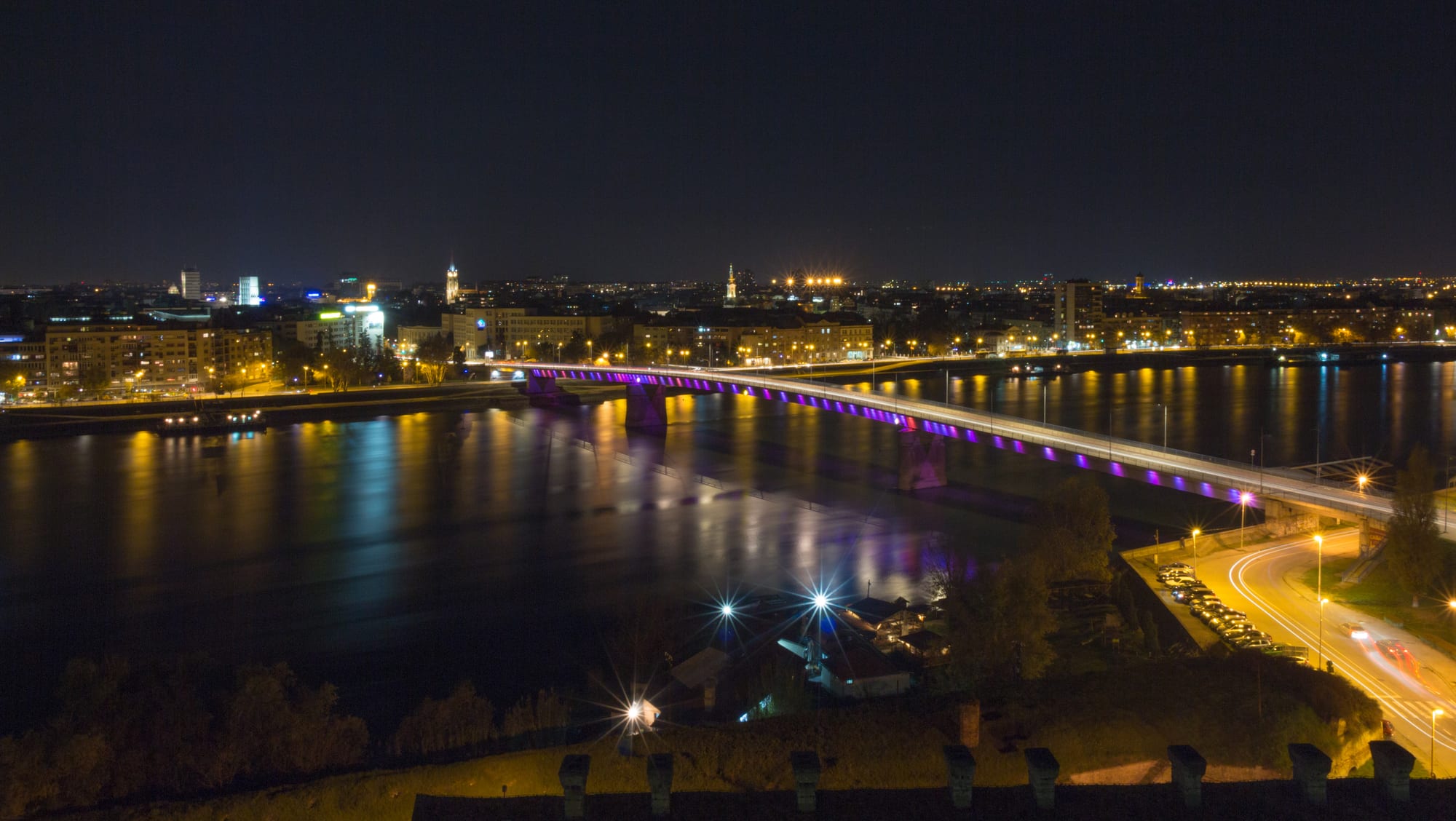
City buses run by JGSP Novi Sad cover the city and suburbs, with the main terminal beside the railway station at the northern end of Liberation Boulevard and a smaller one in the centre. Taxis are not expensive, but cars unaffiliated with the major firms, especially at the station, may overcharge. Three bridges cross the Danube to Petrovaradin and Sremska Kamenica.
Use a known taxi firm or an app rather than unmarked cars waiting at the station.
🛬 Airport & Station Connections
Novi Sad has no civil airport; Belgrade Nikola Tesla Airport is roughly an hour's drive away. The Soko high-speed trains, running since 2022, link the city with Belgrade and, since October 2025, with Subotica. Buses run from the main terminal beside the station to towns across Serbia.
🚶 Walkability
The centre is flat and compact, with long pedestrian streets around Freedom Square, and a walk along the Danube quay leads to Danube Park and the Liman beaches. The fortress is reached by crossing the Varadin Bridge and climbing steps or a steep road. Liman and the station area are a bus ride or long walk away.
🛡️ Safety
Serbia is a safe country for visitors, with low violent crime. Novi Sad is calm, with petty theft and taxi overcharging at the station the usual complaints. Since the station canopy collapse of November 2024 the city has been at the centre of large student-led protests, which can close roads and bridges.
Avoid protest crowds, use reputable taxis, and swim only at designated beaches such as the Štrand. Check current official travel advice before travelling.
🌦️ Climate
Hot summers and cold winters on the edge of the Pannonian plain. Spring is short and rainy and summer arrives abruptly. The košava, a dry east-south-easterly wind from the Carpathians, blows mostly in autumn and winter and can pile snow into drifts.
- Summer
- warm to hot — the city's record, 41.6°C, was set in July 2007
- Winter
- cold — January averages about 1°C, with average lows near −2.5°C and around 22 days of snowfall a year
🤝 Local Customs
Novi Sad prides itself on a calm, unhurried manner and on its long cultural tradition as the Serbian Athens. The city is mixed in faith and language: Orthodox, Catholic and other churches stand close together in the centre, and Hungarian and Slovak are heard as well as Serbian.
Dress modestly in churches and monasteries, and ask before photographing services.
💳 Common Payment Methods
The currency is the Serbian dinar (RSD). Cards are widely accepted in larger towns, including central Novi Sad; carry cash for markets, buses, monasteries and rural areas. Euros are easily exchanged.