💰 Budget
Franschhoek is one of the most expensive small towns in South Africa. Restaurant and accommodation prices approach European levels, especially from December to February, and the tasting fees at the better-known estates are higher than elsewhere in the Winelands. Staying in Paarl or Stellenbosch and visiting for the day costs noticeably less.
- Daily Budget Midrange
- USD 150–310 (guesthouse or boutique hotel, restaurant dinners, car hire, wine tastings)
- Daily Budget Shoestring
- USD 55–95 (self-catering or guesthouse outside the centre, cooking, one or two tastings)
Set lunch menus are often much cheaper than dinner at the same kitchens, and the monument gardens, the pass and the reserve trails cost little or nothing.
📅 Best Time to Visit
February to April brings the harvest, warm days and settled weather. December and January are hot, busy and expensive. Winter, June to August, is wet and cold with snow on the peaks, but the valley is green, prices fall, fires are lit in the tasting rooms and the Bastille Festival fills the town in July.
⏳ Suggested Number of Days
A day covers the village and a farm or two. Two or three days allow the wider Winelands and the passes. Interest in wine and food, and whether the town is a base or a stop on a longer route, are what change the number.
- First Visit
- 1 day
- With Surroundings
- 2–3 days
🚆 Transportation
A car is the usual way to arrive and to reach the farms, though the town's single street is easily walked. A hop-on hop-off tram and tram-bus service runs between a number of estates in the valley, and hired drivers and small tour operators cover the same ground. Ride-hailing is limited and there is no passenger rail.
Drink-driving limits are low and enforced, so use the tram, a driver or a tour when tasting at more than one farm.
🛬 Airport & Station Connections
Cape Town International Airport is about 60 km away, usually an hour by road, and the city centre about 75 km. Stellenbosch is roughly 30 km over the Helshoogte Pass and Paarl about 25 km. Most visitors drive or arrange a transfer; no scheduled coach or train serves the town directly.
🚶 Walkability
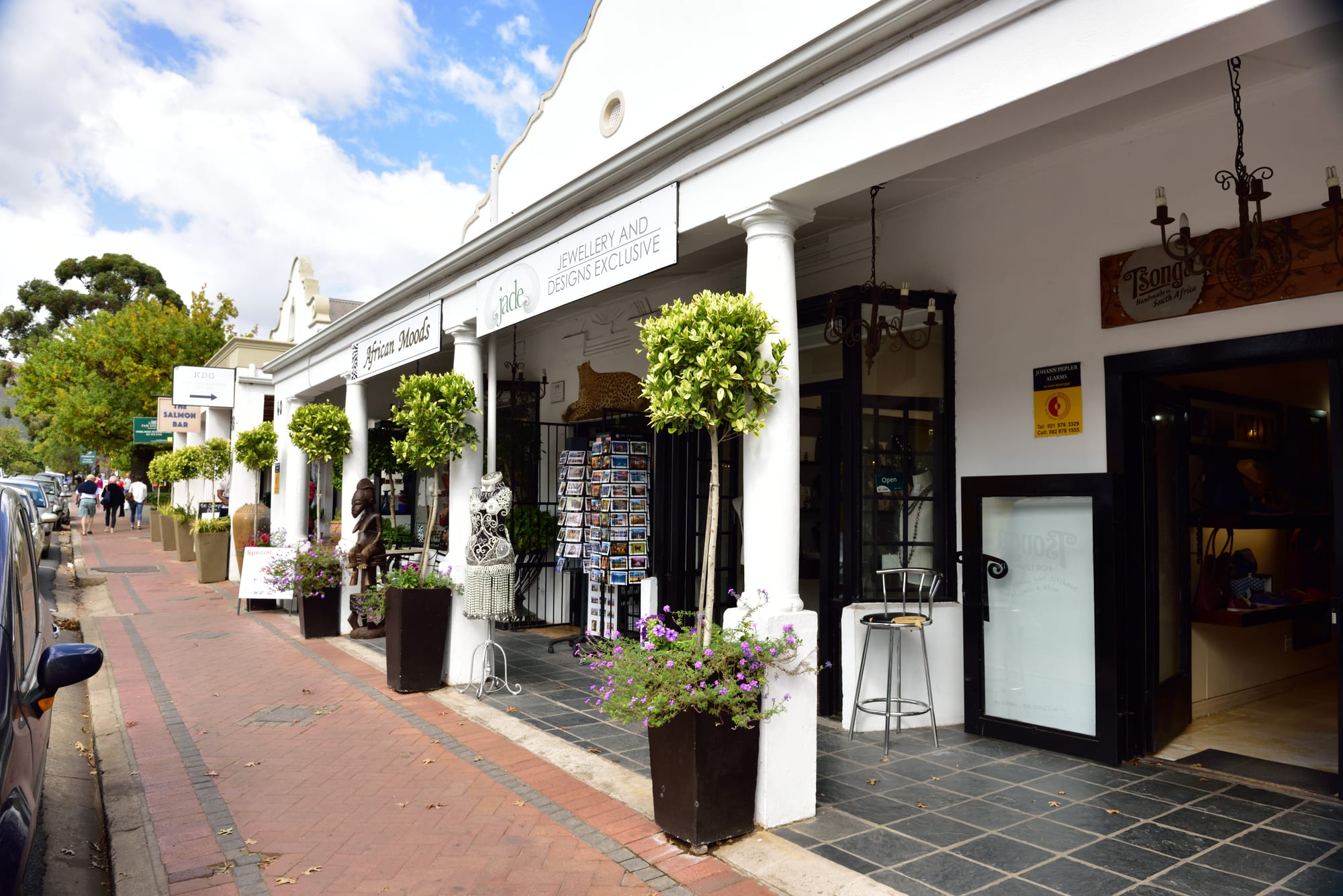
The village is flat and walkable end to end: the main street runs for a little over 2 km from the entrance to the town up to the monument, and restaurants, galleries and tasting rooms line it. The farms in the valley are too spread out to walk between, and the roads outside the village have narrow verges.
🛡️ Safety
The village is quiet and heavily used by visitors, and serious crime is uncommon in the centre. The usual risks are break-ins at parked cars, petty theft, and opportunistic crime on unlit roads outside the village at night. Mountain weather on the pass and the reserve trails changes quickly, and the passes are dangerous in fog or rain.
Violent crime rates are high, but most of it is concentrated in areas visitors do not go; the main tourist routes — Cape Town centre, the Winelands, the Garden Route, Kruger and the private reserves — are heavily travelled and generally fine with sensible precautions. Leave nothing visible in a parked car, walk the reserve trails in company, and drive the passes with care in bad weather. Check current official travel advice before travelling.
🌦️ Climate
A Mediterranean mountain-valley climate: hot, dry summers and cold, wet winters, with the seasons reversed from the northern hemisphere — summer runs from December to February. The surrounding peaks trap heat in summer and catch snow in winter, and the valley is less windy than the coast.
- Summer
- hot and dry, often 25–33°C by day and much cooler at night
- Winter
- cold and wet, usually 7–17°C, with snow on the peaks above the town
🤝 Local Customs
Afrikaans and English are both widely spoken, with isiXhosa heard among farm and service workers. Tipping is about 10 to 15 per cent in restaurants, with a few rand for car guards and petrol attendants, who fill the tank for drivers. Dress is smart casual in the better restaurants and relaxed elsewhere, and tasting rooms are working businesses rather than bars.
Ask before photographing people, farm workers or homes in Groendal, and book a table rather than arriving hungry at the busiest kitchens in the holidays.
💳 Common Payment Methods
The currency is the South African rand (R, ZAR). Cards and contactless payment are accepted by restaurants, shops and wine estates. Cash is useful for markets, tips and car guards. ATMs are on the main street, and fuel is sold in the village and in Paarl and Stellenbosch.