💰 Budget
Stellenbosch costs less than Cape Town's Atlantic seaboard for accommodation but more than most South African country towns, and the wine estates' restaurants can be expensive. Tasting fees are modest and often waived on purchase. Prices peak from December to February and over the harvest; winter is much cheaper.
- Daily Budget Midrange
- USD 150–310 (guesthouse or boutique hotel, restaurant dinners, car hire, wine tastings)
- Daily Budget Shoestring
- USD 50–85 (backpacker or student-area guesthouse, self-catering, walking and shared ride-hailing)
Stay in the centre and walk to the museums and restaurants, then use a driver or a tour for the wine farms rather than driving between tastings.
📅 Best Time to Visit
February to April brings the harvest, settled weather and the year's best light on the mountains. December and January are hot and busy. Winter, from June to August, is wet and green, with fires lit in tasting rooms, low prices and snow on the higher mountain ranges; spring brings wildflowers and the university's Woordfees.
⏳ Suggested Number of Days
A day covers the historic streets and a museum or two; two days allow the farms as well. Three or four suit a base for the wider Winelands. Interest in wine, walking in the mountains and the university's term calendar are what change the number.
- First Visit
- 1–2 days
- With Surroundings
- 3–4 days
🚆 Transportation
The historic centre is small enough to cross on foot, and bicycles are common among students. A car is needed for the farms, the passes and the nature reserve, though ride-hailing works within the town and hired drivers and small-group tours run the wine routes. Metrorail trains link Stellenbosch to Cape Town but are not a reliable option for visitors.
Drink-driving limits are low and enforced, so arrange a driver or a tour if tasting at more than one farm.
🛬 Airport & Station Connections
Cape Town International Airport is about 35 km west, usually 30 to 45 minutes by road, and most visitors arrive by hire car or transfer. The R44 and the R310 connect the town to the N1 and N2 highways. Cape Town's centre is about 50 km away, and Franschhoek about 30 km over the Helshoogte Pass.
🚶 Walkability
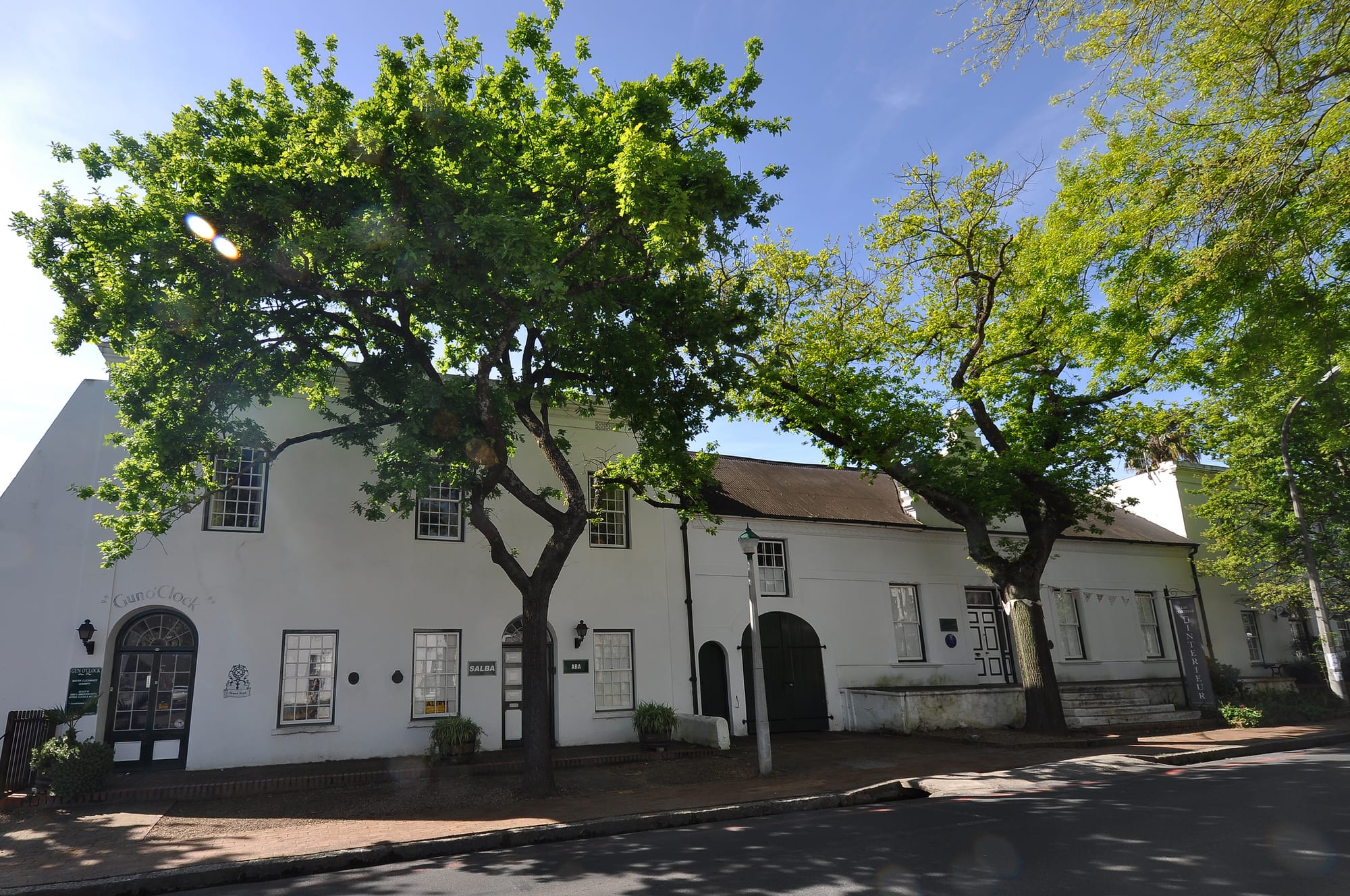
One of the more walkable towns in South Africa: the museums, churches, galleries, university buildings and most restaurants lie within a grid of about ten blocks, shaded by oaks and edged by open water furrows. The surrounding farms are not walkable, and the usual advice about not walking alone after dark applies here as elsewhere.
🛡️ Safety
The historic centre and the campus are busy and generally calm, and violent crime is far less visible here than in the city, but petty theft, bag snatching and break-ins at parked cars do occur, including at trailheads in Jonkershoek. The R44 and the town's outskirts pass informal settlements where visitors have little reason to stop.
Violent crime rates are high, but most of it is concentrated in areas visitors do not go; the main tourist routes — Cape Town centre, the Winelands, the Garden Route, Kruger and the private reserves — are heavily travelled and generally fine with sensible precautions. Leave nothing visible in a parked car, walk in company after dark, and hike the Jonkershoek trails in groups. Check current official travel advice before travelling.
🌦️ Climate
A Mediterranean climate, hotter and less windy than Cape Town because the town sits inland among mountains. Seasons are reversed from the northern hemisphere: summer runs from December to February, winter from June to August, when most of the rain falls.
- Summer
- hot and dry, often 25–33°C by day and cool at night
- Winter
- cool and wet, typically 8–18°C, with snow on the surrounding peaks
🤝 Local Customs
Afrikaans is the town's main language, with English widely spoken and isiXhosa heard in the surrounding settlements; the university teaches in both Afrikaans and English, a question that has been politically contested. Tipping runs at about 10 to 15 per cent in restaurants, with a few rand for car guards and petrol attendants. Dress is casual, and tasting rooms are relaxed about it.
Ask before photographing people or farm workers, and treat tasting rooms as working businesses rather than free bars.
💳 Common Payment Methods
The currency is the South African rand (R, ZAR). Cards and contactless payment are taken by shops, restaurants and almost all wine farms. Cash is useful for market stalls, tips and car guards, and ATMs are easy to find in the centre and the malls.