💰 Budget
Eating out in Granada is inexpensive, because most bars serve a tapa free with each drink. The Alhambra ticket is the one sight that has to be planned around, as entry to the Nasrid palaces is limited.
- Daily Budget Midrange
- USD 140–250 (mid-range hotel, restaurant dinners, Alhambra and monument tickets, taxis)
- Daily Budget Shoestring
- USD 55–100 (hostel bed, free tapas with drinks, city buses and minibuses)
Alhambra tickets sell out, so they are best bought well in advance; the Granada Card can sometimes still be had when regular tickets are gone.
📅 Best Time to Visit
Spring and autumn. Holy Week, the Day of the Crosses and the Corpus Christi fair fill the calendar from March to June. July and August are hot, with days averaging 34°C and spells above 40°C. Winter days are cool, and the ski season runs in the Sierra Nevada above the city.
⏳ Suggested Number of Days
Two or three days suit a first visit, since the main monuments need booked time slots and the hill quarters reward slow walking. Four or five allow time for the countryside and the mountains, or skiing in winter.
- First Visit
- 2–3 days
- With Surroundings
- 4–5 days
🚆 Transportation
The centre and the hill quarters are best covered on foot, helped by small red-and-white minibuses that climb to the Alhambra, the Albaicín and Sacromonte. City buses run along Gran Vía past the cathedral, and a single light-rail line, opened in 2017, crosses the city to Albolote, Maracena and Armilla. A rechargeable travel card covers metro, buses and regional trains.
Do not drive into the historic centre: access is restricted and enforced by traffic cameras that fine unauthorised cars.
🛬 Airport & Station Connections
Federico García Lorca Granada-Jaén Airport is about 15 km west of the city, about half an hour by taxi or bus. It is small, and many visitors fly into Málaga instead and continue by bus. Trains link Granada with Madrid via Córdoba, and with Seville and Almería; the bus station, about 5 km from the centre, has services from Seville, Málaga, Córdoba and Madrid.
🚶 Walkability
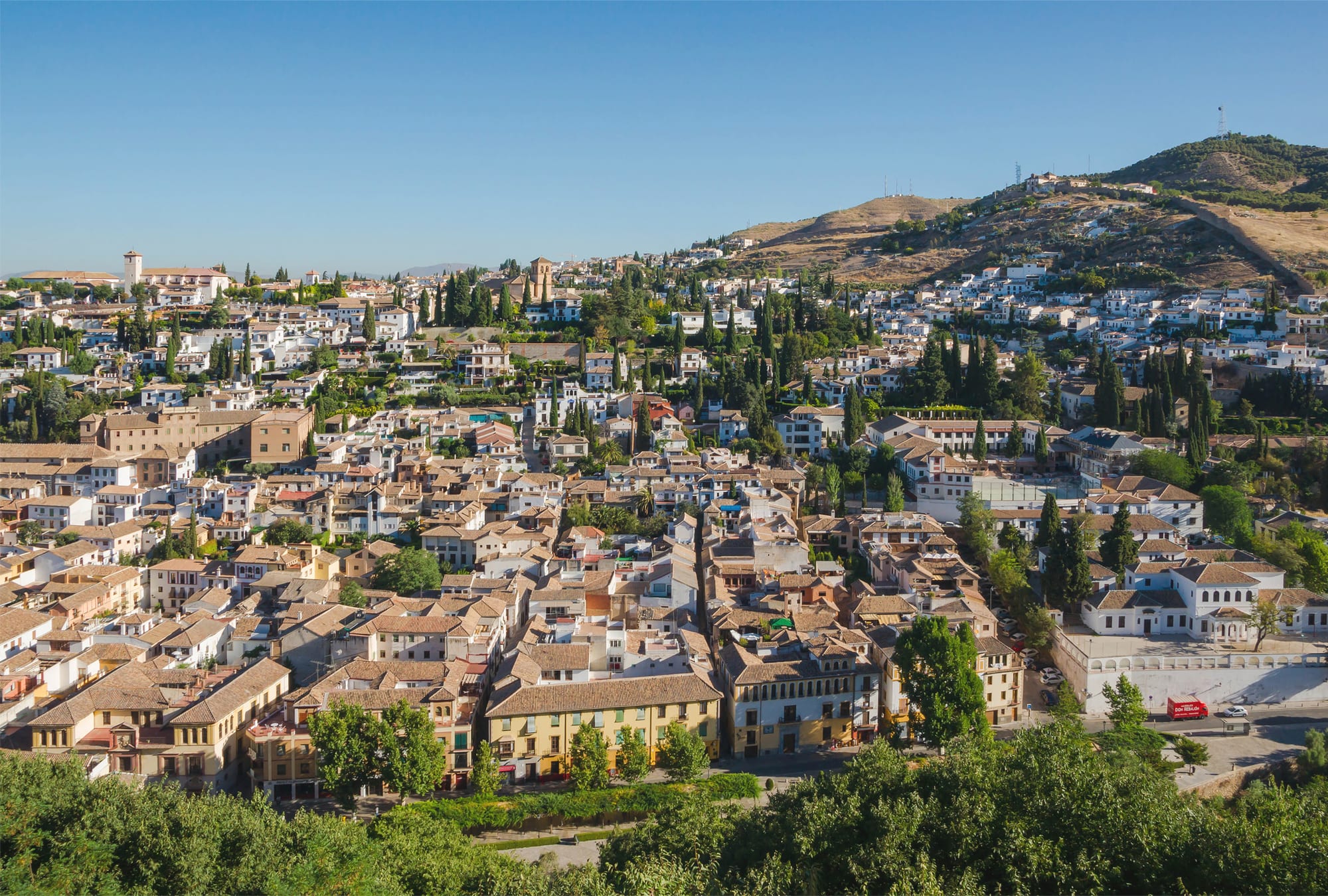
The flat centre is easy on foot, but the Albaicín, Sacromonte and the approaches to the Alhambra are steep, with stairways and cobbles. Streets are often short, winding and narrow, with scooters darting along alleys where pavements are only marked by iron posts. The minibuses spare the climbs.
🛡️ Safety
Spain is a safe country with low violent crime. In Granada the common problems are pickpockets and thieves, sometimes working in teams with distractions, in tourist areas and especially around the cathedral, where women offering sprigs of rosemary then demand money.
Keep bags closed and close in crowds around the cathedral and Plaza Nueva, and decline the rosemary. Check current official travel advice before travelling.
🌦️ Climate
A hot-summer Mediterranean climate close to semi-arid, shaped by an altitude of about 740 m. Summers are hot and dry; winters are cool and damp, with most rain from November to January. Snow is rare in the city, falling once every few years.
- Summer
- hot and dry — July days average 34°C, and temperatures over 40°C are not uncommon
- Winter
- cool — January days around 13°C, falling to about 1°C at night
🤝 Local Customs
Going out for tapas — ir de tapas — between the end of work and dinner is a deeply rooted habit, and unlike most of Andalusia, Granada's bars usually give a tapa free with each drink. The city has a large student population, many of them on exchange, and a mosque, opened in 2003, stands near the San Nicolás viewpoint, near the church.
Expect a tapa to arrive with each drink rather than ordering it; in the Albaicín and Sacromonte, remember that the cave houses and lanes are homes as well as sights.
💳 Common Payment Methods
The currency is the euro. Cards and contactless payment are widely accepted, and cash machines are easy to find in the centre; a little cash is useful for small purchases.