💰 Budget
Galle covers the full range. Boutique hotels in restored fort houses are among the most expensive rooms in Sri Lanka, while guesthouses in the new town, Dadalla and Unawatuna cost a fraction of that. Food is cheap outside the fort and markedly more expensive inside it. The main extras are drivers, day trips along the coast and whale-watching or safari excursions further east.
- Daily Budget Midrange
- USD 90–210 (boutique hotel or villa, restaurant meals, a driver, a coast or safari day trip)
- Daily Budget Shoestring
- USD 25–45 (guesthouse outside the walls, rice and curry, trains and buses)
Staying just outside the fort costs far less than staying inside it, and the ramparts, the churches and the harbour front cost nothing to visit.
📅 Best Time to Visit
December to April is the dry season on the south-west coast, with calm seas and the best beach weather, and the literary festival falls early in the year. The south-west monsoon from about May to September brings rain and heavy surf, when beaches quieten and prices fall; the fort itself is pleasant all year, and showers are usually short.
⏳ Suggested Number of Days
The fort is small enough to cover in a day and a night, which is when it is at its best. Three to five days allow a beach base nearby and trips along the coast and inland. Travellers often use Galle as a hub for the whole south-west.
- First Visit
- 1–2 days
- With Surroundings
- 3–5 days
🚆 Transportation
Inside the fort everything is on foot. Tuk-tuks are the usual way to reach the new town, the beaches and Unawatuna, and metered ones are common. Buses run constantly along the coast road, the coastal railway links Galle with Colombo and Matara, and many visitors hire a car with a driver for the wider coast.
Agree a tuk-tuk fare or use the meter before setting off, and use the train for coastal journeys when timings allow.
🛬 Airport & Station Connections
Galle is about 120 kilometres south of Colombo. The Southern Expressway makes the drive roughly an hour and a half to two hours, and express buses use it; the older coast road is slower. Trains on the coastal line run from Colombo Fort along the sea to Galle in about two and a half to three hours and continue to Matara. The nearest international airport is Katunayake, north of Colombo.
🚶 Walkability
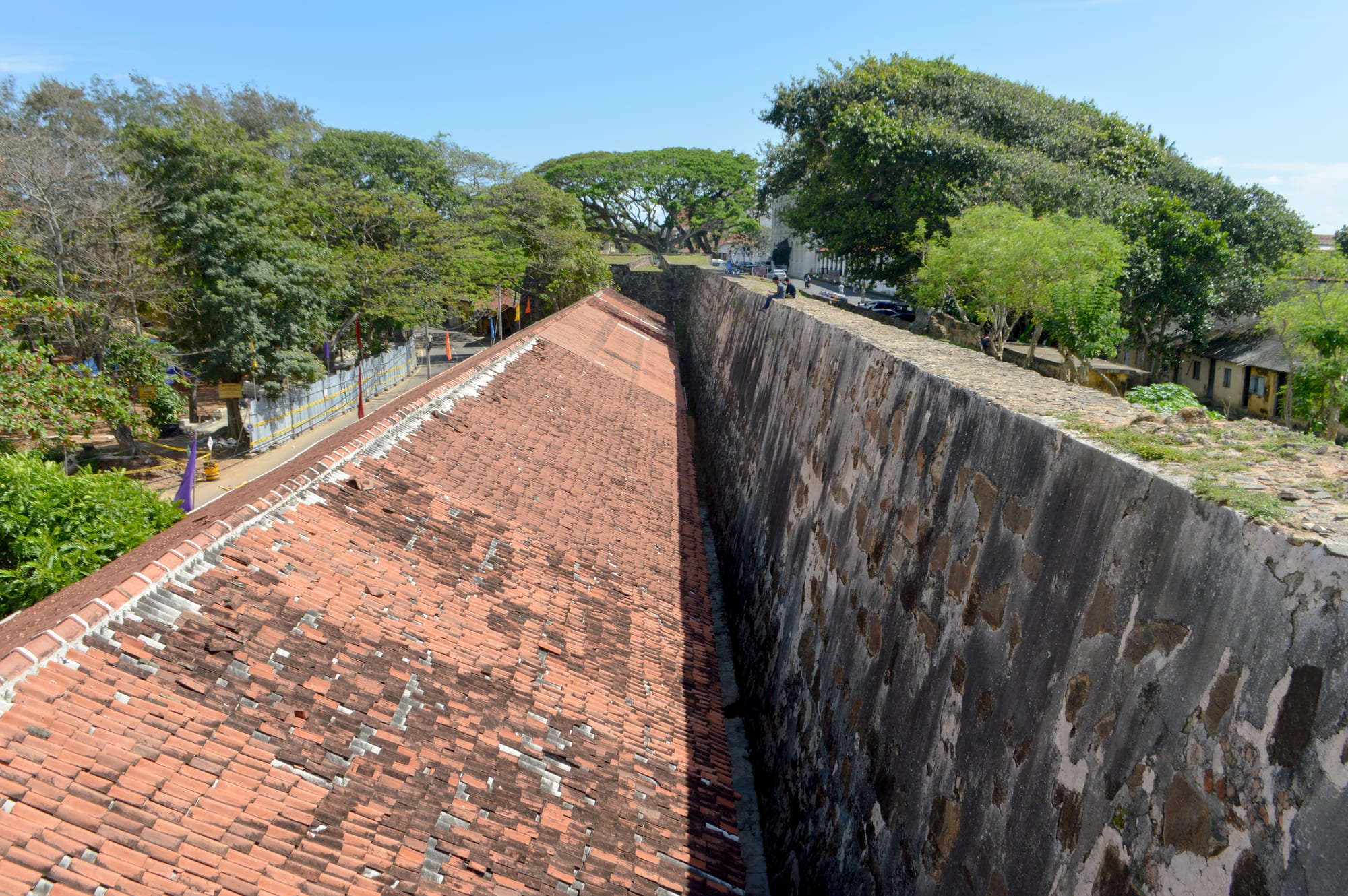
The fort is one of the most walkable places in the country: a flat grid of short streets with little traffic, ringed by a rampart walk that takes about an hour at an easy pace. Outside the walls it is harder — the new town is congested, pavements are narrow and the coast road is fast — and the heat makes midday walking tiring, so short tuk-tuk hops are normal.
🛡️ Safety
Galle is generally safe, with petty theft and overcharging the usual complaints rather than violent crime. The sea is the real hazard: currents and rip tides along this coast cause drownings, especially in the monsoon months. Traffic on the coast road is fast, scooter accidents are common, and touts and unofficial guides are persistent around the fort.
Swim only where local people do and never when red flags fly, wear a helmet on a scooter, and agree prices before accepting a guide or a ride. Check current official travel advice before travelling.
🌦️ Climate
Hot, humid and green all year, typically 26–31°C, with sea breezes moderating the fort. The south-west monsoon brings the heaviest rain and rough seas from about May to September, and a second wetter spell can arrive with the inter-monsoon in October and November. Rain usually comes in short, heavy bursts.
- Summer
- May–September: the monsoon, with rain, humidity and heavy surf, around 27–31°C
- Winter
- December–April: sunny, drier and calmer seas, around 25–31°C, the main travel season
🤝 Local Customs
The south is strongly Buddhist, and Galle also has long-established Muslim and Christian communities inside the fort. Shoulders and knees should be covered at temples, churches and mosques, and shoes and hats removed at Buddhist sites. Beachwear belongs on the beach rather than in the town, and alcohol is not sold on poya full-moon days.
Dress modestly away from the beach, remove shoes at religious buildings, and ask before photographing people, fishermen or worshippers. Tipping is appreciated but modest.
💳 Common Payment Methods
The currency is the Sri Lankan rupee. Hotels, fort restaurants and shops take cards widely, but tuk-tuks, market stalls, buses and small eating houses are cash businesses. ATMs are plentiful in the new town and there are a few inside the fort; money changers cluster around Main Street.