💰 Budget
St. Moritz is an expensive resort, with some 13,000 beds, including several five-star hotels, and prices peak at Christmas, in February during White Turf and in high summer. Apartments and simpler guesthouses in the surrounding villages bring costs down.
- Daily Budget Midrange
- USD 380–720 (resort hotel, mountain restaurants, ski pass or a scenic train seat reservation)
- Daily Budget Shoestring
- USD 140–220 (hostel or simple guesthouse in a nearby village, supermarket meals, trains and postbuses)
Hotel guests staying two nights or more get cable-car rides included, which cuts the cost of a mountain stay.
📅 Best Time to Visit
December to March for skiing and the lake events, with polo in January or early February, White Turf in February and the ski marathon in March. Summer is the season for walking and mountain biking, and many hotels and restaurants close between the seasons.
⏳ Suggested Number of Days
A short stay covers the town, the lake and one ride up the mountains; a week allows for the other Engadin lakes and villages, the Bernina side and the scenic railways. Snow, festival dates and the weather on the peaks decide most plans.
- First Visit
- 2–3 days
- With Surroundings
- 5–7 days
🚆 Transportation
St. Moritz is the highest town in Switzerland with a railway station, the terminus of the Rhaetian Railway's Albula and Bernina lines, with the main postbus stop beside it. Buses and regional trains link the Engadin villages, and the funicular from the Dorf climbs to Corviglia. Parking is very scarce in winter.
The town is steep; walking between the station, the Dorf and the Bad takes time in snow, and local buses save the climb.
🛬 Airport & Station Connections
Most visitors arrive by train via Chur and the Albula line, or on the Glacier Express from Zermatt or the Bernina Express from Tirano. Zurich Airport is about 226 km away and Milan Bergamo about 153 km; the small Samedan Airport is about 5 km away. Roads cross the Julier Pass, open in winter, and the Maloja Pass from Italy.
🚶 Walkability
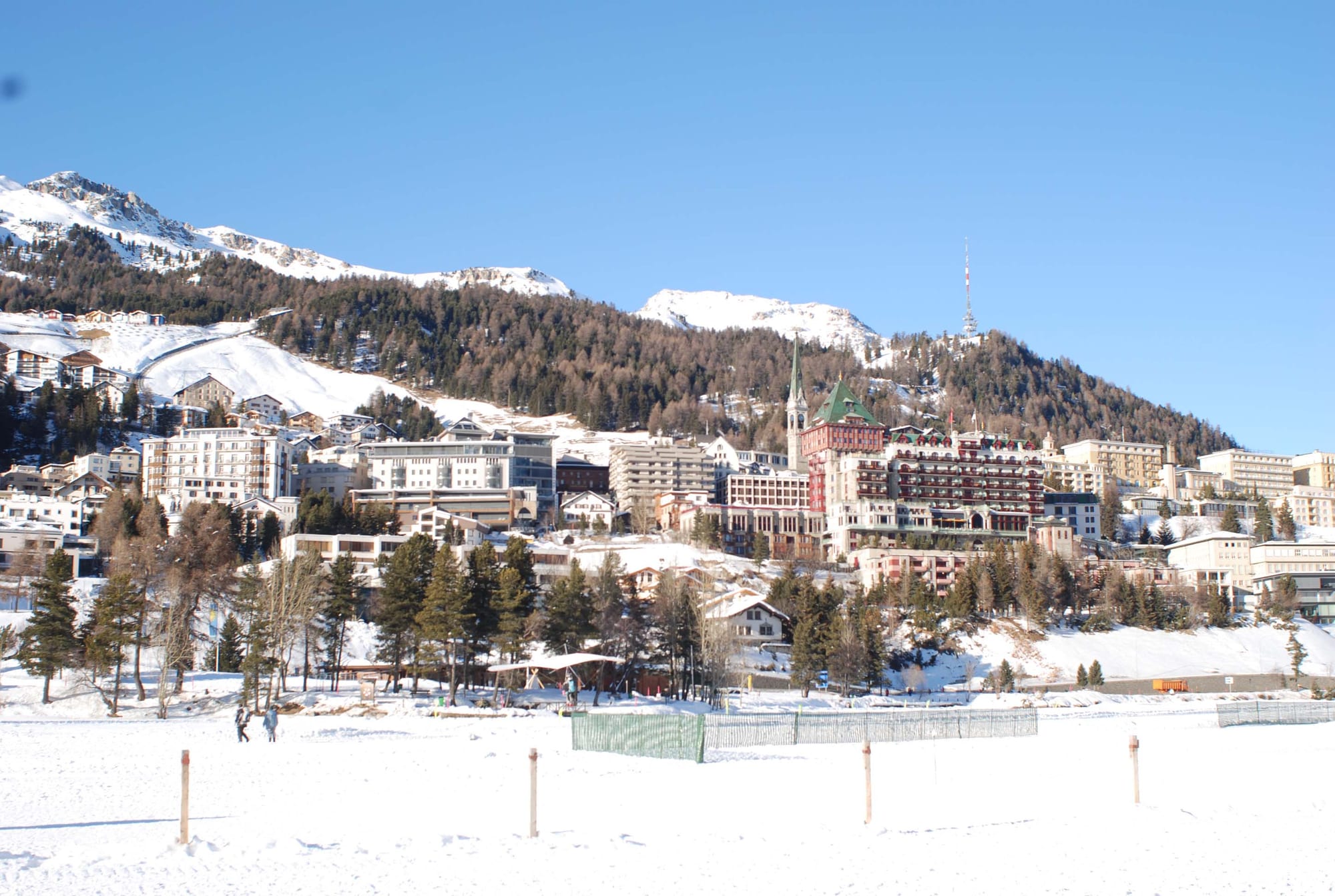
The Dorf is compact but built on a steep slope above the lake, and the Bad lies at the far end of the lake, so walking between them takes time. In winter the frozen lake is used for events. Pavements are often icy.
🛡️ Safety
Switzerland is very safe, with low crime. In St. Moritz the hazards are cold and altitude: winters are very cold, the sun is strong at 1,800 metres, and avalanches threaten off-piste slopes and ski tours.
Check avalanche bulletins before leaving marked pistes, dress for severe cold, and walk on the frozen lake only on marked, opened areas. Check current official travel advice before travelling.
🌦️ Climate
A subarctic climate because of the high altitude near the tree line, with cool summers and cold nights, and very cold, snowy winters with daytime highs around freezing and about 254 cm of snow a year. The town is said to enjoy over 300 days of sunshine a year.
- Summer
- cool — in nearby Samedan, July averages about 12.3°C, with cold nights
- Winter
- very cold — in nearby Samedan, February averages about −8.4°C, and St. Moritz's daytime highs hover around freezing
🤝 Local Customs
German is the main language, with Italian widely spoken and Romansh, the Upper Engadin Puter dialect, the village's original language. By law a service charge is included in Swiss restaurant bills, so tipping is a personal choice.
A few words of German or Italian are welcome; respect church services in the old chapels.
💳 Common Payment Methods
The currency is the Swiss franc. Card payments are common and all ATMs accept foreign cards, although Switzerland is more cash-oriented than many European countries. Some places accept euro notes, but not coins, and give change in francs.