💰 Budget
Matmata is cheap. Rooms in converted pit houses and simple hotels cost little, meals are inexpensive, and the village itself asks only small entry fees at the houses that are open. The expense is transport: without a car, reaching the village and the hill villages beyond it usually means hiring a taxi for a few hours.
- Daily Budget Midrange
- USD 70–150 (comfortable hotel or restored pit house, restaurant meals, a hire car or a taxi hired for the day)
- Daily Budget Shoestring
- USD 20–35 (room in a troglodyte guesthouse, local meals, louage from Gabès)
Bring cash — there is little banking in the village — and agree a price before a guided look inside a lived-in house, where a small payment is customary.
📅 Best Time to Visit
October to April, when the hills are comfortable to walk and the light is good early and late. Spring can be dusty. Midsummer is very hot above ground, though the pit rooms stay cool, and the village is at its quietest in the middle of the day all year, once the tour coaches have passed through.
⏳ Suggested Number of Days
Many people see Matmata on a half-day stop between Djerba and the desert. Staying a night, when the day visitors have gone, allows time for the surrounding hill villages, which take most of another day.
- First Visit
- half a day to 1 day
- With Surroundings
- 1–2 days
🚆 Transportation
The village is small enough to walk, though the pit houses are scattered across the hills and some lie a kilometre or more apart along sandy tracks. Buses and louages run to Gabès, where connections continue to Médenine, Djerba and Tunis, but services are infrequent and stop early. A hire car or a taxi engaged for the day is the practical way to see the villages around.
Roads over the hills are narrow, steep in places and unlit, and loose stones and animals are common, so avoid driving them after dark.
🛬 Airport & Station Connections
Most visitors come from Gabès, about 40 kilometres north-east and roughly an hour by road, by louage, bus or hired taxi. Djerba is around two hours away by car and the usual base for organised day trips, and Tataouine and Douz are each a few hours off. The nearest airport is Djerba–Zarzis.
🚶 Walkability
The centre is a short, flat street, but visiting the pit houses means walking uphill on stony tracks with little shade, and the distances between groups of houses add up. Sturdy shoes help, and the slopes and unfenced pit edges call for care, especially with children.
🛡️ Safety
The village is quiet and crime is rare; the main hazards are physical. Pit courtyards are open in the ground, often unfenced, and the tunnels and stairs into them are dark and uneven. Heat and sun on the treeless hills are the other risk, and mobile coverage weakens away from the road. Western governments advise against travel to the far south and the Libyan border area, and to the military zone south of Tataouine.
Keep away from the Libyan border zone and the desert military zone, use licensed guides for the Sahara, and carry water. Check current official travel advice before travelling.
🌦️ Climate
Semi-arid to desert, with hot dry summers, mild sunny winters and very little rain, although occasional downpours can run hard off the bare slopes. The altitude of the hills makes nights noticeably cooler than on the coastal plain, and the underground rooms stay at an even temperature all year.
- Summer
- hot and dry, often 35–40°C by day, with cooler evenings in the hills
- Winter
- mild sunny days of about 15–19°C, with cold nights sometimes near freezing
🤝 Local Customs
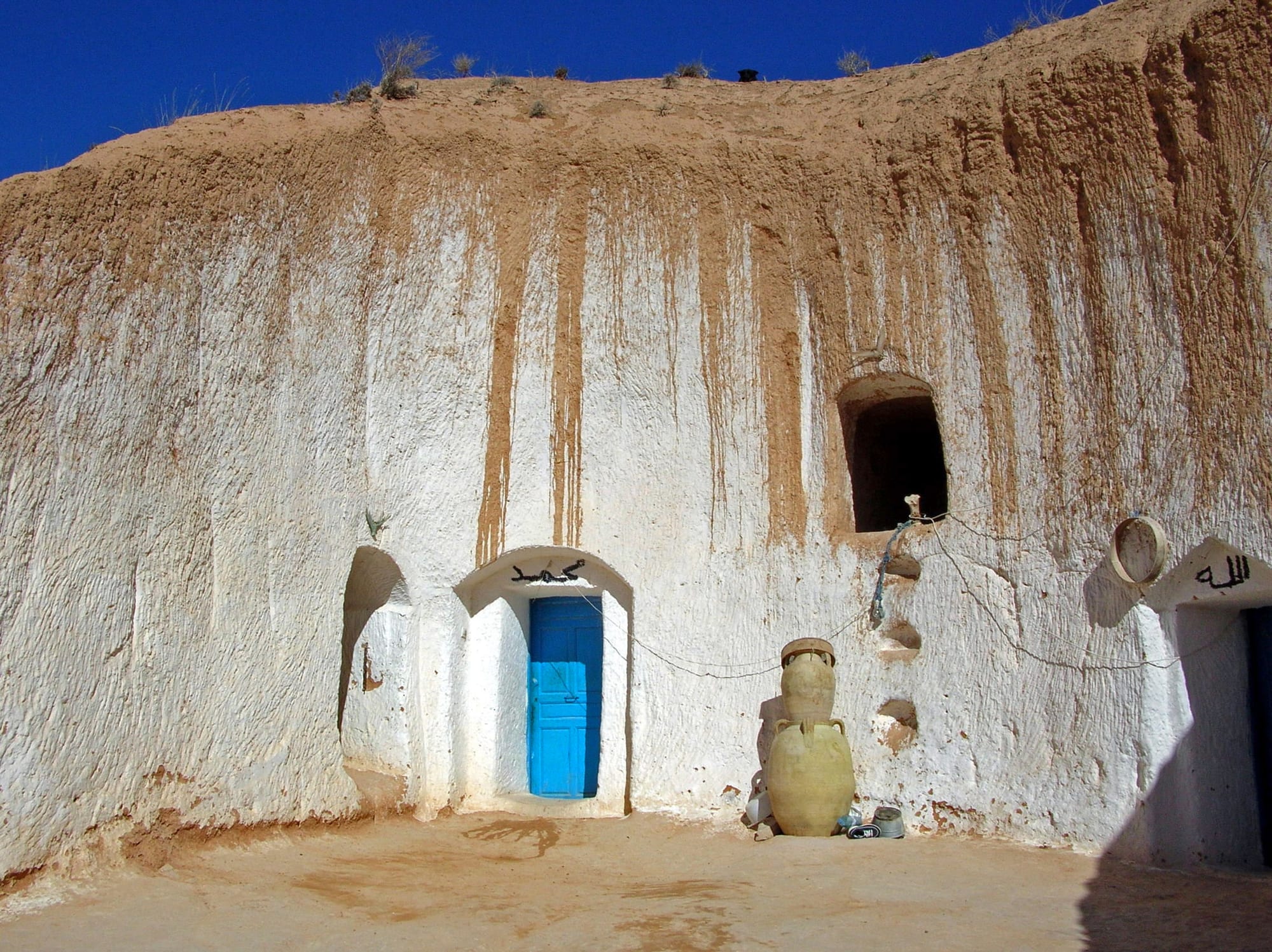
Matmata is a conservative village where many of the pit houses are private homes. Permission should be asked before entering a courtyard or photographing a family, and a small payment is normal where a household shows visitors around. Modest dress is expected, and Amazigh as well as Arabic is spoken.
Ask before photographing people or their homes, bring small notes for entry payments and tips, and expect alcohol to be available only in hotels rather than village cafés.
💳 Common Payment Methods
The currency is the Tunisian dinar, which cannot legally be taken out of the country. Cash is used for nearly everything here: hotels may take cards, but restaurants, shops, taxis and household entry payments do not, and cash machines are limited, so draw money in Gabès or on Djerba.