💰 Budget
Adana is one of the cheaper large cities in Turkey. Hotels are aimed at business travellers and are good value, eating out costs little even in well-known kebab houses, and city transport is inexpensive. Prices rise around the film festival and when trade fairs are on.
- Daily Budget Midrange
- USD 90–200 (comfortable hotel, restaurant meals, museum entry, a hire car for the Cilician sites)
- Daily Budget Shoestring
- USD 30–50 (budget hotel, kebab and lokanta meals, city buses and minibuses)
Eat kebab where it is cheapest and best, in the streets around the old centre, and treat a hire car as the main cost if the castles and ruins of the plain are the point of the trip.
📅 Best Time to Visit
March to May and October to November are the comfortable months, when the plain is green or the citrus is being picked and walking the old centre is pleasant. Summer is genuinely punishing — hot and humid for weeks at a time — and winter is mild, grey and wet. The seasons themselves are unchanged by the war that began in February 2026, although aviation and tourism across the wider region have been disrupted.
⏳ Suggested Number of Days
One or two days are enough for the city centre and the river. Three or four allow the ancient sites of the plain and the mountain edge, which need a car. Heat is the main variable: in high summer the same ground takes longer to cover.
- First Visit
- 1–2 days
- With Surroundings
- 3–4 days
🚆 Transportation
A metro line runs north to south through the city, and buses and dolmuş minibuses cover the rest; taxis are plentiful and cheap. Trains from the central station run west to Mersin and east towards Osmaniye and Gaziantep. The ancient sites of the Çukurova are scattered and poorly served by public transport, so a hire car or a driver is the practical choice for them.
Traffic is heavy on the bridges at peak times; crossing the river on foot by the Taşköprü is often quicker than a taxi.
🛬 Airport & Station Connections
Çukurova International Airport, which opened in August 2024 in the Tarsus district west of the city, now serves both Adana and Mersin; the old Şakirpaşa airport inside Adana closed to commercial passenger flights at the same time. Intercity buses and trains connect Adana with Mersin, Antakya, Gaziantep and Ankara. Air travel across the Middle East has been disrupted since the war that began in February 2026, and schedules at the region's airports can change at short notice.
🚶 Walkability
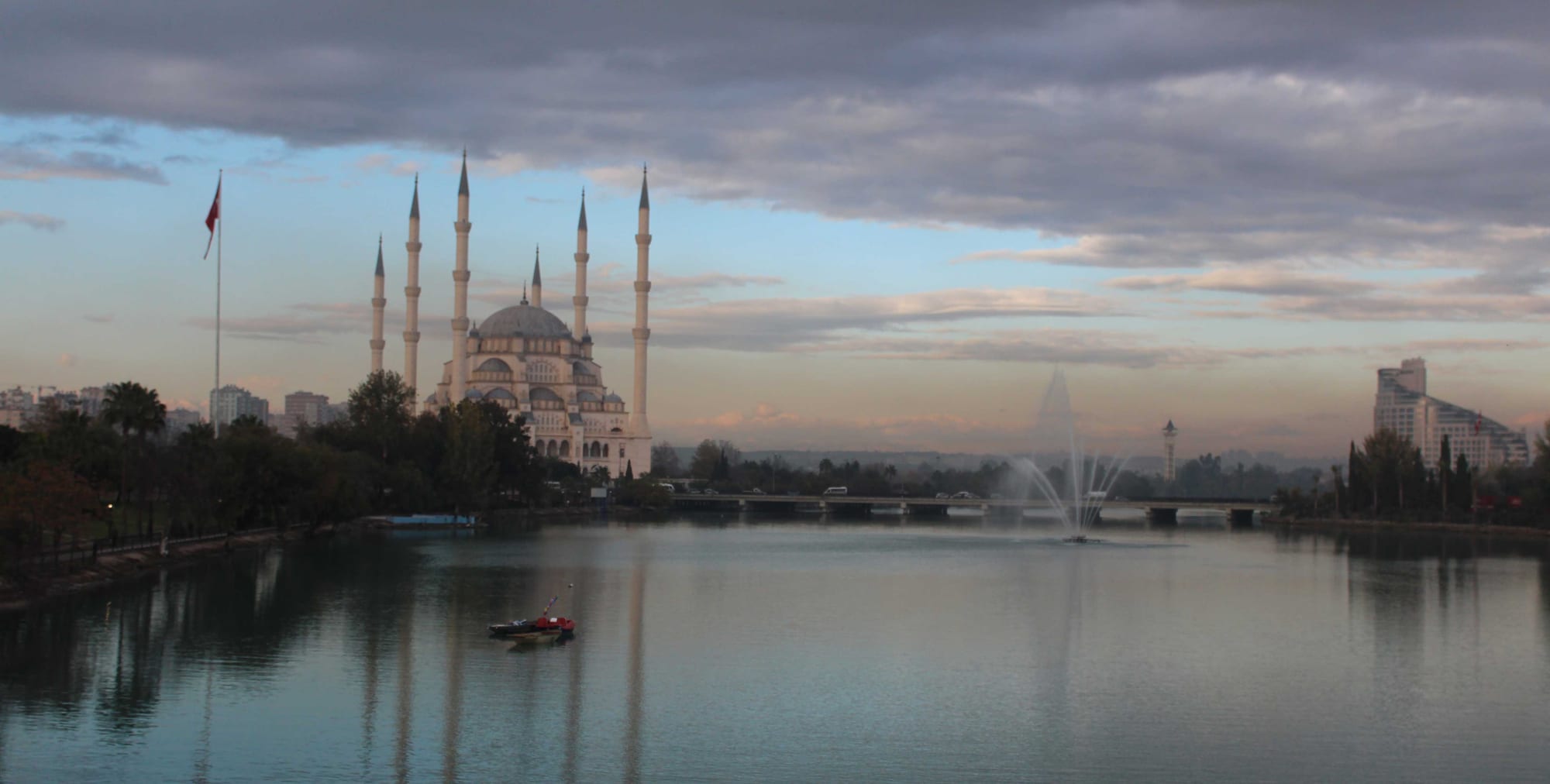
The old centre is flat and walkable: the Great Mosque, the bazaar, the clock tower, the stone bridge and the Sabancı mosque are all within a couple of kilometres of each other. Beyond that the city is spread out and built for cars, with wide avenues and long blocks. From June to September the heat and humidity limit walking to the early morning and the evening.
🛡️ Safety
Adana is a large working city and visitors are rarely troubled, though pickpocketing in crowded markets and traffic are real risks and drivers give little ground to pedestrians. Summer heat and humidity are a health risk in themselves. Since the war between the United States, Israel and Iran began in February 2026, Iranian ballistic missiles crossing towards Turkey have been intercepted by Turkish and NATO air defences, and explosions from interceptions have been heard near Adana.
Drink water constantly in summer and keep out of the midday sun, watch bags in the bazaar, and cross main roads at signalled crossings. Check current official travel advice before travelling.
🌦️ Climate
The Çukurova plain is among the hottest and most humid places in Turkey. Summers are long, very hot and sticky, with warm nights; winters are mild and wet, and most of the year's rain falls between November and March. Spring is short and green, autumn warm well into October.
- Summer
- very hot and humid, often 33–38°C by day with high humidity off the delta
- Winter
- mild and wet, usually 10–17°C by day, with heavy rain and rare frost
🤝 Local Customs
Adana has a reputation across Turkey for directness, loud humour and hospitality, and meals are social occasions: kebab is ordered for the table, and a guest is rarely allowed to pay. Dress is relaxed by Mediterranean standards but modest clothing is expected in mosques, where shoes come off and women cover their hair. Tea arrives constantly and refusing it is not rude.
Tip around 5–10 per cent in restaurants, ask before photographing people in the bazaar or at prayer, and be aware that alcohol is served in many restaurants but not in traditional kebab houses.
💳 Common Payment Methods
The currency is the Turkish lira. Cards and contactless payment work in hotels, supermarkets and most restaurants, and ATMs are everywhere in the centre. Cash remains normal in the bazaar, at street stalls and for minibus fares, so small notes are useful.