💰 Budget
Erzurum is inexpensive outside the ski season. City-centre hotels, kebab houses and city buses cost little, and the monuments charge modest entry fees. Prices at the Palandöken hotels rise sharply between December and March, when packages that include lift passes are the normal way to stay, and a hire car or driver is the main extra cost for trips into the mountains.
- Daily Budget Midrange
- USD 70–140 (good hotel, restaurants, a driver or hire car for day trips)
- Daily Budget Shoestring
- USD 25–45 (simple hotel, lokanta meals, city buses)
Stay in the centre for the monuments and on the mountain for skiing; book Palandöken well ahead for the winter school holidays.
📅 Best Time to Visit
June to September is the season for the mountains and the roads north towards Tortum, when the plain is green and days are warm but never hot. May and October are quieter and cool. December to March is the ski season, with deep snow on Palandöken and temperatures that can stay well below freezing for weeks; heavy snow slows the mountain roads.
⏳ Suggested Number of Days
The monuments of the old centre stand close together and need little time, so one or two nights suits most visits. Skiers and those heading into the mountains or towards the Black Sea road usually allow three or four, and winter weather can add a day.
- First Visit
- 1–2 days
- With Surroundings
- 3–4 days
🚆 Transportation
City buses and shared taxis cover the city, and the monument quarter is best walked. Minibuses climb to the Palandöken hotels in winter. Intercity buses leave from the terminal for Kars, Van, Trabzon and the west, and the Ankara–Kars railway passes through the city.
Allow extra time on mountain roads after snow, and use a taxi rather than waiting for a bus in very cold weather.
🛬 Airport & Station Connections
Erzurum Airport lies about 11 kilometres from the centre, with flights to Istanbul and other Turkish cities. The Eastern Express between Ankara and Kars stops at Erzurum after a journey of about a day. Buses run to Kars in around three hours, to Trabzon on the Black Sea in about five and to Ankara overnight. Air travel across the wider region has been disrupted since the war that began in February 2026, and flight schedules can change at short notice.
🚶 Walkability
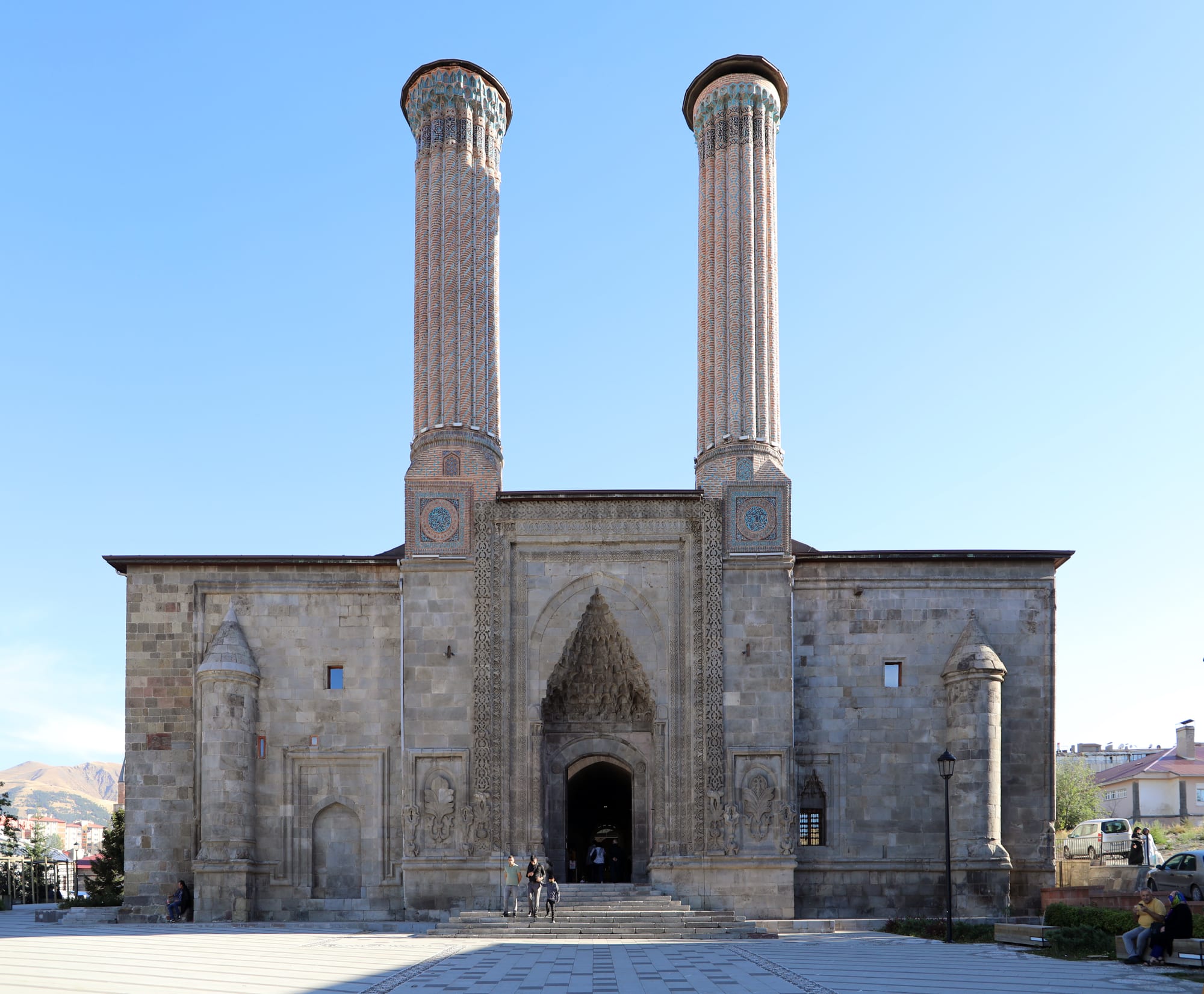
The historic core is flat, compact and easy on foot: the Twin Minaret Madrasa, the Yakutiye Madrasa, the Grand Mosque, the tombs and the citadel are all within a fifteen-minute walk of one another along Cumhuriyet Caddesi. Beyond it the city spreads into wide modern avenues better covered by bus or taxi. Snow, ice and altitude make winter walking slow, and the thin air at 1,900 metres is noticeable on climbs.
🛡️ Safety
Erzurum is a calm, conservative provincial capital with little crime that affects visitors, and it is used to domestic tourists in the ski season. The practical risks are the climate and the roads: extreme cold, ice, and snow on mountain passes from late autumn to spring. Eastern Anatolia lies on active fault lines, and military checkpoints are common on roads in the region.
Carry a passport for checkpoints, dress for temperatures well below freezing in winter, and check road conditions before driving mountain routes. Check current official travel advice before travelling.
🌦️ Climate
One of the coldest cities in Turkey, high on an inland plateau, with a long snowy winter, a short warm summer and a large difference between day and night temperatures all year.
- Summer
- short and dry — July and August days are usually around 25–28°C, with cold nights
- Winter
- long and severe — January often around −10°C or colder, snow lying for months, with readings below −25°C in hard spells
🤝 Local Customs
Erzurum is among the more religiously conservative cities in Turkey. Modest dress is usual, alcohol is much less visible than in western Turkey and is served in relatively few places, and a head covering is needed for women entering a mosque. Tea is offered constantly, in shops as much as in homes, and refusing every glass is considered unfriendly.
Remove shoes before entering a mosque or a home, avoid eating in the street during Ramadan daylight hours, and ask before photographing people.
💳 Common Payment Methods
The currency is the Turkish lira. Cards and contactless payment are accepted in hotels, supermarkets, ski resorts and most restaurants in the centre, and ATMs are easy to find along the main avenue. Small tea houses, bazaar stalls and village stops prefer cash, so lira in small notes is worth carrying.