A long rocky ridge topped by ruined stone fortifications above dry grass and green trees under a clear sky

Eastern Anatolia, Turkey

Van

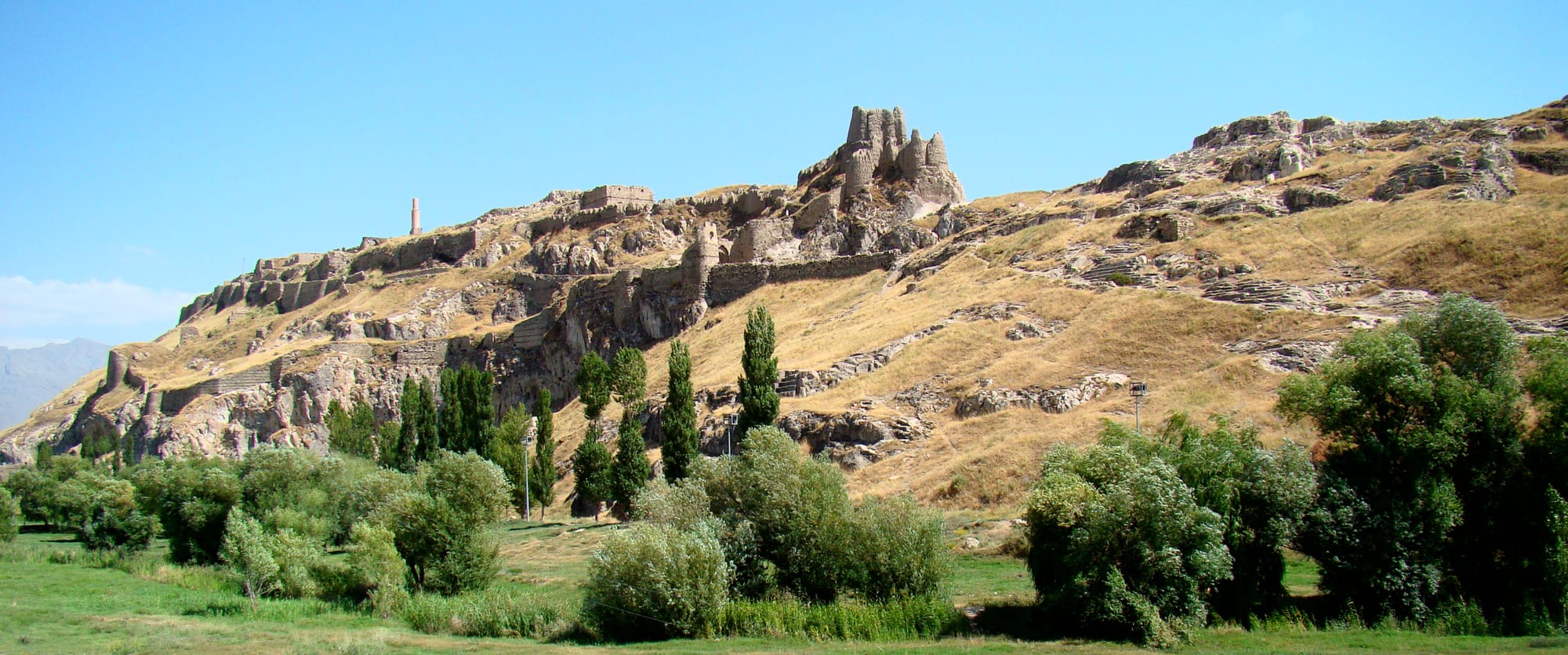
The fortress rock at Van, site of the Urartian capital of Tushpa. (Bjørn Christian Tørrissen / Wikimedia Commons · CC BY-SA 3.0)

One of the largest cities of Turkey's far east, on a plain about five kilometres from the shore of Lake Van at about 1,750 metres. Urartu built its capital, Tushpa, on the great rock west of the modern streets, and the region was long an Armenian centre. The old town was destroyed during the First World War, and today's grid-planned city is known for its breakfast, its cats and the boats to Akdamar.

Neighbourhoods

  • The city centre
    • First-time visitors
    • Shops and services
    • Close to public transport

    A grid of wide streets around Cumhuriyet Caddesi, rebuilt after the city moved from the old site, holding the hotels, banks, bazaar and minibus stops. It is busy from morning until late and almost everything in the city is reached from here.

    Open in Maps
  • Kahvaltı Sokağı
    • Best for food
    • Mornings

    The lane of breakfast houses a short walk from the main street, where the many-dish Van breakfast is served all morning. Tables fill early at weekends, and the quarter is quieter and more ordinary by the afternoon.

    Open in Maps
  • The castle rock and old Van
    • Historic district
    • Walks and viewpoints

    About four kilometres west of the centre, the long rock carries the Urartian citadel, and the grassy ground below it holds the scant remains of the pre-1915 city with two ruined mosques and a minaret. Marshy meadows and paths run towards the lake.

    Open in Maps
  • İskele and the lakeshore
    • Sunsets
    • Quiet and residential

    The shore district west of the city, where the harbour, ferry quay and lakeside cafés look across the water towards the mountains. Public beaches and tea gardens are busy on summer evenings.

    Open in Maps
  • Edremit
    • Beaches
    • Quiet and residential

    A lakeside town about 13 kilometres south-west, now a district of the city, with hotels, restaurants and a shoreline of shingle beaches and reeds. It is where many people from Van go to swim and eat in summer.

    Open in Maps

Things to do

The city and its rock

  • Van Fortresslandmark

    The Urartian citadel of Tushpa on a limestone ridge west of the city, with cuneiform inscriptions, rock-cut royal tombs and a view over the lake.

    Open in Maps
  • Old Vanattraction

    The site of the walled city abandoned after its destruction in the First World War, now open meadow below the rock with ruined mosques and foundations.

    Open in Maps
  • Van Museummuseum

    The provincial museum, strongest on Urartian bronzes, jewellery and inscriptions from the excavations around the lake.

    Open in Maps
  • Van bazaarmarket

    The covered and street markets in the centre, selling herbed cheese, honey, dried fruit, copperware and the kilims woven in the villages.

    Open in Maps

The lake

  • Lake Vanattraction

    The largest lake in Turkey, a soda lake at about 1,640 metres whose water is alkaline enough to be used for washing, ringed by volcanic mountains.

    Open in Maps
  • Akdamar Islandattraction

    A small island reached by boat from Gevaş, west of the city, with almond trees and a path around its shore.

    Open in Maps
  • Cathedral of the Holy Crosslandmark

    The 10th-century Armenian church on Akdamar, its pink tuff walls carved with biblical scenes in relief, restored and opened as a monument.

    Open in Maps
  • Gevaşattraction

    The lakeside town where the Akdamar boats leave, with the domed tomb of Halime Hatun and the largest Seljuk cemetery of carved headstones after Ahlat's.

    Open in Maps

Castles and Urartian sites

  • Çavuştepelandmark

    An Urartian fortress and temple on a ridge south-east of the city, with cut-stone walls and inscriptions from the 8th century BC.

    Open in Maps
  • Hoşap Castlelandmark

    A 17th-century Kurdish lord's castle on a rock above a river and a village, with a fortified gateway and long curtain walls.

    Open in Maps

Short trips from the city

  • Muradiye Waterfallattraction

    A wide waterfall north of the lake, beside the town of Muradiye, crossed by a footbridge, about 80 kilometres from the city.

    Open in Maps
  • Ahlatattraction

    A town on the north-western shore of the lake, in Bitlis province, with a large medieval cemetery of tall carved tombstones and domed tombs.

    Open in Maps
  • Erek Mountainviewpoint

    The mountain rising to 3,204 metres east of the city, with the ruins of the Armenian monastery of Varagavank at its foot and walking on its lower slopes in summer.

    Open in Maps

Seasonal events

  • Nevruz21 March

    The spring new year, marked in Van with large public gatherings, music, bonfires and dancing, and widely celebrated among Kurdish communities.

  • Summer on the lakeJune to September

    The months when the shore at Edremit and the beaches fill, boats run steadily to Akdamar, and the highland pastures above the city are green.

  • Van cat eventsvaries

    The city's white cats, whose eyes are blue or amber and sometimes one of each, are celebrated in exhibitions and at a university research and breeding centre.

Eat and drink

Long-standing places and food districts in Van. Hours, ratings and directions come from your maps app, always current.

Van classics

  • Kahvaltı Sokağı breakfast housesneighborhood

    The lane of breakfast salons where the Van spread is served — herbed cheese, clotted cream with honey, olives, eggs cooked with butter and flour, jams, tomatoes and endless tea.

    Open in Maps
  • Van bazaar food stallsmarket

    Stalls in the central market sell otlu peynir, the herbed cheese matured in skins, along with local honey, walnuts, dried fruit and pulses.

    Open in Maps
  • Kebab and grill houses in the centreneighborhood

    Lamb grills, stews and the local flatbreads fill the restaurants along and behind Cumhuriyet Caddesi, with ayran or tea rather than alcohol at most tables.

    Open in Maps

Experience Van

History

The rock above the plain carried Tushpa, capital of the kingdom of Urartu, from the 9th century BC. Its kings cut chambers and inscriptions into the limestone, including a trilingual text left by the Persian king Xerxes, and irrigated the plain with a canal attributed to Queen Semiramis in legend but built under Urartian rule. The kingdom fell in the 6th century BC, and the region passed to Medes, Persians, Armenian dynasties, Rome and Byzantium in turn.

For centuries Van was a centre of Armenian life, the heart of the province of Vaspurakan; the Artsruni kings built the church on Akdamar in the 10th century. Seljuks, Kurdish emirates, the Kara Koyunlu, Safavid Persia and the Ottomans each held the town, which the Ottomans secured in the 16th century and made the seat of an eastern province. By the 19th century the walled city below the rock was a crowded place of churches, mosques, gardens and bazaars, with mixed Armenian, Kurdish and Turkish quarters.

That city did not survive the First World War. In 1915 fighting between Armenian defenders and Ottoman forces was followed by the wider deportations and massacres of the Armenian genocide, and Russian and Ottoman armies took the town in turn; when the fighting ended the old city was in ruins and largely emptied. Rather than rebuild on the site, the republic laid out a new city on the plain a few kilometres east, which is the Van of today. A severe earthquake in October 2011 destroyed buildings across the province and killed hundreds of people, and much of the city's housing dates from the rebuilding that followed.

Culture & Customs

Van has a Kurdish majority, and Kurdish music, dance and the dengbêj tradition of long narrative singing are part of everyday life alongside Turkish. Nevruz, on 21 March, is the biggest public celebration of the year, marked with crowds, fires and line dancing. Weddings are large and loud, held in halls or in the open, with drum and zurna players and dances in which the whole party joins hands.

The city's best-known symbol is the Van cat, a chalky-white breed whose eyes are blue or amber and sometimes one of each, with a reputation for swimming, bred and studied at a centre on the university campus since 1995. The breakfast table is almost as strong an emblem: eating a long, slow, many-dish breakfast is a social ritual here rather than a meal, and visitors are judged partly by how they approach it.

Manners are conservative and hospitable. Guests are pressed with tea, food and further invitations; elders are greeted first; and modest dress is normal in the streets. The population is young, the university large, and student life gives the centre a livelier evening feel than the city's reputation suggests, though cafés and tea houses rather than bars are where it happens.

Daily Life

About half a million people live in the central districts of İpekyolu and Tuşba that make up the city, and roughly 1.1 million in Van province, one of the youngest populations in Turkey. Most residents live in apartment blocks built since the 2011 earthquake, spreading east and south of the old grid, while villages around the lake remain small and agricultural.

The economy runs on trade, public employment and farming. The border crossing with Iran at Kapıköy and the road to Tehran have long made Van a trading city, and cross-border commerce shapes its markets; livestock, dairy, cereals and fruit come from the plain and the highlands; and the provincial administration, hospitals and Yüzüncü Yıl University employ many thousands. Tourism is growing but remains seasonal. Unemployment is high and many families rely on relatives working in western Turkey or abroad.

Daily rhythm is shaped by long breakfasts, a working day that ends with tea and a walk on the main avenue, and winters that keep people indoors for months. Heating costs, earthquake resilience and water levels in the lake, which have risen in some years and flooded shoreline property, are recurring local concerns. The city is also a transit point for migrants crossing from Iran.

Food

Breakfast is the meal Van is known for nationally. The spread covers the table: otlu peynir, a cheese matured with wild herbs from the mountains; kavut, a toasted flour and butter paste; murtuğa, flour cooked in butter with egg; honey in the comb with thick clotted cream; olives, tomatoes, cucumber, butter, jams, walnuts and hot bread, with tea refilled throughout. Whole streets of salons serve nothing else.

The everyday kitchen is lamb-based and thrifty. Keledoş, a slow-cooked dish of pulses, dried yoghurt, wild greens and meat, is the city's own; su böreği, sheets of boiled pastry layered with cheese, is made for guests; and lamb is grilled as kebab or stewed with pulses. Village bread is baked in a tandır oven, and dried yoghurt and ayran appear at most meals.

The lake supplies the inci kefali, a pearl mullet that migrates up the freshwater streams to spawn in May and June, eaten fried or salted. Van's highland honey and its walnuts are sold in the bazaar, and sweets tend to be syrup pastries or milk puddings. Tea is drunk strong and constantly, and alcohol is served in relatively few places in the city.

Planning tools

Budget

Van is among the cheapest cities in Turkey. Hotels in the centre are inexpensive, breakfast is famously good value even when it covers a whole table, and shared minibuses cost very little. Distance is the real expense: the sights around the lake are spread over tens of kilometres, so a hire car or a driver for a day is the item that moves a budget.

Daily Budget Midrange
USD 70–140 (good hotel, restaurants, a driver or hire car for day trips)
Daily Budget Shoestring
USD 25–45 (simple hotel, lokanta meals, buses and dolmuş)

Carry cash for villages and small towns, and share the cost of a car or taxi for Akdamar, Çavuştepe and Hoşap, which are easily combined in one day.

Best Time to Visit

June to September, when the passes are open, the lake is warm enough to swim in and the highlands are green. May and October are cooler and quieter, with clear light over the water. Winter is long, cold and snowy — the boats to Akdamar can be limited by weather, and mountain roads are slow.

Suggested Number of Days

Two days cover the city and the castle rock. Four allow the lake shore, the Urartian sites and the castles inland, which are the main reason most travellers come this far east. Long driving distances and snow in winter both stretch the number.

First Visit
2 days
With Surroundings
4 days

Transportation

City minibuses and buses run along the main avenues and out to Edremit and the castle, and shared dolmuş vehicles serve Gevaş and the villages. Taxis are cheap by Turkish standards. Intercity buses connect Van with Erzurum, Diyarbakır and Ankara, and a ferry crosses the lake between Van and Tatvan. A hire car is the easiest way to reach the castles and the waterfall.

Distances around the lake are longer than the map suggests; allow a full day for the sights south and east of the city.

Airport & Station Connections

Van's airport is a few kilometres from the centre, with flights to Istanbul and other Turkish cities; air travel across the wider region has been disrupted since the war that began in February 2026, and flight schedules can change at short notice. Long-distance buses run to Erzurum, Diyarbakır and beyond, and a train and ferry link crosses the lake from Tatvan on the line towards Ankara.

Walkability

The city centre is flat and easy to walk, with the main avenues, the bazaar and the breakfast street within about a kilometre of one another. Everything else — the castle rock, the lakeshore, Edremit — is several kilometres out and needs a minibus or taxi. The altitude makes climbs feel harder, and winter pavements are icy.

Safety

Van and the main routes around the lake are generally safe for visitors, with military checkpoints common on roads in the wider region. Hakkâri and the mountain provinces near the Iraqi border saw decades of fighting between the army and the PKK, which declared a ceasefire in March 2025 and announced its dissolution in May 2025; some governments advise against travel near the Iraqi border. The region borders Iran, where the United States and Israel have been at war with Iran and its allies since February 2026. Winter driving is hazardous, and the area lies on active fault lines: an earthquake in 2011 killed hundreds of people in and around the city.

Keep to the main towns and routes, carry a passport for checkpoints, avoid the border areas and drive with care in snow. Check current official travel advice before travelling.

Climate

A high continental climate softened by the lake, which keeps Van milder than Erzurum or Kars at similar altitude. Summers are warm, dry and bright with cool nights; winters are long and cold with snow lying for weeks, and spring arrives late. Rainfall is low and concentrated in spring.

Summer
warm and dry, usually 25–30°C by day, with cool nights
Winter
cold and snowy, often around −5 to 3°C by day, milder than the highlands to the north

Local Customs

Van is a religious and conservative city with a largely Kurdish population, and both Kurdish and Turkish are heard in the streets. Modest dress is expected, alcohol is served in relatively few places, and hospitality is taken seriously: invitations to tea or to a meal are genuine and refusing them flatly can offend. Family and neighbourhood ties are strong, and elders are greeted first.

Cover shoulders and knees at mosques, women covering their hair; ask before photographing people, particularly women and children, and avoid photographing checkpoints or military sites.

Common Payment Methods

The currency is the Turkish lira. Cards are accepted in city hotels, restaurants and shops, and ATMs are common in the centre. Cash is essential outside the city — for village shops, boat fares, small restaurants and minibuses — and should be drawn before setting out for the day.