History
The kingdom of Urartu ruled the highlands around Lake Van from the 9th to the 6th century BC, building its capital, Tushpa, on the great rock at Van, where cuneiform inscriptions are still carved into the cliff. Further west, Arslantepe near Malatya was an important settlement from the 4th millennium BC.
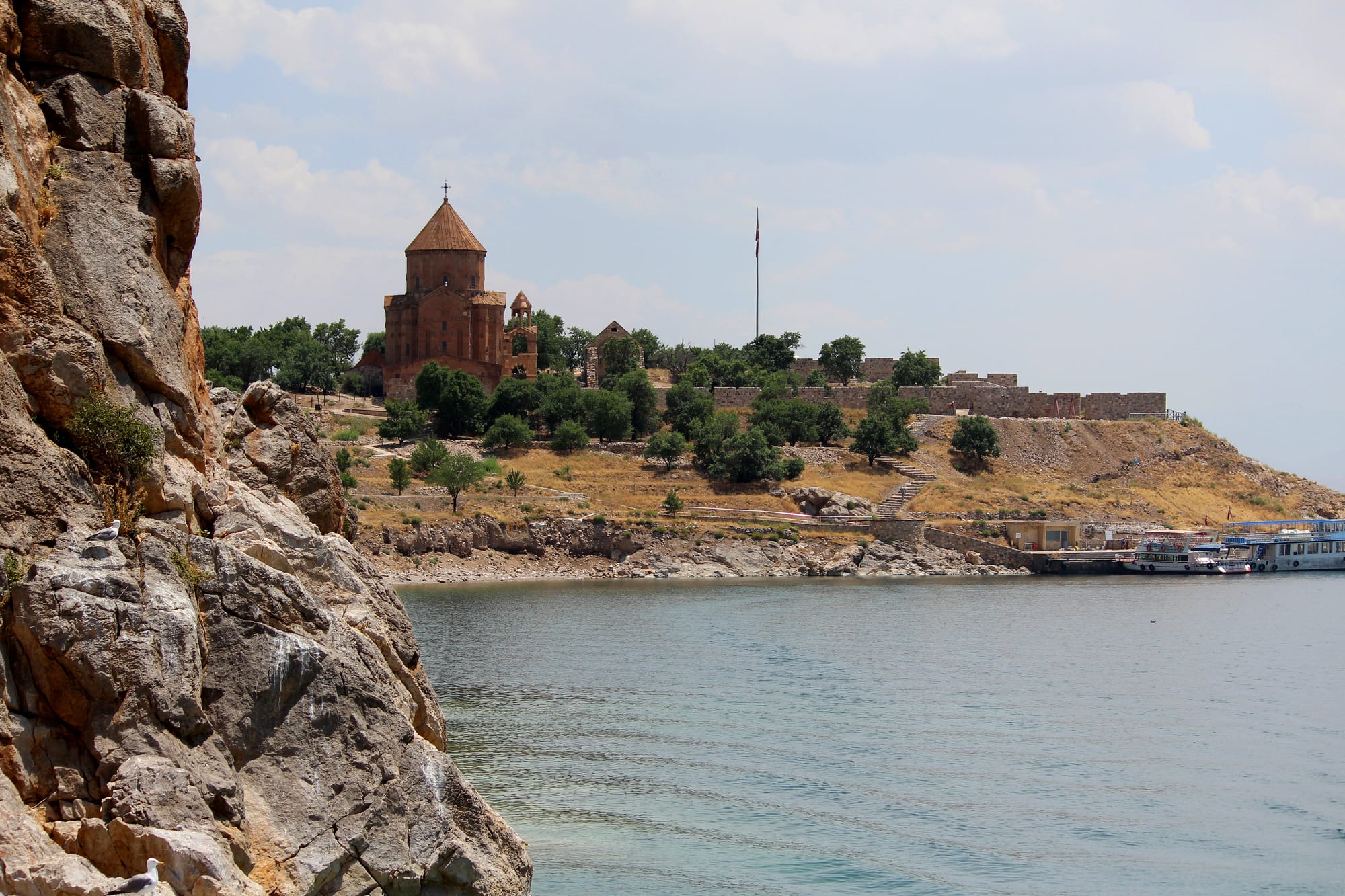
For much of the next two thousand years the region was the heartland of Armenian kingdoms, contested by Rome, Persia and Byzantium. In the 10th century King Gagik of Vaspurakan built the church on Akdamar, and the Bagratid kings made Ani a capital of churches and palaces. The Seljuks took Ani in 1064, and their victory over Byzantium at Manzikert, today's Malazgirt in Muş province, in 1071 opened Anatolia to Turkish settlement. Erzurum and Ahlat became Seljuk and later Turkmen centres, and the Ottomans secured the region in the 16th century.
From the 19th century the east was a frontier with Russia: Kars was under Russian rule from 1878 to 1918, and in the winter of 1914–15 an Ottoman army was destroyed at Sarıkamış. In 1915 the Armenian population of the region was deported and massacred in the Armenian genocide, carried out by the Ottoman government and affirmed as genocide by the vast majority of scholars; the Turkish government maintains that the deportations were a legitimate wartime measure that cannot be described as genocide. The Erzurum Congress of 1919 was an early step towards the republic. In 1937–38 a revolt in Dersim, now Tunceli, was put down by the army with great loss of life, and from 1984 the conflict with the PKK affected the south-east of the region.