History
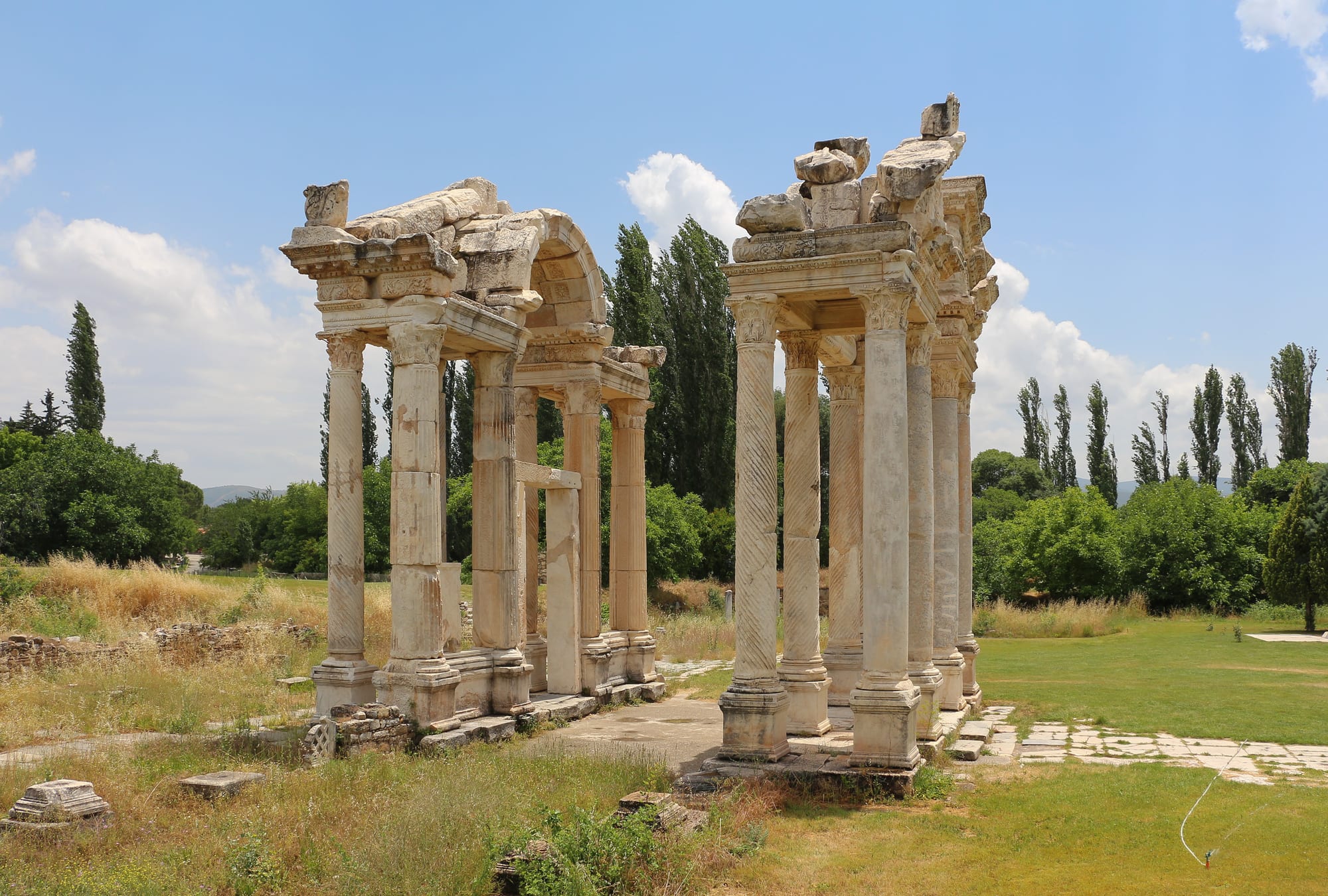
The Aegean coast was the heart of the ancient Greek east. Ionian settlers founded Ephesus, Miletus and Priene and took over Aeolian Smyrna, the city that became İzmir, and Miletus produced the first Greek philosophers. Inland, the Lydian kingdom ruled from Sardis, near today's Manisa, where Croesus's predecessors are credited with striking the first coins, before the Persians took it in the 6th century BC. Halicarnassus, now Bodrum, was the birthplace of Herodotus and site of the Mausoleum, one of the Seven Wonders of the ancient world. Pergamon flourished as a Hellenistic kingdom until its last king left it to Rome in 133 BC.
Under Rome, Ephesus became the capital of the province of Asia and one of the leading cities of the empire, and Paul preached there; Hierapolis grew rich as a spa above the Pamukkale springs. After Byzantine rule, Turkish principalities took over in the 13th and 14th centuries — the Aydınids around Birgi and Selçuk, the Menteşe in the south, the Germiyanids at Kütahya — before the Ottomans absorbed them all. The Knights Hospitaller held Bodrum's castle until 1523.
The modern age began violently. Greek forces landed at Smyrna in 1919 and pushed inland; the Turkish counter-offensive of August 1922 opened near Afyonkarahisar, and in September Turkish troops entered İzmir, where a great fire destroyed much of the city. The population exchange of 1923 emptied the Greek villages of the coast, Kayaköy among them. From the 1980s tourism transformed fishing villages such as Bodrum, Marmaris and Fethiye.