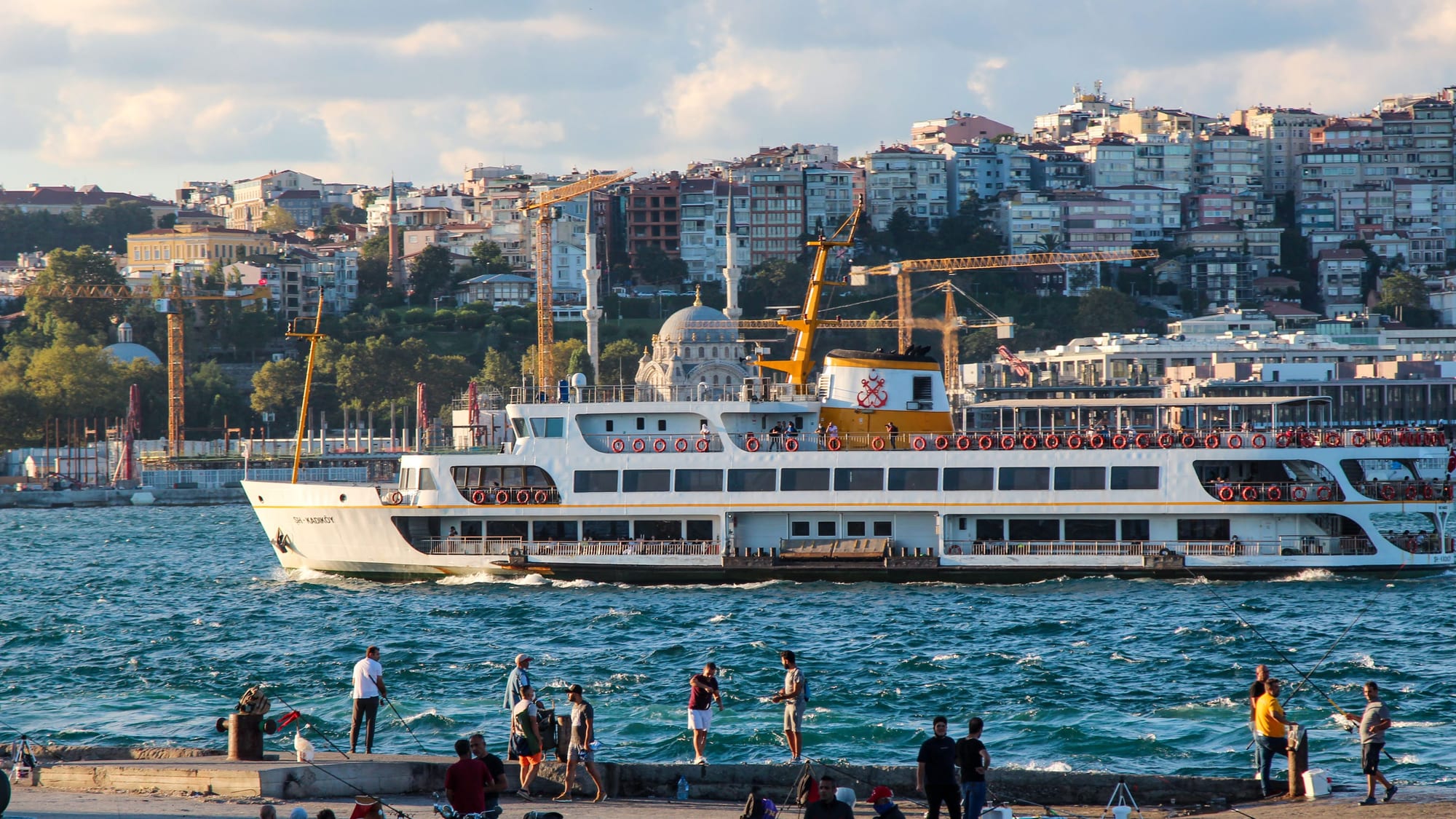
A white Istanbul city ferry crossing the blue Bosphorus in front of a hillside of apartment blocks and a domed mosque

Turkey

Istanbul & the Marmara Region

A city ferry on the Bosphorus below the Cihangir neighbourhood of Istanbul. (SegLig / Wikimedia Commons · CC BY 4.0)

Turkey's north-western corner, wrapped around the Sea of Marmara from Thrace on the European side to Bursa and the Dardanelles in Anatolia — the country's most populous and industrial region, home to Istanbul, the early Ottoman capitals of Bursa and Edirne, and the battlefields of Troy and Gallipoli.

Explore Istanbul & the Marmara Region

History

The Marmara has been a crossroads since the Bronze Age. Troy, on the mound of Hisarlık above the Dardanelles, was rebuilt again and again over some four thousand years, and its later layers are linked with the city of Homer's Iliad. Greek colonists founded Byzantium on the Bosphorus in the 7th century BC, and in 330 AD Constantine refounded it as Constantinople, capital of the Eastern Roman Empire. Nicaea, today's İznik, hosted the first ecumenical council of the Church in 325.

The Ottoman state grew up on the region's southern edge. Osman's son Orhan took Bursa in 1326 and made it the first great Ottoman capital; the dynasty then crossed into Europe and moved its seat to Edirne, the Roman Adrianople, in the 14th century. Mehmed II set out from Edirne to take Constantinople in 1453, and for the next four and a half centuries Istanbul was the imperial capital, a city of Turks, Greeks, Armenians and Jews.

The empire's end was fought out here too. In 1915 Allied fleets and armies tried to force the Dardanelles, and the Gallipoli campaign cost more than 100,000 lives before the Allies withdrew in January 1916; a young officer, Mustafa Kemal, made his name there. Allied forces occupied Istanbul after 1918, and the republic moved the capital to Ankara in 1923. The population exchange with Greece reshaped Thrace and the coast, and the Balkan migrants who arrived through the century still give the region much of its character. The İzmit earthquake of 1999 killed more than 17,000 people, a reminder of the fault beneath the sea.

Culture & Customs

This is Turkey's most mixed region. Istanbul draws people from every province, and whole neighbourhoods keep ties with a Black Sea village or an eastern town, while Thrace and the southern shore carry the traditions of families who came from the Balkans and the Caucasus. The Ecumenical Patriarchate of the Orthodox Church still sits in Istanbul's Fener district, alongside Armenian churches and synagogues, remnants of the city's older communities.

Two regional traditions are on UNESCO's intangible heritage list. Edirne's Kırkpınar oil-wrestling festival, held every early summer, sets wrestlers in leather breeches and coated in olive oil against each other in a meadow outside the city, and claims a history going back to the 14th century. Karagöz, the shadow-puppet theatre of the bawdy Karagöz and his pompous friend Hacivat, is associated with Bursa, where the pair are said to have lived and died. Hıdırellez, the spring festival of early May, is kept with particular energy by Edirne's Roma community.

Crafts follow the cities: silk in Bursa's Koza Han, İznik's revived blue-and-red tile workshops, and Istanbul's carpet dealers, calligraphers and marbled-paper artists. Football divides Istanbul into Galatasaray, Fenerbahçe and Beşiktaş loyalties, and derby days bring the city to a halt. Istanbul Turkish is the basis of the standard language, and the city's manners — quick, ironic, proud — are both admired and resented elsewhere in the country.

Daily Life

About a third of Turkey's population lives in this region. Istanbul alone has more than 15 million people, and Bursa is the fourth-largest city in the country, with around three million in its province. Kocaeli, centred on İzmit and the industrial town of Gebze, Sakarya around Adapazarı, Tekirdağ, Balıkesir and Çanakkale are the other main centres, and the towns of Thrace and Bilecik are smaller.

The region is Turkey's industrial engine. Car plants run in Bursa and around İzmit, the shores of İzmit Bay are lined with refineries, shipyards and factories, and Istanbul concentrates finance, media, trade and the head offices of most large companies. Thrace grows sunflowers and wheat, the southern shore olives and peaches, and Balıkesir is known for its cheese. Tourism runs from Istanbul's historic centre to the summer resorts of the islands and the Aegean coast.

Daily life in Istanbul is shaped by distance: long commutes by metrobus, Marmaray and ferry, traffic on the Bosphorus bridges, and rents that have climbed faster than wages. Many residents live with the knowledge that a large earthquake is expected, and the renewal of older buildings is a constant political subject. Weekends mean family breakfasts, the seaside and, for many, a drive out of the city.

Food

Istanbul's kitchen gathers the whole empire: meze and fish in the meyhane taverns of Kumkapı and Beyoğlu, balık ekmek (grilled fish in bread) at the Eminönü quay, midye dolma (mussels stuffed with spiced rice) from street vendors, and simit, the sesame-crusted bread ring, for breakfast on the move. Palace cooking survives in dishes such as hünkar beğendi, lamb stew on a smoky aubergine purée.

Bursa gave the country İskender kebap — thin slices of döner over pide bread, with tomato sauce, sizzling butter and yoghurt — along with the small, dense köfte of nearby İnegöl and kestane şekeri, candied chestnuts from the slopes of Uludağ. Edirne is known for tava ciğer, thin fried liver served with dried red peppers, and for badem ezmesi, an almond paste sweet. Tekirdağ has its own Tekirdağ köftesi and lends its name to a well-known rakı, and Adapazarı in Sakarya is known for ıslama köfte, meatballs on bread soaked in broth.

On the Aegean edge of Balıkesir, Ayvalık is olive-oil country, with its toasted sandwich, Ayvalık tostu, famous across Turkey, and höşmerim, a sweet of fresh cheese and semolina, comes from Balıkesir too. Thrace and the Şarköy coast of Tekirdağ grow wine grapes, and Bozcaada has been an island of vineyards since antiquity.

Attractions & Natural Wonders

Istanbul fills days on its own: Hagia Sophia, the Blue Mosque, Topkapı Palace and the Basilica Cistern on the historic peninsula, Sinan's Süleymaniye above the Golden Horn, the mosaics of the Chora church, the Grand Bazaar, and a ferry up the Bosphorus past Ottoman waterside mansions to Rumeli Hisarı. Across the water, the car-free Princes' Islands are a short boat ride from the city.

Bursa, on the lower slopes of Uludağ, has the Ulu Cami with its twenty domes, the tiled Green Mosque and Green Tomb, the silk hall of Koza Han and the Ottoman village of Cumalıkızık, together listed as a UNESCO World Heritage Site; above the city a cable car climbs to Uludağ's ski slopes. İznik keeps Roman walls and the church of Hagia Sophia where the Seventh Ecumenical Council met. In Thrace, Edirne's Selimiye Mosque, a UNESCO World Heritage Site, rises over the old bridges on the Tunca and Meriç rivers.

Çanakkale is the base for the Dardanelles. On the Gallipoli peninsula the cemeteries and memorials of Anzac Cove, Lone Pine, Chunuk Bair and Cape Helles face the Çanakkale Martyrs' Memorial; across the strait lie the ruins of Troy, a UNESCO World Heritage Site, and its modern museum, and further south the hilltop temple of Athena at Assos and the islands of Bozcaada and Gökçeada. The Sea of Marmara coast runs from Tekirdağ's beaches and the vineyards of Şarköy to Erdek and the Marmara islands, with the bird sanctuary at Lake Manyas inland and Ayvalık and Cunda on the Aegean shore.

Cities in Istanbul & the Marmara Region

Planning basics

Budget

Istanbul is the most expensive place in Turkey: hotel prices in Sultanahmet and Beyoğlu, museum tickets for foreigners and restaurant bills along the Bosphorus are well above the national average. Bursa, Edirne, Çanakkale and the Thracian towns cost noticeably less, and the Marmara resorts fill with Istanbul families rather than foreign tour groups, keeping prices moderate.

Daily Budget Midrange
USD 110–220 (boutique hotel in Istanbul, restaurant dinners, museum tickets, a Gallipoli day tour)
Daily Budget Shoestring
USD 40–65 (hostel or simple hotel, lokanta meals and street food, Istanbulkart transport)

Buy an Istanbulkart for the metro, trams and ferries, and budget separately for Istanbul's major museum tickets, which have risen sharply.

Safety

The region is generally safe. In Istanbul the risks are pickpockets on trams and in the bazaars, taxi overcharging, and the well-known scam in which a friendly stranger leads a visitor to a bar with an enormous bill. Political demonstrations are policed forcefully. The North Anatolian Fault runs beneath the Sea of Marmara, and a major earthquake is expected in the Istanbul area at some point.

Use metered or app-booked taxis, decline invitations from strangers to bars or clubs, stay away from demonstrations, and note the hotel's earthquake assembly point. Check current official travel advice before travelling.

Climate

The region sits between climates. Istanbul and the Marmara shore are temperate, with warm humid summers and cool damp winters when a north wind off the Black Sea can bring snow. Thrace is more continental, with colder winters in Edirne, while the Çanakkale and Ayvalık coast is Aegean in character, drier and warmer. Uludağ above Bursa holds snow for skiing in winter.

Summer
warm and humid, 26–31°C in Istanbul; hotter and drier around Çanakkale and Edirne
Winter
cool and wet, 3–10°C, with occasional snow in Istanbul and Thrace and deep snow on Uludağ

Transportation

Istanbul has two international airports, Istanbul Airport on the European side and Sabiha Gökçen on the Asian side. High-speed trains run from Istanbul through İzmit, Sakarya and Bilecik towards Ankara. Fast ferries cross the Sea of Marmara to Yalova and Mudanya for Bursa, and bridges over İzmit Bay and the Dardanelles now link the southern shore by road. Intercity buses reach Edirne in about three hours and Çanakkale in about five; ferries from Geyikli serve the island of Bozcaada.

Use the Marmaray, metro and ferries rather than taxis in Istanbul, and take the sea bus to Bursa to skip the traffic around İzmit Bay.

Best Time to Visit

April to June and September to October. Spring brings the tulip displays in Istanbul's parks and Edirne's Kırkpınar wrestling in early summer; autumn is mild and clear. 25 April is Anzac Day at Gallipoli, when dawn services draw large crowds and accommodation in Çanakkale and Eceabat is booked far ahead. July and August suit the Marmara islands and the Ayvalık coast; winter is grey but good for Istanbul's museums and for skiing on Uludağ.