💰 Budget
Şanlıurfa is inexpensive. Kebab houses, çiğ köfte counters and the bazaar make eating very cheap, city hotels are moderate, and only the restored stone-house hotels in the old town cost noticeably more. The main extra is transport to the archaeological sites: Göbekli Tepe, Karahan Tepe and Harran are usually reached by hired car and driver or on an organised trip.
- Daily Budget Midrange
- USD 70–150 (boutique hotel in the old town, restaurants, a car and driver for day trips)
- Daily Budget Shoestring
- USD 25–45 (simple hotel, kebab and lokanta meals, buses and dolmuş)
Share a driver for the Neolithic sites and Harran, and carry cash for the bazaar and village stops.
📅 Best Time to Visit
April to early June and late September to November are the comfortable months, when the plain is green or freshly harvested and the heat is bearable. Spring brings wild flowers to the Harran plain and the Nevruz celebrations in March. High summer is punishing, with long stretches above 40°C, and winter is cool and damp but quiet at the sites.
⏳ Suggested Number of Days
Two days are enough for the old town and its museums at an unhurried pace. Three or four suit visitors who want the archaeological sites and river towns of the surrounding province as well. Summer heat slows everything and adds time.
- First Visit
- 2 days
- With Surroundings
- 3–4 days
🚆 Transportation
The old town is walked; everything else is reached by city bus, minibus or taxi. Intercity buses run from the terminal to Gaziantep in about two hours, to Mardin in about three and to Diyarbakır in around three. Minibuses reach Harran and the nearer villages, but the Neolithic sites are far easier with a car.
Hire a car and driver or join a trip for Göbekli Tepe, Karahan Tepe and Harran in one outing, and carry a passport for checkpoints.
🛬 Airport & Station Connections
Şanlıurfa GAP Airport lies about 35 kilometres north-east of the city, with flights to Istanbul and Ankara and a shuttle bus into the centre. Buses connect the city with Gaziantep, Mardin, Diyarbakır and Adana through the day, and with Istanbul and Ankara overnight. Air travel across the wider region has been disrupted since the war that began in February 2026, and flight schedules can change at short notice.
🚶 Walkability
The old town is a walking district: the pools, the castle rock, the mosques and the bazaar are all within fifteen minutes of one another, although lanes are narrow, stepped in places and busy with handcarts. The modern city beyond is spread out along wide avenues and is better crossed by bus or taxi. Heat is the limiting factor for much of the year, and midday walking is unwise in summer.
🛡️ Safety
Şanlıurfa receives many domestic visitors and pilgrims and is generally calm, with the usual big-city risks of pickpocketing in crowded bazaar lanes. The province reaches the Syrian border, and governments advise against travel to the border areas; military and police checkpoints are routine on the roads. The city was affected by the February 2023 earthquakes. Summer heat is a serious health risk.
Stay away from the Syrian border area and from demonstrations, carry identification for checkpoints, and avoid sightseeing in the midday heat. Check current official travel advice before travelling.
🌦️ Climate
A hot-summer Mediterranean climate on the edge of the Mesopotamian plain, with very hot, dry, cloudless summers and cool, damp winters; almost all the rain falls between November and April.
- Summer
- very hot and dry — July and August days commonly reach 38–43°C, with warm nights
- Winter
- cool and rainy — January days are usually around 5–10°C, with frost at night and rare snow
🤝 Local Customs
This is one of the more conservative cities in Turkey. Modest dress is expected, especially in the old town and at the sacred pools, where women should cover their heads when entering mosques and shorts are out of place for anyone. Alcohol is served in very few places and is not sold openly. Hospitality is emphatic, and an offer of tea or mırra coffee is hard to refuse politely.
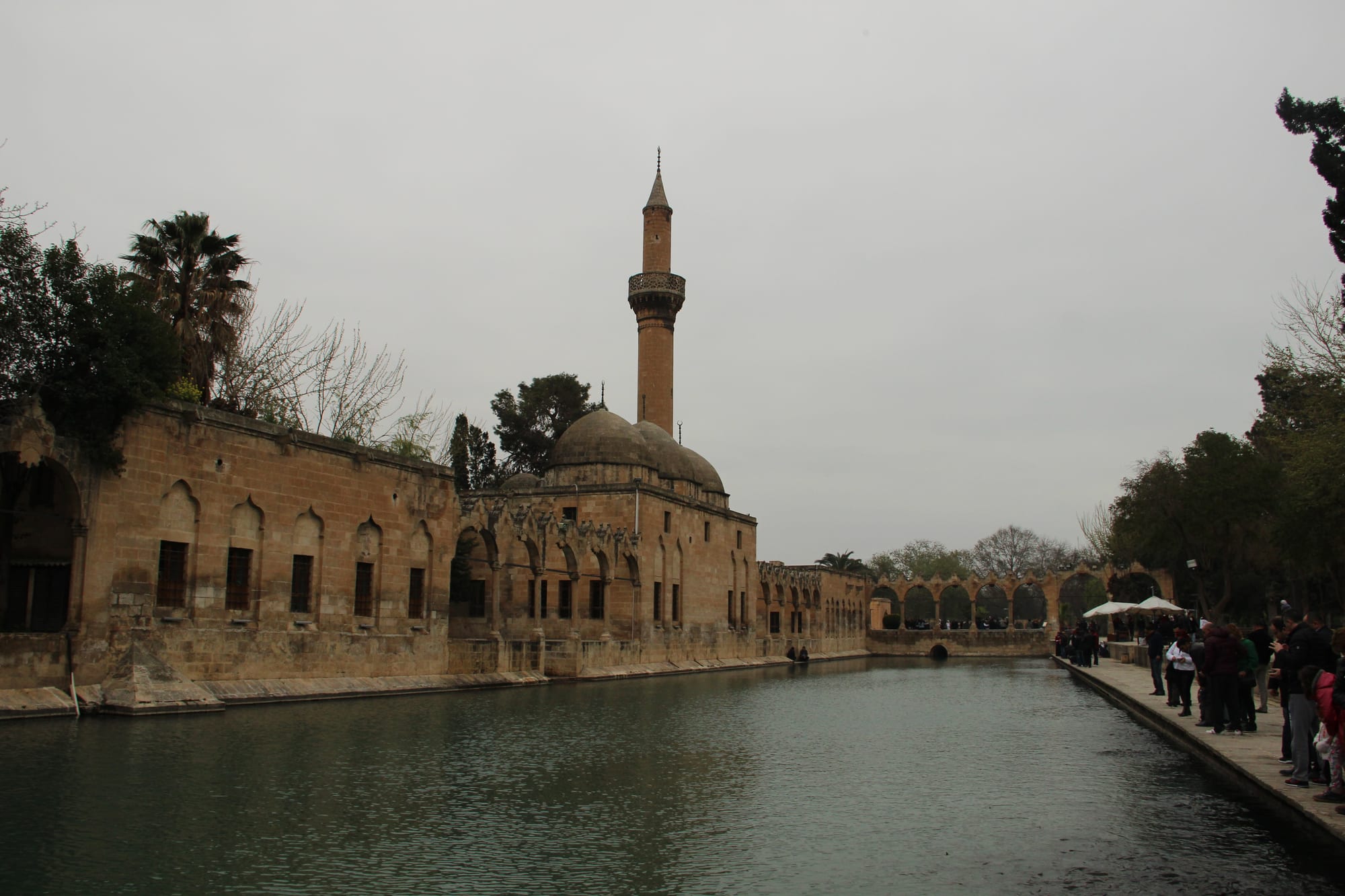
Do not feed or disturb the carp at Balıklıgöl, remove shoes before entering a mosque, ask before photographing people, and avoid eating or drinking in the street during Ramadan daylight hours.
💳 Common Payment Methods
The currency is the Turkish lira. Cards and contactless payment work in hotels, supermarkets and larger restaurants, and ATMs are common in the modern centre. The bazaar, small kebab counters, village shops and shared taxis run on cash, so lira in small notes is essential for a day in the old town or on the plain.