💰 Budget
Manchester is cheaper than London but one of the pricier cities in the North for rooms, which rise steeply on big match days, concert nights and during the Christmas markets. The centre is walkable.
- Daily Budget Midrange
- USD 170–310 (city-centre hotel, restaurant dinners, a stadium tour or concert, trams)
- Daily Budget Shoestring
- USD 70–120 (hostel, café and market meals, trams and buses)
Walk the centre, and book rooms well ahead for home matches and big concerts.
📅 Best Time to Visit
Any season works, since most sights are indoors. Summer brings long evenings, Manchester Pride in August and, in alternate years, the Manchester International Festival; the football season runs from August to May; and November and December bring the Christmas markets.
⏳ Suggested Number of Days
Most first visits take two or three days. About four allow time for Salford and the surrounding towns as well; a match, a concert or a festival adds to the number.
- First Visit
- 2–3 days
- With Surroundings
- 4 days
🚆 Transportation
The Metrolink tram network, begun as part of the regeneration of the late 1980s and early 1990s, runs across the city centre and out to Salford, the airport, Old Trafford and the suburbs, and buses cover the rest. The city's four central stations — Piccadilly, Victoria, Oxford Road and Deansgate — handle local and long-distance trains.
Walk the centre, and use the tram for Salford Quays, the stadiums and the airport.
🛬 Airport & Station Connections
Manchester Airport, one of the UK's busiest, lies 7 miles south-west of the city centre, linked by train and tram. Manchester Piccadilly has direct trains from London Euston and across the North; the central station group is the third busiest in the UK.
🚶 Walkability
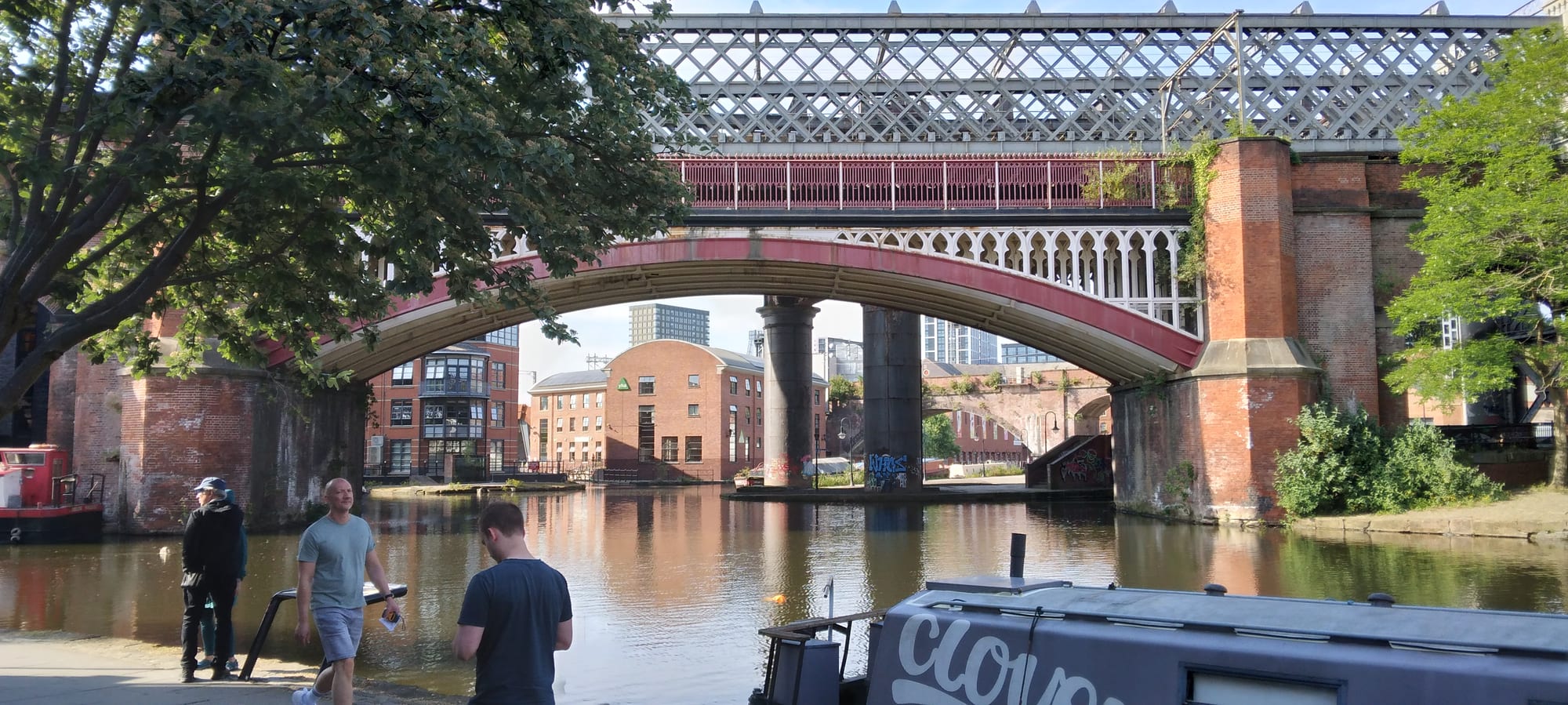
The city centre is compact and mostly flat: Piccadilly, the Northern Quarter, the cathedral, Deansgate and Castlefield are all within a short walk, and canal towpaths link several districts. The universities and the Curry Mile are a longer walk or short bus ride south along Oxford Road.
🛡️ Safety
The UK is generally safe, with the main risks being pickpocketing and phone theft in crowded parts of London and other cities, occasional late-night antisocial behaviour, and drink-related trouble around nightlife. In Manchester these risks concentrate in the busy city centre, especially around the nightlife streets at weekends and in match-day crowds.
Keep phones secure in crowds and on trams, and use licensed taxis late at night. Check current official travel advice before travelling.
🌦️ Climate
A mild, damp climate with frequent rain, though its rainy reputation is only partly deserved. Extremes are rare: the lowest temperature on record is −17.6°C, in January 2010, and the highest 38.0°C, in July 2022.
- Summer
- mild — summer daytime temperatures regularly top 20°C, and occasionally pass 30°C
- Winter
- cool — snowfalls are not common in the city, and the record low is −17.6°C, in January 2010
🤝 Local Customs
Mancunians are proud of their city's independence and of its music and football, and loyalties between United and City divide families and workplaces. Greater Manchester has the largest Jewish population in Britain outside London; the city has large South Asian, Chinese and Irish communities and the largest student population in Europe.
Order and pay at the bar in pubs, and keep football colours low-key around rival grounds on match days.
💳 Common Payment Methods
The currency is the pound sterling. Cards and contactless payment are widely used, and cash machines are easy to find.