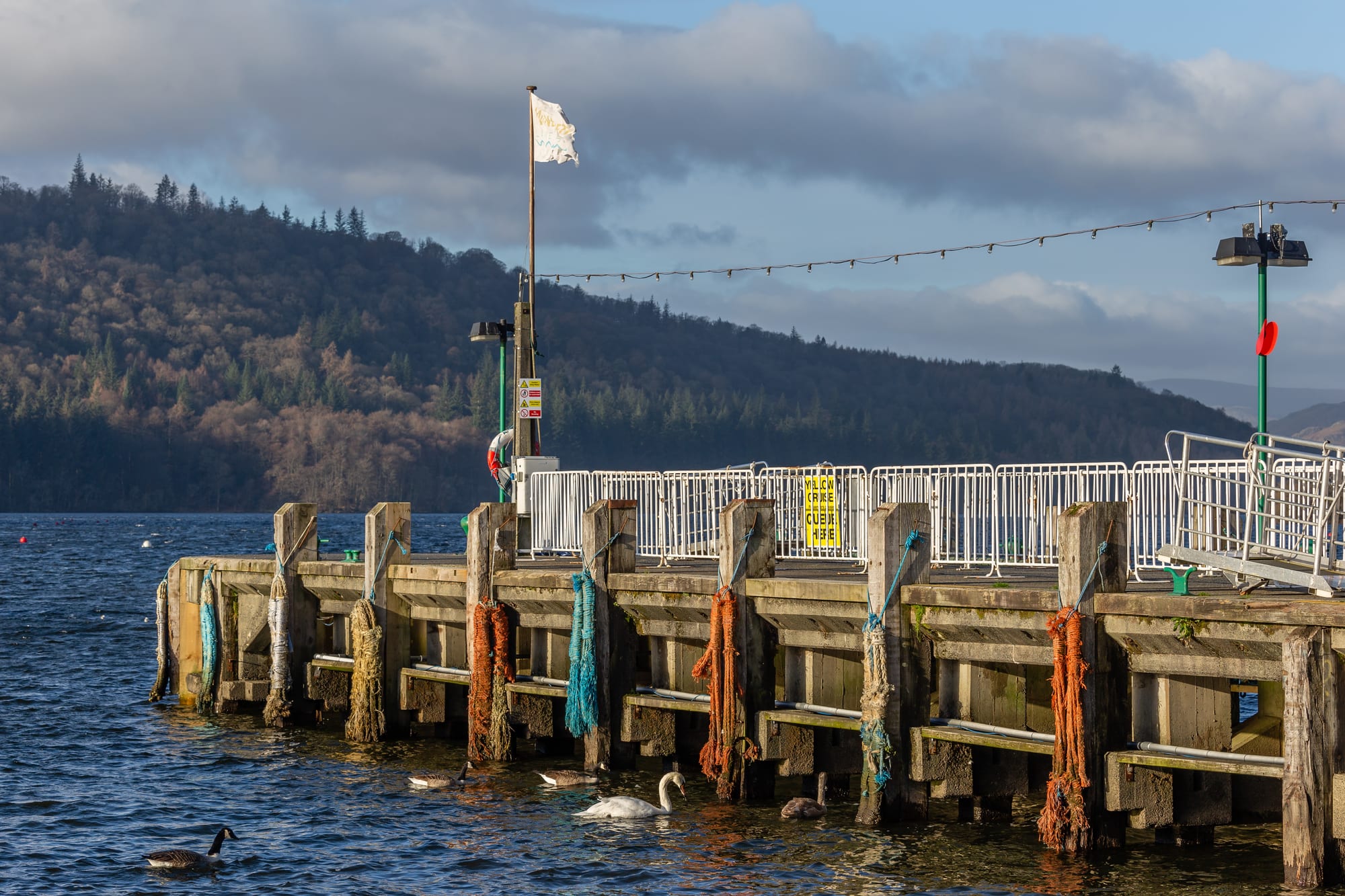
A wooden pier on a lake with ropes on its posts and a swan below, in front of wooded hills under a cloudy sky

North West England, United Kingdom

Windermere

A pier in Bowness Bay, on the lakeshore of Windermere and Bowness. (Michal Klajban / Wikimedia Commons · CC BY-SA 4.0)

A small Lake District town in Cumbria, about half a mile from the lake whose name it took when the railway arrived in 1847. With the older lakeside town of Bowness-on-Windermere it forms one urban area, where boats leave the piers for England's largest lake and fell walks start from the edge of town.

Neighbourhoods

  • Windermere town
    • Close to public transport
    • Walkers
    • Quiet and residential

    The railway town around the station, with shops, cafés and guesthouses. Orrest Head rises just behind it, and buses for the rest of the Lakes stop by the station.

    Open in Maps
  • Bowness-on-Windermere
    • First-time visitors
    • Lakeside
    • Boat trips

    The older lakeside town below, with the piers of Bowness Bay, the medieval St Martin's Church and the World of Beatrix Potter. It is the busiest part of the area in summer, with boats, shops and places to eat along the shore.

    Open in Maps
  • Ferry Nab and the south shore
    • Quiet lake views
    • Ferry crossing

    The eastern landing of the Windermere Ferry, which crosses the lake at about its midpoint to Ferry House at Far Sawrey on the western shore.

    Open in Maps

Things to do

Lake and lakeshore

  • Windermereattraction

    The largest lake in England by length, area and volume, about 11 miles long and a mile wide at its widest, sailed by Windermere Lake Cruises' boats from Bowness.

    Open in Maps
  • Windermere Ferrytransit hub

    A cable ferry carrying up to 18 cars and over 100 passengers across the lake from Ferry Nab to Far Sawrey in under ten minutes.

    Open in Maps
  • Windermere Jetty Museummuseum

    The former Windermere Steamboat Museum on the eastern shore between Bowness and Windermere town, reopened in 2019 after redevelopment as the Windermere Jetty: Museum of Boats, Steam and Stories, with about 40 boats from the late 18th century to the present.

    Open in Maps

In the towns

  • Orrest Headviewpoint

    A fell climbed directly from Windermere town near the station, the first fell Alfred Wainwright climbed.

    Open in Maps
  • St Martin's Churchlandmark

    The ancient parish church of Bowness, built in 1483 on an older foundation.

    Open in Maps
  • The World of Beatrix Pottermuseum

    An attraction in Bowness dedicated to the children's author and her characters, opened in 1991.

    Open in Maps
  • Blackwelllandmark

    An Arts and Crafts house by Baillie Scott near Bowness, with views over the lake, open to visitors since 2001 and holding regular exhibitions.

    Open in Maps

Short trips around the lake

  • Hill Toplandmark

    Beatrix Potter's farmhouse in Near Sawrey, across the lake by the ferry.

    Open in Maps
  • Amblesideattraction

    The town at the head of the lake, reached by boat from Bowness, a base for hiking and mountaineering.

    Open in Maps
  • Lakeside and Haverthwaite Railwayattraction

    The restored railway that meets the boats at Lakeside, at the southern end of the lake.

    Open in Maps
  • Dove Cottagemuseum

    William Wordsworth's home at Grasmere, where he wrote much of his best-known poetry.

    Open in Maps

Eat and drink

Long-standing places and food districts in Windermere. Hours, ratings and directions come from your maps app, always current.

Lake District classics

  • Cumberland sausagerestaurant

    The long, coiled Cumbrian sausage, which has protected status, served in local pubs.

    Open in Maps
  • Kendal mint cakemarket

    A sugary peppermint bar carried by fell walkers and climbers, made in nearby Kendal.

    Open in Maps

Where to eat

  • Bowness lakefrontneighborhood

    Cafés, pubs and restaurants around the bay and the streets climbing from it.

    Open in Maps
  • Windermere town centreneighborhood

    Cafés, pubs and restaurants on the streets around the railway station.

    Open in Maps

Experience Windermere

History

Before the railway there was no town here; the area, in the historic county of Westmorland, was known as Birthwaite. The older settlement was Bowness on the lake shore below, whose parish church of St Martin was built in 1483 on an older foundation. In 1847 the Kendal and Windermere Railway opened a station and a hotel at Birthwaite, named after the lake, and a new town grew around them to serve visitors.

Wordsworth had published his Guide to the Lakes in 1810, and the railway opened the lake to tourists. Passenger boats sailed the length of the lake, and Bowness grew with hotels and boarding houses that employed much of its permanent population. Arthur Ransome later used Bowness as 'Rio' in his Swallows and Amazons books.

From 1894 Windermere was governed by an urban district council, which in 1905 absorbed Bowness's own council, and the two places now form one urban area. In 1974 the area left Westmorland for the new county of Cumbria; in 2020 the merged parish was renamed Windermere and Bowness, and in 2023 South Lakeland council was abolished and replaced by Westmorland and Furness.

Culture & Customs

The lake defines local life. Windermere Lake Cruises runs three of the original large railway-era boats and a fleet of smaller launches; though often called steamers, they are now diesel motor vessels. The Windermere Ferry has long carried traffic across from Ferry Nab, and the western shore once marked the boundary between Westmorland and Lancashire. Bowness was the centre of the boat-building industry that provided the sailing yachts, rowing boats and steam launches used on the lake, and that history is displayed at the Windermere Jetty Museum.

Literature is part of the area's identity. Beatrix Potter lived at Hill Top across the lake, and the World of Beatrix Potter in Bowness was opened in 1991 by the comedian Victoria Wood. Wordsworth's Dove Cottage at Grasmere lies up the valley, and readers of Arthur Ransome recognise Bowness from his books.

Cumbria's own traditions run through the wider area: Cumberland wrestling, fell running and hound trails at the Grasmere Sports each August, first held in 1852.

Daily Life

About 4,800 people lived in Windermere at the 2021 census, and the joint parish with Bowness is larger. Tourism is the main business, and the towns fill with visitors in summer and school holidays while staying quieter in winter.

Many residents work in hotels, guesthouses, shops, restaurants and on the boats. Children go to The Lakes School, the state secondary on the outskirts, or the independent Windermere School.

Buses link the town to Kendal, Ambleside, Keswick and beyond, and trains run down the branch line to Oxenholme for the main line. Kendal, the nearest large town, has the larger shops and services. Local radio comes from BBC Radio Cumbria and from Lake District Radio, which broadcasts online from studios in Kendal, and the Westmorland Gazette and North West Evening Mail cover local news.

The lake shapes the rhythm of the year: boats and walkers from spring to autumn, a quieter season in winter when many residents' work slows down.

Food

The Lake District's food is hearty, built for walkers and hill farmers. The Cumberland sausage, a spicy pork sausage traditionally very long and sold rolled in a flat coil, has had protected status as "Traditional Cumberland sausage" since 2011. Herdwick lamb comes from the Herdwick, the fell sheep native to the Lake District, prized for living solely on forage. Grasmere gingerbread has been sold in the village since the early 19th century, and sticky toffee pudding, widely served in the Lake District, has become a culinary symbol of the area; a take-home version was developed in Cartmel in 1989.

In Windermere and Bowness most of the eating is done in pubs, tea rooms and cafés along the bay and around the station, serving walkers and day-trippers. Kendal Mint Cake, a sugar-based confection flavoured with peppermint, comes from the market town of Kendal to the east and is popular with climbers and mountaineers as a source of energy.

Planning tools

Budget

The Lake District is the expensive corner of North West England, and Windermere and Bowness fill up in summer and school holidays, when rooms and parking are at their dearest. Walking costs nothing; lake cruises, museums and Beatrix Potter attractions add up.

Daily Budget Midrange
USD 170–320 (guesthouse or inn, restaurant dinners, a lake cruise and museum entry)
Daily Budget Shoestring
USD 70–120 (hostel or budget guesthouse, café and pub meals, buses and walking)

Visit midweek or outside the school holidays for lower prices, and arrive by train to avoid summer parking problems.

Best Time to Visit

May to September is best for the lake and the fells, with long days for walking, though July and August are crowded. Spring and autumn bring fewer visitors. Winter is quiet and damp.

Suggested Number of Days

Most first visits take about two days. Four or five days make the town a base for the wider Lake District; the weather and how much walking is planned change the number most.

First Visit
2 days
With Surroundings
4–5 days

Transportation

Windermere station is the hub for trains and buses. Stagecoach buses run from the town to Bowness, Ambleside, Grasmere, Keswick, Kendal, Coniston, Penrith, Lancaster and Barrow-in-Furness, and boats from Bowness call at Ambleside and Lakeside. The A591 runs through the town from Kendal to Keswick.

Leave the car and use buses and boats; the station is about a mile and a quarter from the lake's Waterbus jetty.

Airport & Station Connections

Windermere railway station, opened in 1847, is the end of a branch line from Oxenholme on the West Coast Main Line, with Northern trains on the branch and some services continuing to Manchester Airport. Visitors arrive by train via Oxenholme or by car along the A591.

Walkability

Windermere town is compact, and Bowness is a walk downhill through the joined-up streets or a short bus ride. Orrest Head starts from the edge of town. The streets are hilly, and pavements on the lanes around the lake are narrow or missing.

Safety

The UK is generally safe, with the main risks being pickpocketing and phone theft in crowded parts of London and other cities, occasional late-night antisocial behaviour, and drink-related trouble around nightlife. Windermere itself is a quiet town; the real hazards are on the fells, where fog, sudden storms and steep ground catch walkers out, and on the lake.

Carry proper clothing, a map and a forecast on the fells, and follow boat-hire safety advice on the lake. Check current official travel advice before travelling.

Climate

A mild, wet climate: the Lake District is the wettest part of England, and snow typically falls on about 20 days a year in its valleys.

Summer
mild — in nearby Kendal, July and August average highs of about 19°C and lows of about 11°C
Winter
cool and damp — in nearby Kendal, January and February average highs of about 6°C and lows of about 1°C

Local Customs

Windermere is a tourist town where walkers in boots are welcome in most pubs and cafés. The countryside code matters around farms: gates are left as found and dogs kept on leads near sheep. Many local people work in tourism.

Order and pay at the bar in pubs, and park only in marked spaces in the narrow lanes.

Common Payment Methods

The currency is the pound sterling. Cards and contactless payment are widely accepted in shops, pubs, cafés and on lake cruises, and the town has cash machines; a little cash helps in village shops and some car parks.