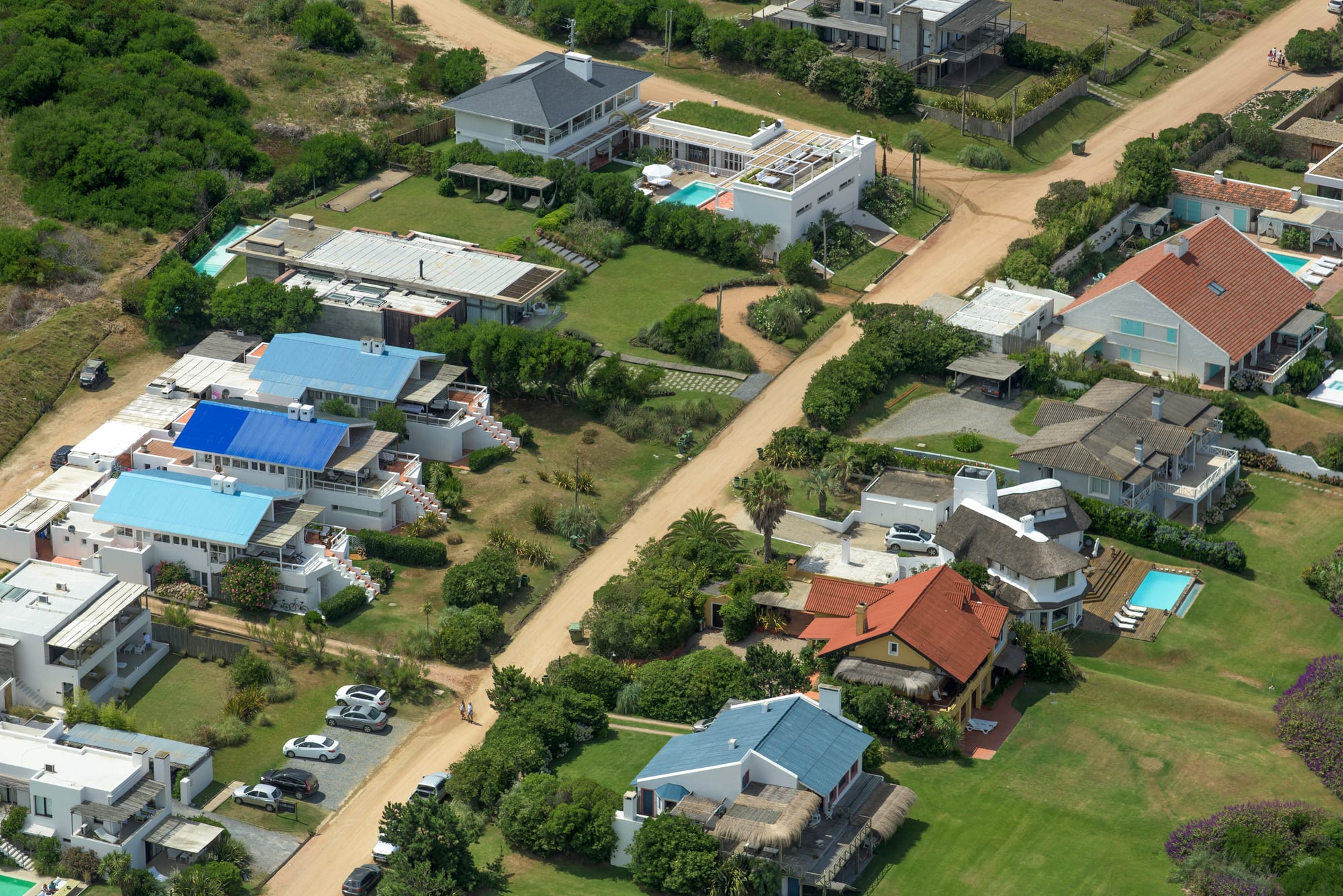
Aerial view of low houses with gardens, swimming pools and palm trees along sandy unpaved streets

Punta del Este & the East Coast, Uruguay

José Ignacio

Houses and sandy streets of José Ignacio seen from the air. (Jimmy Baikovicius / Wikimedia Commons · CC BY-SA 2.0)

A small resort on a rocky point of Uruguay's Atlantic coast, about 30 km east of Punta del Este, between the José Ignacio and Garzón lagoons. It grew around an 1877 lighthouse, drew Argentine summer visitors from the 1960s and well-known names after them, and now has fewer than 300 permanent residents and exclusive restaurants.

Neighbourhoods

  • The point and the lighthouse
    • First-time visitors
    • Best for food
    • Walks

    The village proper, on a small peninsula about two kilometres long that ends at the rocky tip where the lighthouse stands. Its sandy streets hold summer houses, shops and the restaurants that made the place known, with sea on three sides.

    Open in Maps
  • Playa Brava side
    • Beaches
    • Surf

    West of the peninsula, a wide beach exposed to the open Atlantic and known for its big waves, running back towards the José Ignacio lagoon.

    Open in Maps
  • The coast towards Laguna Garzón
    • Quiet and residential
    • Beaches

    East of the village, summer farm estates and the resort of Arenas de José Ignacio sit behind long, empty beaches that run to the Garzón lagoon and its circular bridge.

    Open in Maps

Things to do

Famous landmarks

  • José Ignacio Lighthouselandmark

    A cylindrical stone tower about 25 metres high, first lit in 1877 on the rocky tip of the point to warn ships off the surrounding reefs, and the symbol of the village.

    Open in Maps
  • Laguna Garzón Bridgelandmark

    A ring-shaped road bridge designed by Rafael Viñoly and opened in December 2015, replacing a small two-car ferry across the Garzón lagoon on the border with Rocha.

    Open in Maps

Beaches and lagoons

  • Playa Bravabeach

    The broad surf beach on the west side of the peninsula, known for its width and large waves.

    Open in Maps
  • Laguna José Ignaciopark

    A coastal lagoon west of the village, cut off from the ocean by a sandbank and listed as an Important Bird Area for its Chilean flamingos and wintering Olrog's gulls.

    Open in Maps
  • Laguna Garzónpark

    The lagoon on the Rocha border east of the village, part of Uruguay's National System of Protected Areas and a birdwatching site.

    Open in Maps

Short trips from the village

  • Garzónattraction

    A small inland village on the Arroyo Garzón, declared a pueblo in 1936, where the Argentine chef Francis Mallmann opened a hotel and restaurant in 2004.

    Open in Maps
  • Punta del Esteattraction

    Uruguay's best-known resort, on a peninsula about 30 km to the west, with its harbour, high-rise seafront and the beaches of Playa Mansa and Playa Brava.

    Open in Maps

Eat and drink

Long-standing places and food districts in José Ignacio. Hours, ratings and directions come from your maps app, always current.

José Ignacio classics

  • Restaurants of the villageneighborhood

    The village's restaurants, many of them opened as Argentine visitors and well-known summer residents arrived, are known for the fish of the day, shellfish and dishes made with seaweed.

    Open in Maps
  • Garzón's restaurantsneighborhood

    In the inland village of Garzón, the Argentine chef Francis Mallmann opened a restaurant in an old property in 2004.

    Open in Maps

Experience José Ignacio

History

There are several stories behind the name. One says it came from an early settler, José Ignacio Sylveira; another from an Indigenous cattle driver from the Jesuit missions. In 1763 Pedro de Cevallos set up a state-owned estancia, or ranch, on the land and gave it the name José Ignacio. The point was a danger to shipping, its rocky tip ringed by reefs.

To stop such losses a lighthouse was lit on the tip of the peninsula on 1 June 1877. It was run by a private company until 1907, when the concession ended and the state took it over. At that time the place could be reached only on horseback, by carriage or by sea. The surveyor Eugenio Saiz Martínez divided the first building plots in 1907, but the first brick houses and a general store, or pulpería, were not built until the late 1920s.

A road to Route 9 was built in 1954, with the first bus service to San Carlos. From the 1960s Argentine summer visitors came, and over time many well-known people built holiday homes here, followed by exclusive restaurants. In December 2015 the circular Laguna Garzón Bridge replaced the small ferry to the east, opening the Rocha shore beyond to new development.

Culture & Customs

José Ignacio sits between the two cultures of Uruguay's east coast. Like Punta del Este to the west it is part of the international summer scene of Argentine visitors, late dinners and second homes; like the Rocha villages to the east it keeps sandy streets, low houses and a tradition of fishing from the shore and from boats. Its restaurants are part of that identity: the first exclusive ones followed the well-known people who built holiday homes here from the 1960s onwards.

The lighthouse is the village's emblem — the Uruguayan post office issued a stamp in its honour in 1997 — and watching the sunset from the point or the beaches is a summer habit.

The wider Uruguayan customs hold here too: mate carried in a thermos and shared, long grills at weekends, Rioplatense Spanish, and an understated manner that dislikes show even among the wealthy. Rhythm is set by the calendar more than the clock: crowded and late-night in January, then almost empty for much of the year.

Daily Life

The 2011 census counted 292 permanent residents, and the village belongs to the municipality of Garzón, which also includes the inland village of Garzón. East of the point, summer farm estates with luxurious houses spread along the coast towards the Garzón lagoon. In summer the number of people staying rises many times over, as houses are let or opened by their owners.

The economy is tourism and building: renting and looking after holiday houses, restaurants, shops and construction, with fishing alongside. In summer extra water is drawn for the village, supplementing the supply from the Laguna Blanca near Manantiales. Buses link the village with Maldonado, Punta del Este, San Carlos and Montevideo, but most summer visitors arrive by car.

The rhythm is seasonal above all: a busy six to eight weeks from Christmas, then a long quiet stretch when many houses are shut. Since the opening of the Garzón bridge, property development has spread across the lagoon to the Rocha side.

Food

With water on almost every side, José Ignacio has always eaten from the sea, and its restaurants are known above all for the catch of the day, shellfish and seaweed. Along this coast that means corvina and brótola, a white fish, grilled or fried; rabas, rings of battered squid; mussels steamed in white wine; and, on the Rocha side, buñuelos de algas, fritters made with seaweed.

The Uruguayan staples are here as well. The parrilla, or grill, serves beef, chorizo and morcilla (blood sausage), and the chivito — the steak sandwich layered with ham, cheese, egg and salad — is said to have been invented in a Punta del Este restaurant in the 1940s. Empanadas and fainá, a thin chickpea-flour flatbread eaten with pizza, are everyday food, and dulce de leche fills alfajores and most desserts.

Tannat, the dark red grape that is Uruguay's flagship wine, is widely poured. Mate is drunk at any hour, and grappamiel, grappa with honey, is the warming spirit of cooler evenings.

Planning tools

Budget

José Ignacio is one of the most expensive places on the Uruguayan coast in late December and January, when rents and restaurant bills peak. The same village is far cheaper from March to November, when much of it closes and the beaches empty. A car, or taxis, adds to the cost of reaching the beaches and lagoons outside the village.

Daily Budget Midrange
USD 150–350 (house, cabaña or small hotel, seafood dinners, a hire car); January can exceed this
Daily Budget Shoestring
USD 60–110 (simple room or cabaña outside the peak, bus fares, empanadas and grilled fish); much more in January

Book January stays months ahead, or come in December or March for the same beaches at a fraction of the price.

Best Time to Visit

The beach season runs from mid-December to early March and peaks in the first weeks of January, when the village is at its busiest and dearest. February is calmer and March often has settled weather with thin crowds. Outside summer many restaurants and houses close and the village is very quiet.

Suggested Number of Days

The village itself is small and most visitors spend a day or two, often as part of a stay on the Maldonado coast. Three or four days allow time for the lagoons, the inland villages and the neighbouring resorts; out of season a shorter stay is usual.

First Visit
1–2 days
With Surroundings
3–4 days

Transportation

The village sits on Route 10. A car or taxi is the practical way to reach the beaches, the lagoons and the inland villages. Local bus line 14 runs along Route 10 to Punta del Este and Maldonado, and another line links the village with San Carlos. Inside the village, distances are short and the streets are largely sand.

In January allow extra time on Route 10 and the approaches to Punta del Este.

Airport & Station Connections

José Ignacio is about 30 km east of Punta del Este and Maldonado along Route 10. The nearest airport is Punta del Este's Capitán Curbelo International at Laguna del Sauce, 14 km north-west of Maldonado, with most flights from Buenos Aires; Montevideo's Carrasco International is the main international gateway. Long-distance buses run by COT and COPSA link the village with Punta del Este, Maldonado and Montevideo.

Walkability

The village on the point is small enough to cross on foot, and the lighthouse, the shops and the beaches either side are a short walk apart. The lagoons, the Garzón bridge and the estates to the east are spread along Route 10 and need a car or bicycle.

Safety

Uruguay is among the safest countries in Latin America, though property crime and, in some Montevideo neighbourhoods, violent crime have risen with drug-trafficking activity. Violent crime is rare on this coast; summer brings some theft from cars, beach bags and rented houses. The main hazards are natural — rip currents and big waves on the Atlantic beaches, rocks and reefs around the point, and strong summer sun.

Swim where lifeguards are posted, stay off the rocks at the point in heavy seas, and keep valuables out of sight in cars and rentals. Check current official travel advice before travelling.

Climate

An oceanic climate with pleasant summers and cool winters. The exposed Atlantic shore is windy, the sea is cool even in summer, and storms from the south-east bring heavy surf.

Summer
December–February, mild to warm; at nearby Punta del Este February, the warmest month, averages about 22°C
Winter
June–August, cool, windy and damp; at nearby Punta del Este July averages about 12°C

Local Customs

Spanish is spoken in its Rioplatense form, with vos and the 'sh' sound for ll and y; English is understood in tourism. Mate, the bitter herbal infusion shared from a gourd, is drunk everywhere, including on the beach. Summer evenings run late, and dinner in January often starts close to midnight. Dress is casual and beach clothes are normal in the village.

Ask before photographing fishermen at work or people outside their homes, and keep beaches and dunes free of litter.

Common Payment Methods

The currency is the Uruguayan peso (UYU). Cards are widely accepted and US dollars are taken for larger purchases in tourist areas. ATMs are common in Uruguay, but the village is small, so cash is best drawn in Punta del Este or Maldonado before arriving.