💰 Budget
Gijduvan is a cheap place to spend time, and most visitors come for a few hours from Bukhara rather than staying the night. Costs are a meal, tea, a modest workshop fee if joining a pottery class, and transport. Ceramics bought directly from a workshop are the main expense, and prices rise with the size and the amount of hand painting.
- Daily Budget Midrange
- USD 70–150 (a room in a craft-family guesthouse, meals, a pottery session and a car with driver from Bukhara)
- Daily Budget Shoestring
- USD 20–35 (guesthouse or homestay room, bazaar food, shared taxis)
Carry cash, as cards are rarely accepted outside Bukhara, and agree the price for a workshop visit or a ceramic piece before starting.
📅 Best Time to Visit
April to May and September to October, when the days are warm rather than fierce and the fields and orchards around the town are at their best. Late summer brings the melon and grape harvest to the bazaar but very heavy heat. Winter is cold and grey, and the square is quiet apart from pilgrims.
⏳ Suggested Number of Days
The square, a workshop visit and the bazaar fill a half day, which is how most people see the town on the road between Bukhara and Samarkand. A night in a craft-family guesthouse and a slower look at the district's monuments stretch it to a day or two.
- First Visit
- Half a day
- With Surroundings
- 1–2 days
🚆 Transportation
The centre is small and walkable, with the madrasa, the shrine and the bazaar close together. Shared taxis and minibuses run frequently along the main road to Bukhara and Navoiy and gather near the market; within the district, taxis are hired by the trip. Most visitors arrive in a car with a driver as part of a longer journey.
Fix the fare before getting into a shared car, and arrange a driver to wait if visiting workshops on the outskirts.
🛬 Airport & Station Connections
Gijduvan lies on the main road between Bukhara and Navoiy, about 45 kilometres from Bukhara — roughly an hour by car or shared taxi. The nearest airport is at Bukhara, and the nearest fast-train stop is Bukhara's main station, 12 kilometres from the city at Kogon. Drivers between Samarkand and Bukhara often break the journey here.
🚶 Walkability
Everything of interest in the centre is within about ten minutes on foot, on flat ground and mostly on paved surfaces around the square. The main road through town is busy with lorries, pavements are inconsistent, and the workshops and villages on the outskirts are too far apart to reach comfortably without a vehicle.
🛡️ Safety
The town is quiet and crime against visitors is rare. The practical concerns are traffic on the highway that runs through the centre, summer heat with little shade in the square, and the usual risk of being overcharged when buying ceramics or hiring a car.
Cross the main road with care, carry water and a hat in summer, and agree prices in advance for crafts and transport. Check current official travel advice before travelling.
🌦️ Climate
A hot desert climate much like Bukhara's, with very dry summers, cold winters and a short spring. Rain falls mostly between December and April, and dust blows off the surrounding plain in the hottest months.
- Summer
- very hot and dry, often 35–42°C by day, with warm nights and almost no rain
- Winter
- cold, around -3–8°C by day, with night frosts and occasional light snow
🤝 Local Customs
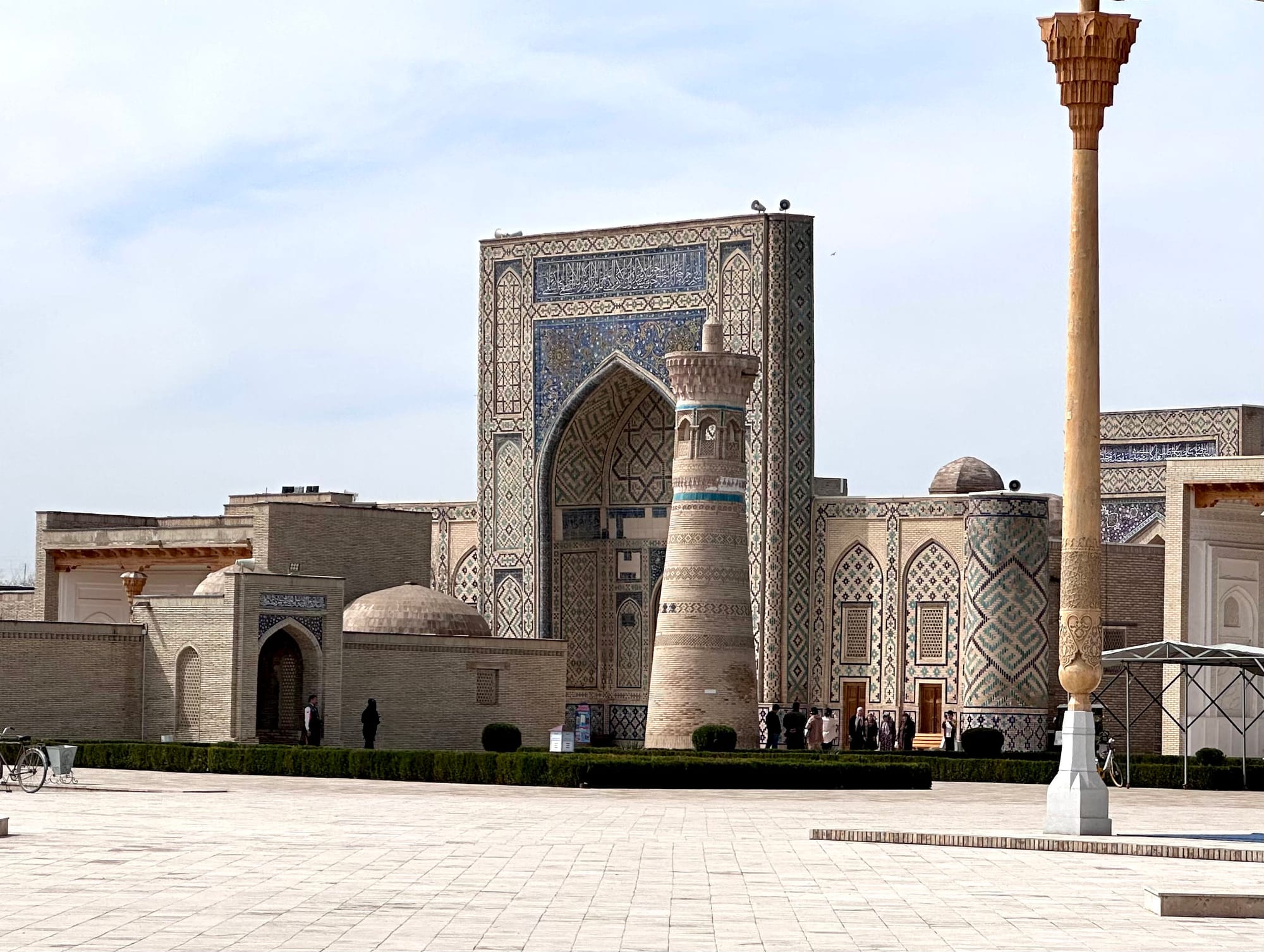
The shrine draws pilgrims from across the country every day, and the square is treated as a religious place. Modest dress is expected around the madrasa and the tomb, with hair covered by women at prayer halls and shoes removed at the door. Hospitality in craft families is generous and hard to refuse: tea, bread and fruit are offered before any business is discussed.
Ask before photographing people at the shrine or potters at work, and accept at least a cup of tea when it is offered.
💳 Common Payment Methods
The currency is the Uzbek som (UZS), and Gijduvan runs almost entirely on cash. There are banks and a few ATMs in the town, but withdrawals are more reliable in Bukhara. Workshops, guesthouses, the bazaar and taxis all expect notes, and small denominations are useful.