History
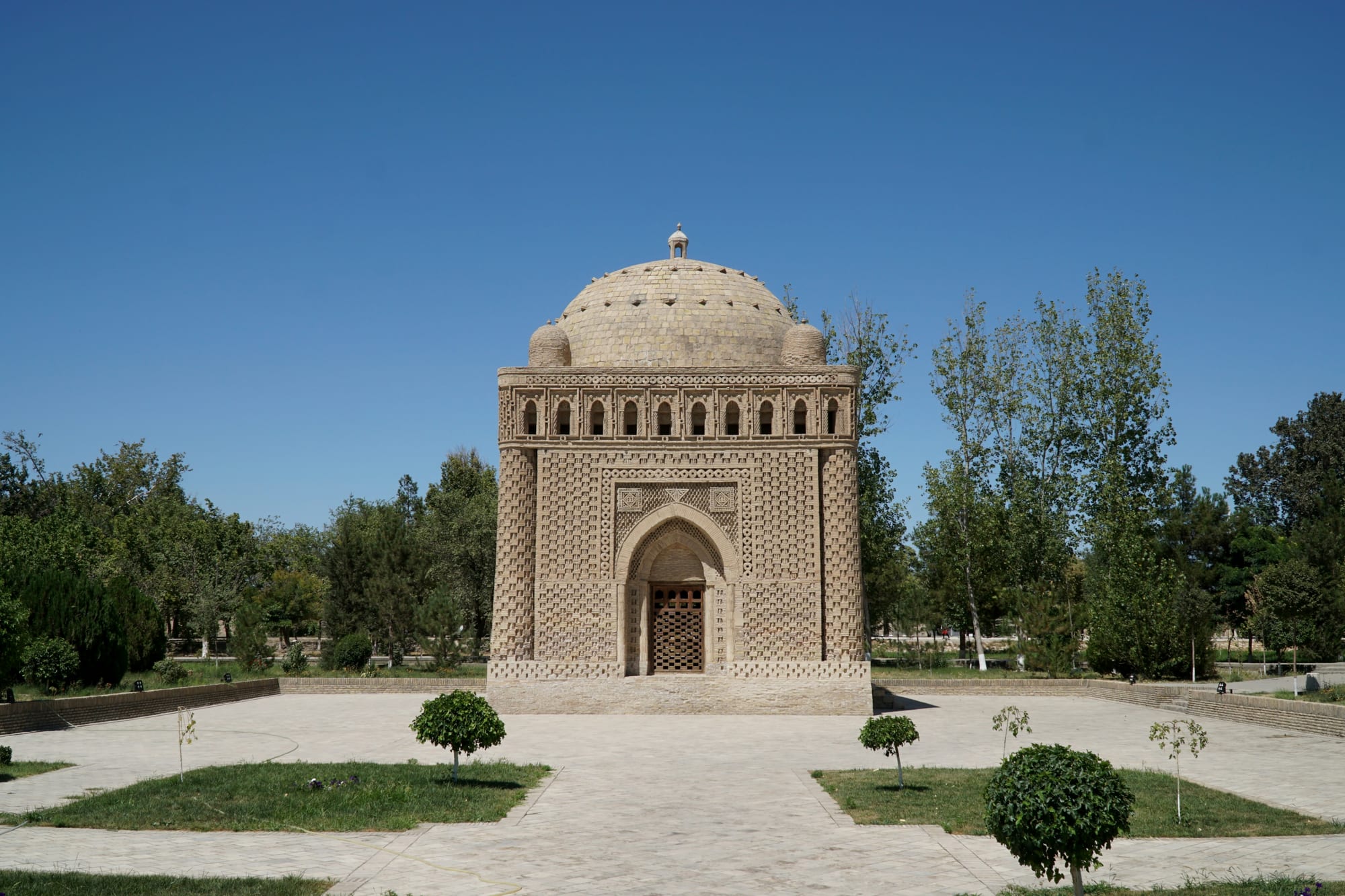
The Zarafshan valley was the heart of Sogdiana. Samarkand, known to the Greeks as Maracanda, was already a walled city on the hill of Afrasiyab when Alexander the Great took it in 329 BC, and for centuries Sogdian merchants from here and from Bukhara ran caravan trade between China, Persia and India; murals of foreign envoys found at Afrasiyab show the city at its height in the 7th century. The Arabs conquered both cities in the early 8th century, and under the Samanids in the 9th and 10th centuries Bukhara became a capital of Persian literature and Islamic scholarship; Ibn Sina (Avicenna) was born near the city.
Genghis Khan's armies sacked both cities in 1220, though Bukhara's Kalyan minaret survived. Timur made Samarkand the capital of his empire from 1370, bringing craftsmen from conquered lands to build mosques and mausolea, and his grandson Ulugh Beg governed there as a scholar-prince, building a madrasa on the Registan and a great observatory.
From the 16th century the Shaybanid Uzbeks ruled from Bukhara, and the city remained the seat of a khanate and later the Emirate of Bukhara. Russia took Samarkand in 1868 and made Bukhara a protectorate; the Red Army captured Bukhara in 1920 and the last emir fled to Afghanistan. In Soviet times Navoiy grew as a mining city, and the Hunger Steppe of Jizzakh and Sirdaryo was irrigated for cotton.