History
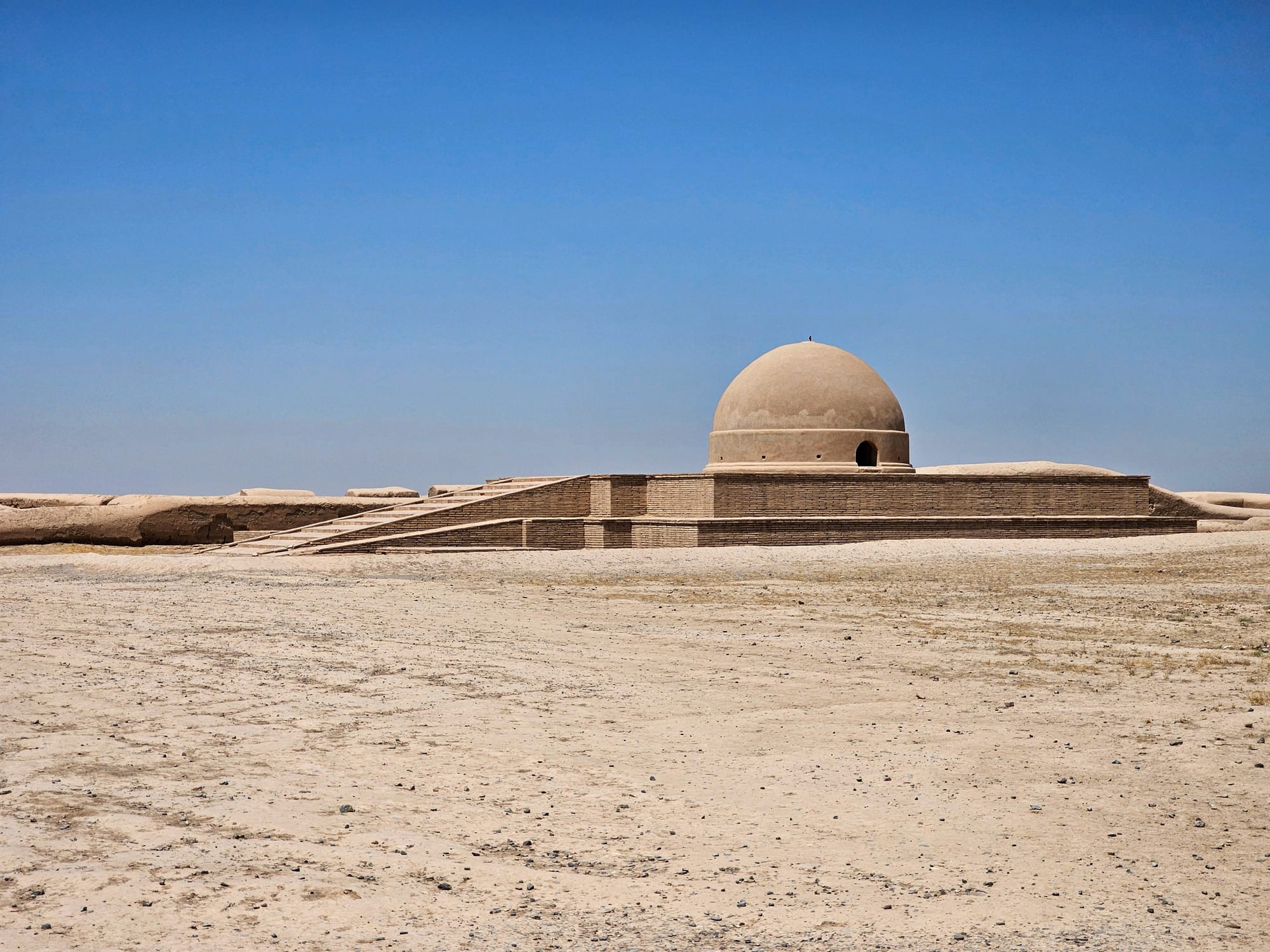
The south lies within ancient Bactria, the land north and south of the Amu Darya. The Teshik-Tash cave in the Boysun mountains held a Neanderthal child burial, and in historical times the region was a province of the Persian Empire, crossed by Alexander the Great and then ruled by Greco-Bactrian kings. Under the Kushan Empire in the first centuries AD, Termez became a Buddhist centre on the road between India and Central Asia, with monasteries at Kara Tepe and Fayaz Tepe and the Zurmala stupa, while Dalverzin Tepe near Denov grew into a Kushan city.
After the Arab conquest Termez became a centre of Islamic learning, the home of the 9th-century scholar al-Hakim at-Termizi. Genghis Khan destroyed the old city in 1220. To the north, the town of Kesh, later Shahrisabz, was the birthplace of Timur, and he built a vast palace, Ak-Saray, there, along with mausolea for his family.
The region later fell to the Emirate of Bukhara, whose second city was Qarshi. The Russians built a garrison town at Termez in the 1890s, and in Soviet times it became the base for the war in Afghanistan: the Friendship Bridge over the Amu Darya opened in 1982, and the last Soviet troops crossed it home in 1989. Since independence, Termez has become Uzbekistan's main gateway for trade with Afghanistan.