💰 Budget
Shahrisabz is cheap even by Uzbek standards, and most visitors see it as a day trip from Samarkand, so the main costs are a car and driver and the monument tickets. Hotels in the town are modest and inexpensive, meals cost little, and the bazaar is the cheapest place to eat well.
- Daily Budget Midrange
- USD 50–110 (better hotel, restaurant meals, monument tickets, a car and driver over the pass)
- Daily Budget Shoestring
- USD 20–35 (simple hotel or guesthouse, bazaar and teahouse food, shared taxis)
Carry som in cash, as cards are accepted only in the larger hotels, and agree a full-day price if hiring a driver from Samarkand.
📅 Best Time to Visit
April to May and September to October. Spring brings blossom and green hills to the Qashqadaryo foothills and comfortable days for walking the monument park; autumn is dry, warm and the fruit season. July and August are hot and glaring, with little shade between the ruins, and winter is cold, with snow sometimes closing the mountain pass.
⏳ Suggested Number of Days
Half a day covers the monuments, which stand in a line along one park, and a full day allows the bazaar and a slower pace. Two days suit anyone adding the mountains or the neighbouring towns, or staying overnight rather than returning to Samarkand.
- First Visit
- Half a day to 1 day
- With Surroundings
- 2 days
🚆 Transportation
The monuments are strung along a single landscaped axis about two kilometres long and are walked between easily. Taxis are cheap and are hailed on the street or arranged at hotels; shared cars and minibuses leave from near the bazaar for Samarkand, Qarshi and the surrounding villages. There is no rail service into the centre, and most visitors arrive by car.
Agree the fare before setting off, and ask a driver from Samarkand to wait rather than hoping for a return car in the late afternoon.
🛬 Airport & Station Connections
Most people come from Samarkand, about 80 kilometres north — roughly two hours by car over the Takhtakaracha Pass, with a longer low-level road used when the pass is closed by snow. Shared taxis make the trip through the day. Qarshi, about two hours to the south-west, has the nearest airport, with flights to Tashkent, and buses link the two towns.
🚶 Walkability
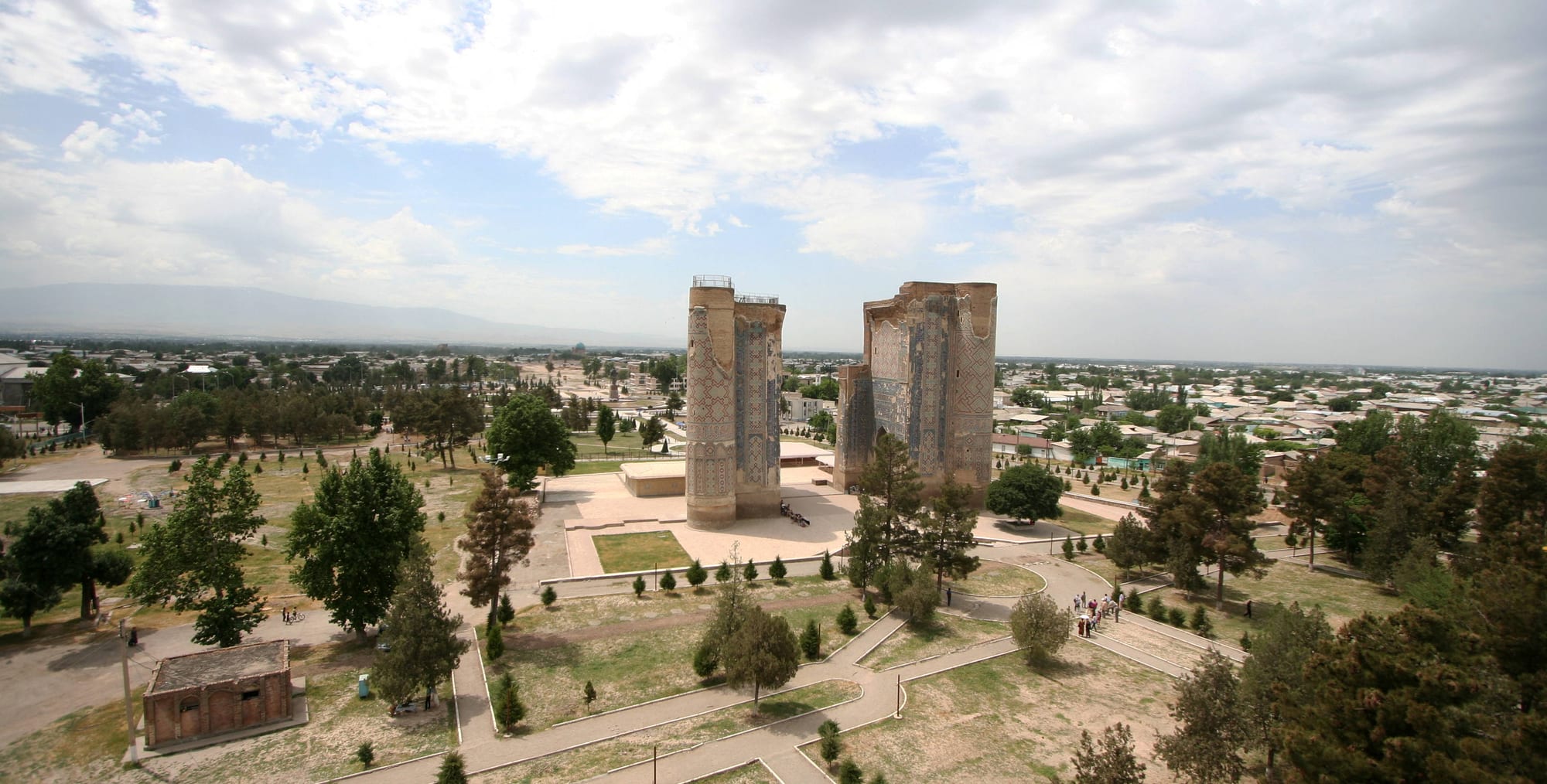
The historic axis is flat, paved and made for walking, with the palace ruins at one end and the mausolea at the other; the walk between takes around half an hour. There is very little shade in the new park, which makes midsummer hard going, and the bazaar and the residential streets beyond are dustier and busier with traffic.
🛡️ Safety
Shahrisabz is a quiet provincial town with low crime and a police presence around the monuments. The practical risks are heat and strong sun in the open park, traffic on the through roads, uneven ground at the ruins, and mountain roads that become difficult in snow or heavy rain.
Carry water and a hat in summer, keep a passport to hand for checkpoints in the south, and check the state of the pass in winter before driving. Check current official travel advice before travelling.
🌦️ Climate
Warmer than the mountains behind it and cooler than the lowlands around Qarshi, with a wet, green spring, a long dry summer and a short cold winter. Most rain falls between December and April, and the surrounding hills hold snow into spring.
- Summer
- hot and dry, commonly 32–38°C by day, with cooler nights than the southern plains
- Winter
- cold, around 0–10°C by day, with frost at night and occasional snow that closes the mountain pass
🤝 Local Customs
The south is more conservative than the big Silk Road cities, and modest dress is expected, especially at the mausolea, where women cover their hair and shoes are removed at prayer halls. Timur is a national figure here and treated with respect; casual remarks about him are not welcomed. Hospitality is emphatic, and a guest is served first and pressed to eat more.
Ask before photographing people, dress with shoulders and knees covered at the shrines, and accept tea when it is offered.
💳 Common Payment Methods
The currency is the Uzbek som (UZS). Larger hotels and a few restaurants take cards, but the bazaar, taxis, guesthouses and monument kiosks work in cash. There are ATMs in the town centre, though they can run dry, and it is safer to draw money in Samarkand or Qarshi before arriving.