History
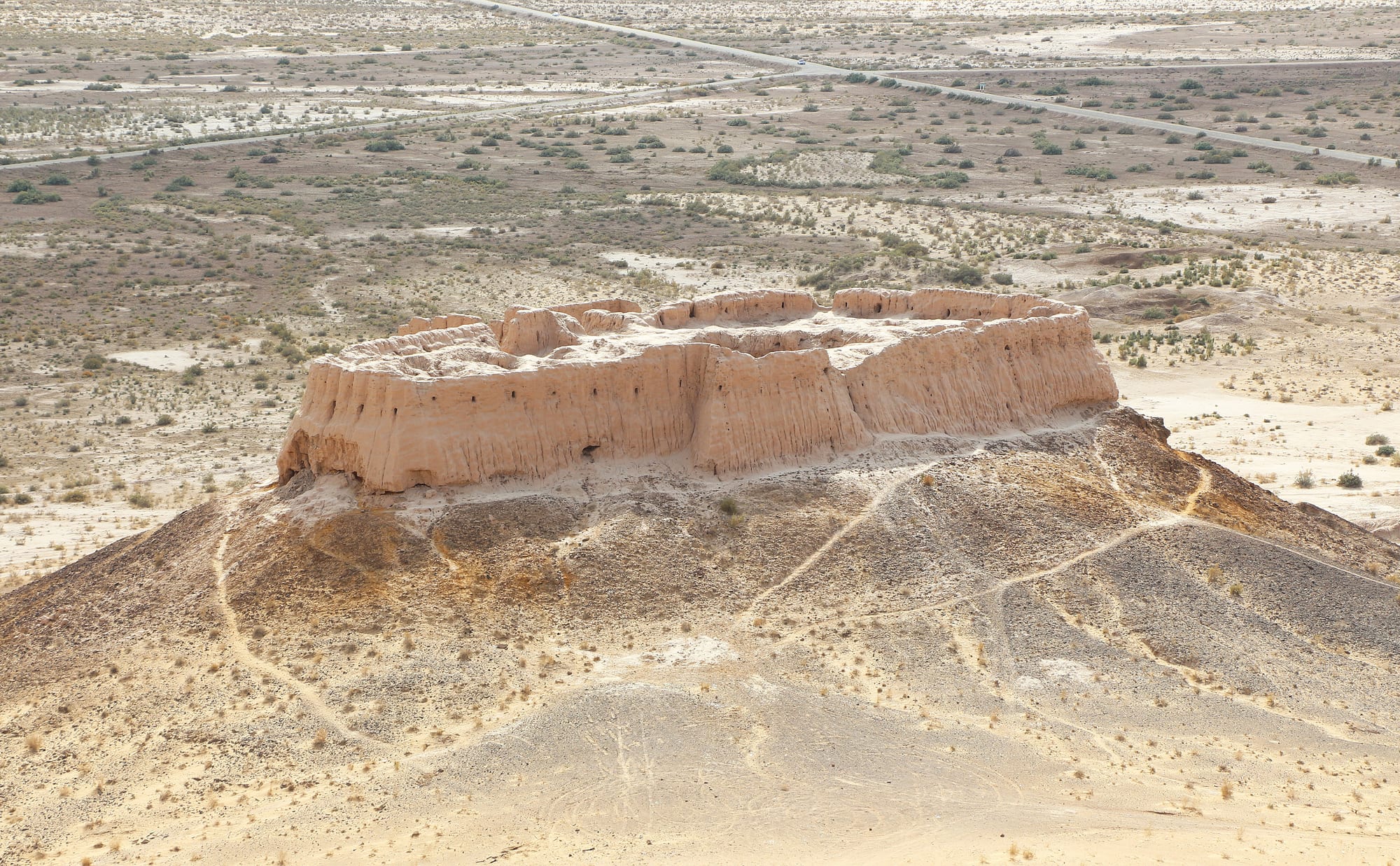
The lower Amu Darya was the heart of Khwarazm, or Chorasmia, one of the oldest civilisations of Central Asia. Irrigated farming here goes back thousands of years, and from the mid-first millennium BC the region was ruled from fortified cities along the delta. Ayaz Kala, Toprak Kala, whose palace held wall paintings and royal archives, Kyzyl Kala and many others guarded canals and caravan routes. Khwarazm was a province of the Persian Empire, and local tradition links it with the early history of Zoroastrianism, whose relics include the Chilpyk tower near Nukus.
After the Arab conquest and the rise and Mongol destruction of the Khwarazmshahs' empire, based at Kunya-Urgench, now in Turkmenistan, the Amu Darya shifted course, and in the 17th century the Uzbek khans moved their capital to Khiva. The Khanate of Khiva became notorious for its slave market and raids across the desert. Russia conquered it in 1873 and made it a protectorate, and in 1920 it became the Khorezm People's Soviet Republic before being divided between the Uzbek and Turkmen republics.
The Karakalpaks, a Turkic people, settled on the delta by the 18th century. Their lands became an autonomous region and later the autonomous republic of Karakalpakstan within Uzbekistan. From the 1960s Soviet irrigation for cotton drained the Aral Sea, ruining its fisheries, and in 2022 plans to limit Karakalpakstan's autonomy sparked protests in Nukus in which people were killed; the plans were dropped.