💰 Budget
Nukus is inexpensive, with a small range of hotels rather than guesthouses, cheap food and very cheap local transport. The real expense is the car and driver needed for the sites outside the city and for the long day north to Moynaq and the dried seabed. Museum entry costs little by international standards.
- Daily Budget Midrange
- USD 60–140 (a comfortable hotel, restaurant meals, a driver for the ancient sites or the trip north, a night in a yurt camp)
- Daily Budget Shoestring
- USD 25–40 (basic hotel, bazaar food, shared taxis and buses)
Arrange a driver through a hotel a day ahead, and share the cost of the long northern trip with other travellers, since there is no regular transport for sightseeing.
📅 Best Time to Visit
April to early June and September to October, when the desert is neither furnace-hot nor frozen and the melons and fruit are in. Midsummer is severe, with strong sun and little shade. Winter is cold and grey, and spring brings the worst of the dust and salt blown off the dried Aral seabed.
⏳ Suggested Number of Days
A day covers the museums and the centre comfortably, and many visitors stop only that long. Two or three more allow the ancient sites west and east of the city and the long journey north towards the old seabed, all of which need a car.
- First Visit
- 1–2 days
- With Surroundings
- 3–4 days
🚆 Transportation
The centre is compact and walkable, and shared taxis, minibuses and buses cover the rest of the city cheaply, with fares settled in cash. Taxis are easy to find and inexpensive, though few drivers speak English. Everything beyond the built-up area — the necropolis, the desert fortresses, the road north — is reached by hired car, usually with a driver for the day.
Agree a price before getting into a taxi, and treat any trip into the desert as a full-day hire with water and a reliable vehicle.
🛬 Airport & Station Connections
Nukus airport, on the edge of the city, has regular flights from Tashkent and a much shorter journey than the alternatives. Trains from Tashkent and Samarkand take the best part of a day. By road it is roughly three hours from Khiva and Urgench, and a long desert drive from Bukhara; shared taxis cover the route to Urgench frequently.
🚶 Walkability
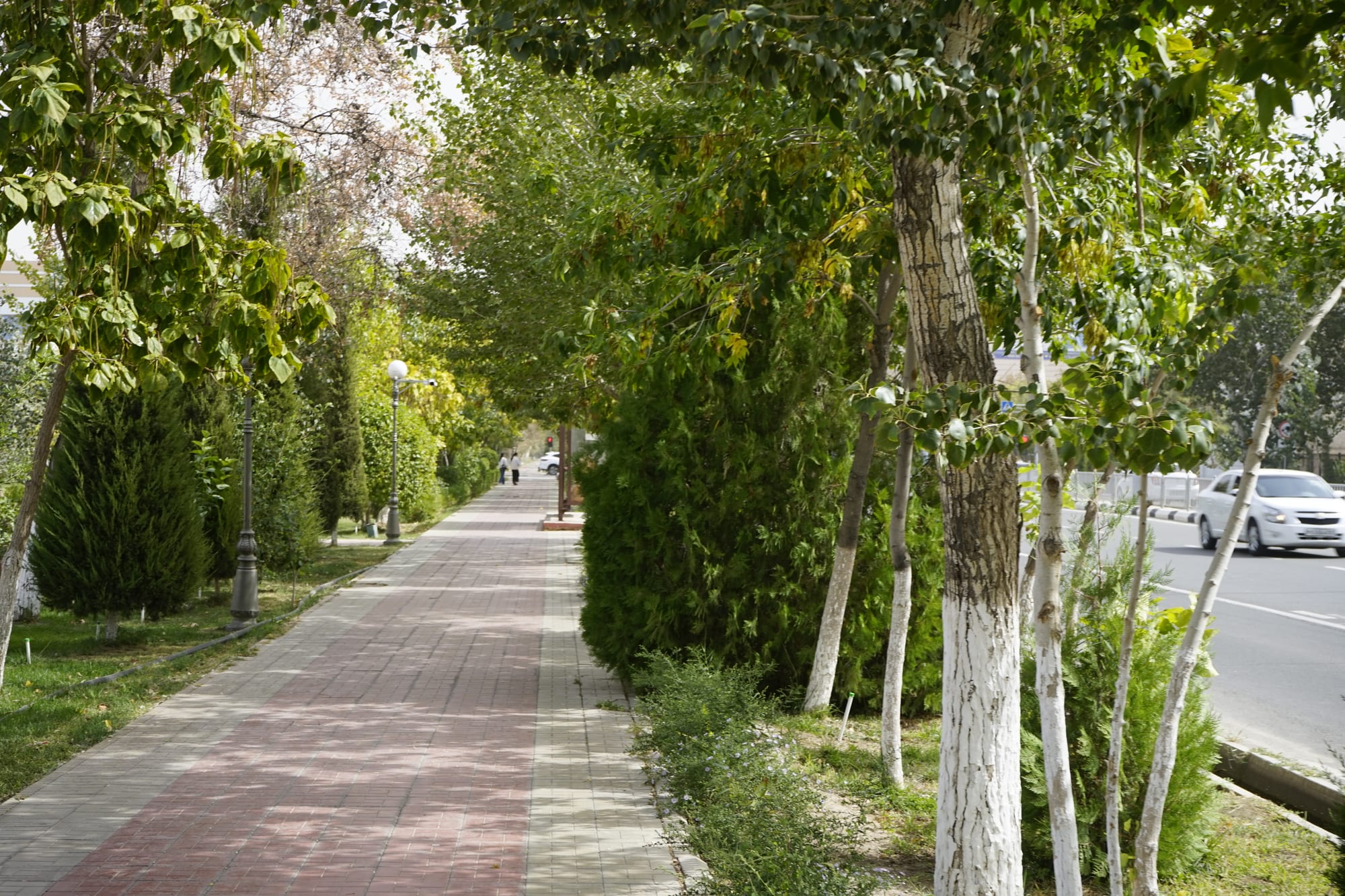
The Soviet plan makes the centre easy to walk but long-winded: the blocks are large, the avenues wide and the distances between landmarks greater than they look on a map. Pavements are broad and tree-shaded in the central streets, rougher in the residential blocks. Summer heat and winter wind both discourage walking, and there is little street lighting away from the main roads.
🛡️ Safety
Crime against visitors is rare and the city is quiet, with a noticeable police presence. Karakalpakstan saw deadly unrest in 2022 over proposed changes to its autonomy, and the political situation remains a sensitive subject. The practical risks are environmental: extreme summer heat, dust and salt carried on the wind from the dried seabed, poor tap water and limited medical care.
Avoid political discussions and do not photograph security forces, government buildings or checkpoints; drink bottled water and carry a mask or scarf in dusty weather. Check current official travel advice before travelling.
🌦️ Climate
The most continental climate in Uzbekistan, and one of the driest: long hot summers, cold winters and very little rain, with the shrinking of the Aral Sea having made the extremes sharper. Wind is a constant, and spring storms lift dust and salt from the exposed seabed to the north.
- Summer
- very hot and dry, regularly 35–42°C by day with fierce sun and cool nights
- Winter
- cold, with January days often around -2 to 3°C, night frosts below -10°C and occasional snow
🤝 Local Customs
Karakalpakstan has its own language, closer to Kazakh than to Uzbek, its own flag and parliament, and a strong sense of separate identity; Uzbek and Russian are also widely spoken, and a few words of Karakalpak are appreciated. Hospitality is emphatic — tea, bread and sweets appear immediately for a guest. Dress is modest by regional habit rather than rule, and heads are covered and shoes removed at shrines such as Mizdakhan.
Ask before photographing people, be careful and neutral when the 2022 events or the Aral Sea come up in conversation, and treat pilgrimage sites as places of worship rather than ruins.
💳 Common Payment Methods
The currency is the Uzbek som. Cards work at some hotels and the larger shops, but Nukus runs mainly on cash, and taxis, the bazaar and small restaurants take nothing else. ATMs exist in the centre and can run dry, so it is worth drawing money in Tashkent, Urgench or Khiva and carrying some US dollars in good condition as a reserve.