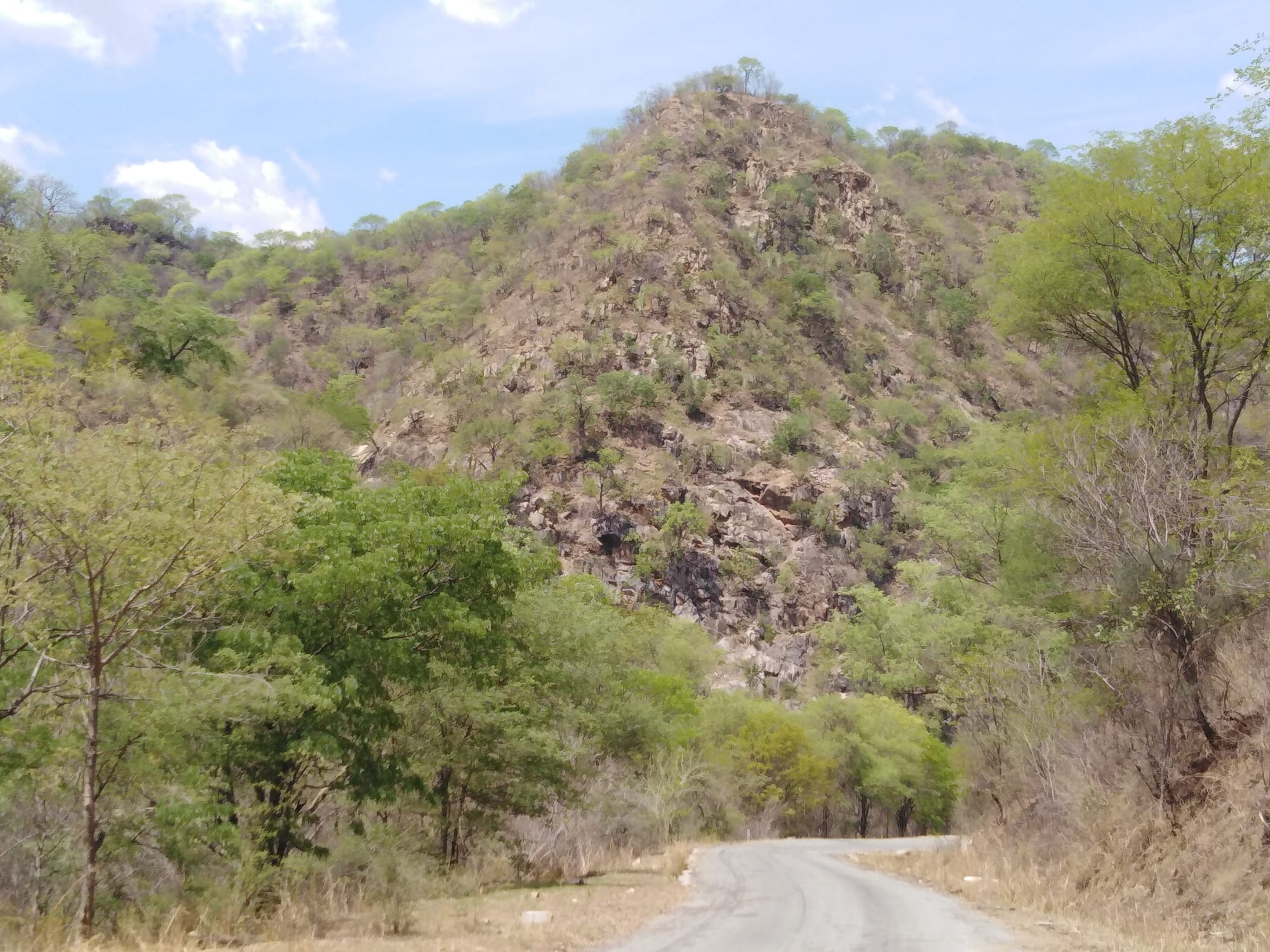
A rocky, wooded hill rising above a narrow tarred road through dry bush under a blue sky with scattered cloud

Victoria Falls, Bulawayo & Matabeleland, Zimbabwe

Binga

Rocky hills above the road into Binga, on the western side of Lake Kariba. (Mulavu123 / Wikimedia Commons · CC0)

A small town on the remote western shore of Lake Kariba in north-western Zimbabwe, at the end of a long road off the Victoria Falls highway. It was built as an administrative centre after the Tonga were moved from the Zambezi valley when Lake Kariba was created in the late 1950s, and it lives today by fishing, farming and a trickle of visitors.

Neighbourhoods

  • Binga centre
    • First-time visitors
    • Shops and transport

    The small grid of government offices, the district hospital, a police station, shops and the bus stop, set back a little from the water. Everything official happens here, and it is where buses from Bulawayo and Hwange finish their run.

    Open in Maps
  • The lakeshore
    • Views
    • Fishing

    The strip along the water below the town, with the harbour where kapenta rigs and fishing boats tie up, a rest camp and lodges among the trees, and the hot springs bubbling up near the shore. Sunsets over the lake are the main event.

    Open in Maps
  • The surrounding Tonga villages
    • Local life
    • Crafts

    Thatched homesteads, maize and sorghum plots and cattle spread along the escarpment and the inlets on either side of the town. Basket weaving and drum making are part of household life here, and the villages are where the district's language and customs are strongest.

    Open in Maps

Things to do

In and around the town

  • Chibwatata hot springsattraction

    Hot mineral water rising near the lakeshore by the rest camp at the edge of the town, long part of local life and a setting for rainmaking ceremonies.

    Open in Maps
  • Binga harbour and lakeshoreattraction

    The small working harbour where kapenta rigs, fishing boats and the occasional lake ferry tie up, with views across a wide arm of Lake Kariba.

    Open in Maps
  • Tonga craft stallsmarket

    Stalls and workshops in and around the town selling woven baskets, carved stools, drums and headrests, the best-known craft of the Zambezi valley people.

    Open in Maps

Short trips from the town

  • Lake Karibapark

    The world's largest artificial lake and reservoir by volume, filled between 1958 and 1963 behind the Kariba dam, with hippo, crocodile and a shoreline of inlets and islands.

    Open in Maps
  • Chizarira National Parkpark

    Zimbabwe's third-largest national park, rugged and little visited on the Zambezi escarpment inland from the town, cut by sheer gorges, with elephant, buffalo, lion and leopard.

    Open in Maps

Eat and drink

Long-standing places and food districts in Binga. Hours, ratings and directions come from your maps app, always current.

Everyday eating

  • Lakeshore fish grillsneighborhood

    Simple places near the harbour and the rest camp cooking fresh fish from the lake, grilled or stewed, with sadza and greens.

    Open in Maps
  • Binga town marketmarket

    Vegetable stalls, dried kapenta by the cupful, baobab fruit and bush fruits in season, and vendors selling maputi and roasted maize.

    Open in Maps
  • Town centre takeawaysneighborhood

    Counters near the shops and the bus stop serving sadza with beef or chicken stew, rice and chips, and tea with buns in the morning.

    Open in Maps

Experience Binga

History

The land along this stretch of the Zambezi was the home of the Tonga, who farmed the fertile valley floor, fished the river and lived in scattered homesteads on both banks. Their world ended in the second half of the 1950s, when the Kariba dam was built between 1955 and 1959 downstream and the rising lake drowned the valley. About 57,000 Tonga from both banks of the river were moved out of the flooding valley onto the dry, stony ground above it, in one of the largest forced resettlements in the region's colonial history; the move was made without compensation and the new land was far poorer.

Binga was laid out as the administrative centre for the displaced population — a district office, a police station, a hospital and a school on a site above the new shoreline — rather than growing from an older settlement. For decades it was among the least developed districts in the country, reached by a long dirt road, with few clinics, little electricity and almost no share of the power and irrigation that the dam made possible downstream.

Since independence the harbour and the kapenta fishery have grown, and the town has acquired a modest tourist trade based on the lake, the hot springs and Tonga crafts. The grievance of the resettlement has not gone away: the demand for recognition, for services and for a share of the lake's benefits remains a live political subject in the district, and it shapes how people here talk about the government in Harare.

Culture & Customs

The Tonga are the defining community of Binga, and their culture is distinct from both the Shona majority and the Ndebele of the rest of Matabeleland. ChiTonga, one of Zimbabwe's sixteen official languages, is predominant in the district, and the valley's oral history — of the river, the crossing and the move — is passed down in families that still name the places now under water.

Nyami Nyami, the river spirit of the Zambezi valley, is central to belief here and is carved into the walking sticks and pendants sold in the district: a serpent with the head of a fish, held to have been separated from his wife by the dam wall. Ceremonies and rainmaking rites continue alongside large Christian congregations, and traditional healers are consulted widely.

Craft is the best-known expression of the culture. Tonga women weave symmetrically patterned baskets, collected well beyond Zimbabwe, and men carve stools from a single piece of wood, along with headrests and drums. Music uses drums and the budima or ngoma buntibe ensembles of horns and percussion, played at funerals, war dances and celebrations.

Daily Life

Binga is a small town — the service centre for one of the country's most sparsely populated districts — and everything about it is shaped by distance. Goods arrive by lorry along one long road, prices are higher than in Bulawayo, and a serious hospital case means a journey of several hours.

Fishing carries the local economy. Kapenta rigs work the lake at night, their lights strung out across the water, and the small silver fish are sun-dried on racks by day and sold across the country. Alongside it are subsistence farming of maize and sorghum on poor soils, cattle and goats, basket weaving for sale, jobs in the district administration and schools, and a handful of lodges. Drought is a recurring threat, and food aid has been needed in bad years.

Days begin early and stop in the heat of the afternoon. Water, firewood and school runs organise the morning; the evening belongs to the shore and the bars. Power cuts are routine, mobile signal is patchy outside the town, and many households depend on money sent by relatives working in Bulawayo, South Africa or Botswana. Younger people leave for work, and the ones who stay talk about the road, the fish catch and the rains.

Food

Fish is what Binga eats. Kapenta — a small lake fish, also called matemba, dried in the sun — is shallow-fried with onion, tomato and groundnut powder and eaten with sadza almost daily, and fresh fish from the lake, grilled or stewed, is the meal offered to a guest. Tigerfish, the lake's best-known gamefish, is caught mainly for sport, and dried fish from the racks is traded inland as far as Bulawayo.

The staple is sadza, or isitshwala in Ndebele, made from maize meal and eaten by hand with a relish of pumpkin leaves, covo, okra or beans. Sorghum and millet, which stand the heat and the poor rains better than maize, are still grown in the district and cooked as porridge. Wild foods matter in a dry place: baobab fruit, whose chalky pulp is sucked or mixed into a drink, other wild fruits in season, and mopane worms dried and fried.

To drink there is sweet tea, maheu, the thick fermented maize drink, home-brewed sorghum beer for gatherings and ceremonies, and Chibuku from cartons in the beer halls. Lodges along the shore serve the usual braai and buffet cooking, with lake fish generally the best thing on the menu.

Planning tools

Budget

Binga is cheap to be in and expensive to reach. Food, guesthouses and the camping sites cost little, but the long drive in, fuel, and any boat trip or park fee are where the money goes. There are few places to spend money once the day's supplies are bought.

Daily Budget Midrange
USD 150–350 (a lakeside lodge, boat outings, a hired vehicle with fuel)
Daily Budget Shoestring
USD 30–60 (a guesthouse or campsite, local food, shared transport)

Carry enough small US dollar notes for the whole stay and fill the fuel tank before leaving the main highway, as supplies in town can be limited.

Best Time to Visit

May to August is the most comfortable season, with warm days, cool nights and calm water. September and October are punishingly hot in this low valley. The rains from November to March bring storms, green bush and difficult going on the district's gravel roads.

Suggested Number of Days

One or two days are enough for the town and the lakeshore. Three or four suit anyone going further into the district or out on the water. The long approach road means most visitors budget a night at each end of the journey.

First Visit
1–2 days
With Surroundings
3–4 days

Transportation

The town is small enough to walk, and pick-ups and kombis serve the outlying villages, though they run to no fixed timetable and thin out in the afternoon. A single long road links the town to the Bulawayo–Victoria Falls highway; buses take most of a day. Dirt roads within the district need a high-clearance vehicle, and boats do some of the work of roads along the lake.

Drive by daylight because of livestock, wildlife and unlit vehicles, and carry water, a spare tyre and extra fuel on any trip off the tarred road.

Airport & Station Connections

Binga lies at the end of a long spur road running north from the highway between Bulawayo and Victoria Falls, and the drive from Bulawayo takes the best part of a day. Buses run from Bulawayo and from towns on the highway. Some visitors arrive by boat across Lake Kariba.

Walkability

The centre and the lakeshore are easily covered on foot, although the ground between them is spread out and the walk is hot and shadeless in the middle of the day. Reaching the villages or the park means a vehicle. Paths near the water are unlit at night.

Safety

The district is peaceful and crime against visitors is uncommon. The hazards are natural: crocodiles and hippos make the lake dangerous for swimming or standing at the water's edge, the heat is severe before the rains, malaria is a year-round risk in the valley, and medical facilities are basic and far from anywhere larger.

Take malaria precautions in the low-lying areas, avoid political gatherings, don't drive at night, keep documents and small change ready for roadblocks, and don't swim in still fresh water outside managed sites. Check current official travel advice before travelling.

Climate

Binga lies low in the Zambezi valley and is hot for most of the year, with a single rainy season and a long dry one. Summer falls in December to February and winter in June to August, as elsewhere in the southern hemisphere.

Summer
hot and humid, often 30–35°C or more, with storms from November to March
Winter
warm, dry and sunny days around 25–28°C with mild nights

Local Customs

This is Tonga country, and Tonga is the first language of most people, with Ndebele, Shona and English also used. Greetings matter and are unhurried; elders are greeted first, and women often greet by kneeling or bending slightly. Chiefs and headmen hold real authority in the villages, and permission is expected before visiting a homestead or a shrine.

Ask before photographing people, homesteads or the hot springs, dress modestly away from the lodges, and buy baskets directly from weavers or the craft centre if possible.

Common Payment Methods

The US dollar does most of the work here, alongside the ZiG, and small notes are essential because change is scarce. Card payment is rarely possible and cash machines cannot be relied on, so money is best drawn in Bulawayo, Hwange or Victoria Falls before the drive in.