History
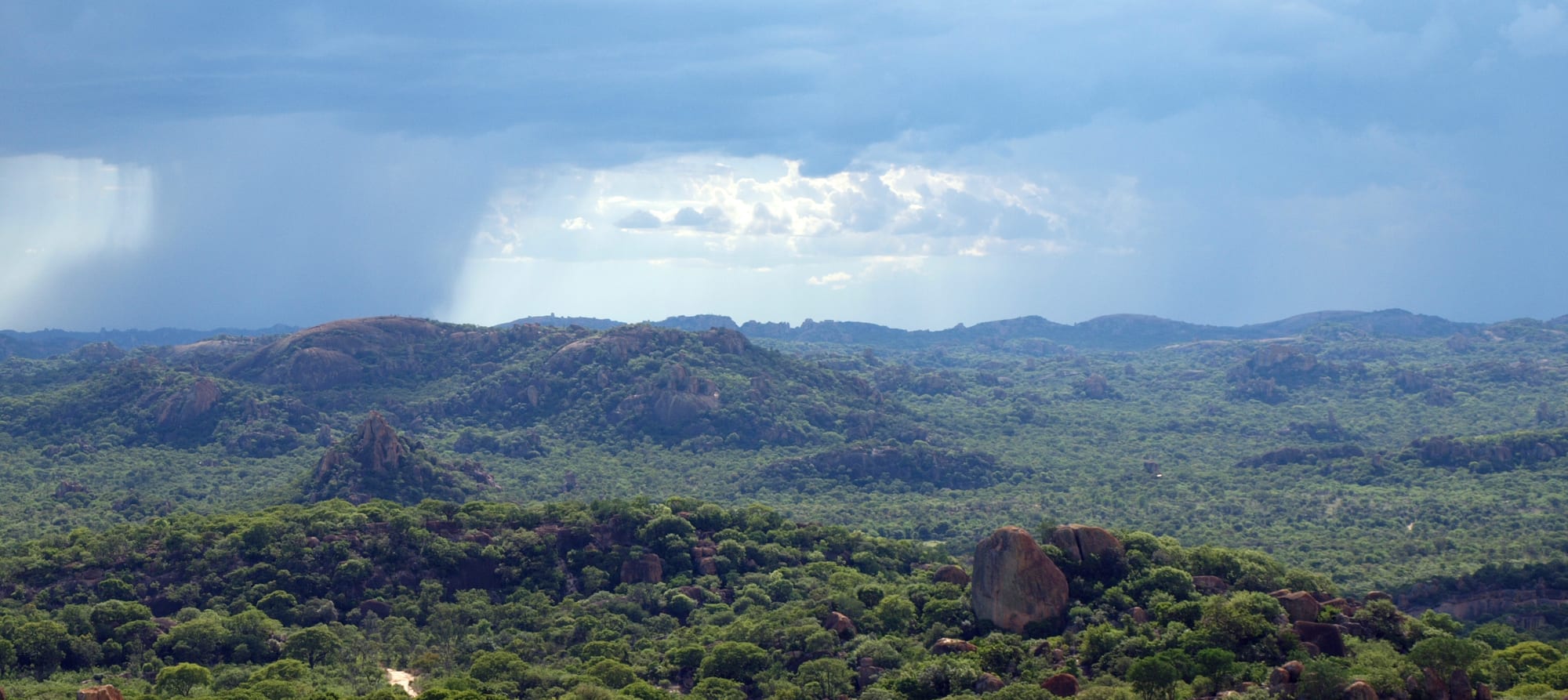
The Matobo Hills hold rock paintings by San hunter-gatherers that stretch back thousands of years. After Great Zimbabwe declined, the Torwa state built its capital at Khami, west of present-day Bulawayo, from the fifteenth century, with terraced platforms of dressed stone; it was succeeded in the seventeenth century by the Rozvi.
In the 1830s the Ndebele, led by Mzilikazi, moved north from the upheavals in South Africa and founded a kingdom here, raiding and taxing Shona communities to the east. Mzilikazi's son Lobengula ruled from his royal town of GuBulawayo until the British South Africa Company invaded in 1893; Lobengula fled north and died, and a settler town grew up at Bulawayo. The Ndebele rose again in 1896, and the rising ended in negotiations Cecil Rhodes held in the Matobo Hills, where he was buried in 1902. Bulawayo became the railway and industrial centre of Rhodesia, and the line reached Victoria Falls in 1904.
Matabeleland was the base of Joshua Nkomo's ZAPU. After independence, between 1983 and 1987, the army's Fifth Brigade carried out the Gukurahundi massacres here and in parts of the Midlands; estimates of the civilian dead range from a conservative 8,000 to more than 20,000, mainly Ndebele and Kalanga. The Unity Accord of December 1987 ended the campaign, but the killings remain a painful and contested subject, and calls for acknowledgement and justice continue.