💰 Budget
Dominica is mid-range for the Caribbean and has little mass tourism. Guesthouses and locally run eco-lodges are the norm rather than big resorts; site passes for the national park and dive trips are the main add-on costs. Cards are accepted in Roseau and at dive shops; carry cash elsewhere. Since the war that began in the Middle East in February 2026, global oil and gas prices have surged and aviation has been disrupted, so air fares and fuel-linked costs can run above the ranges below.
- Site Pass
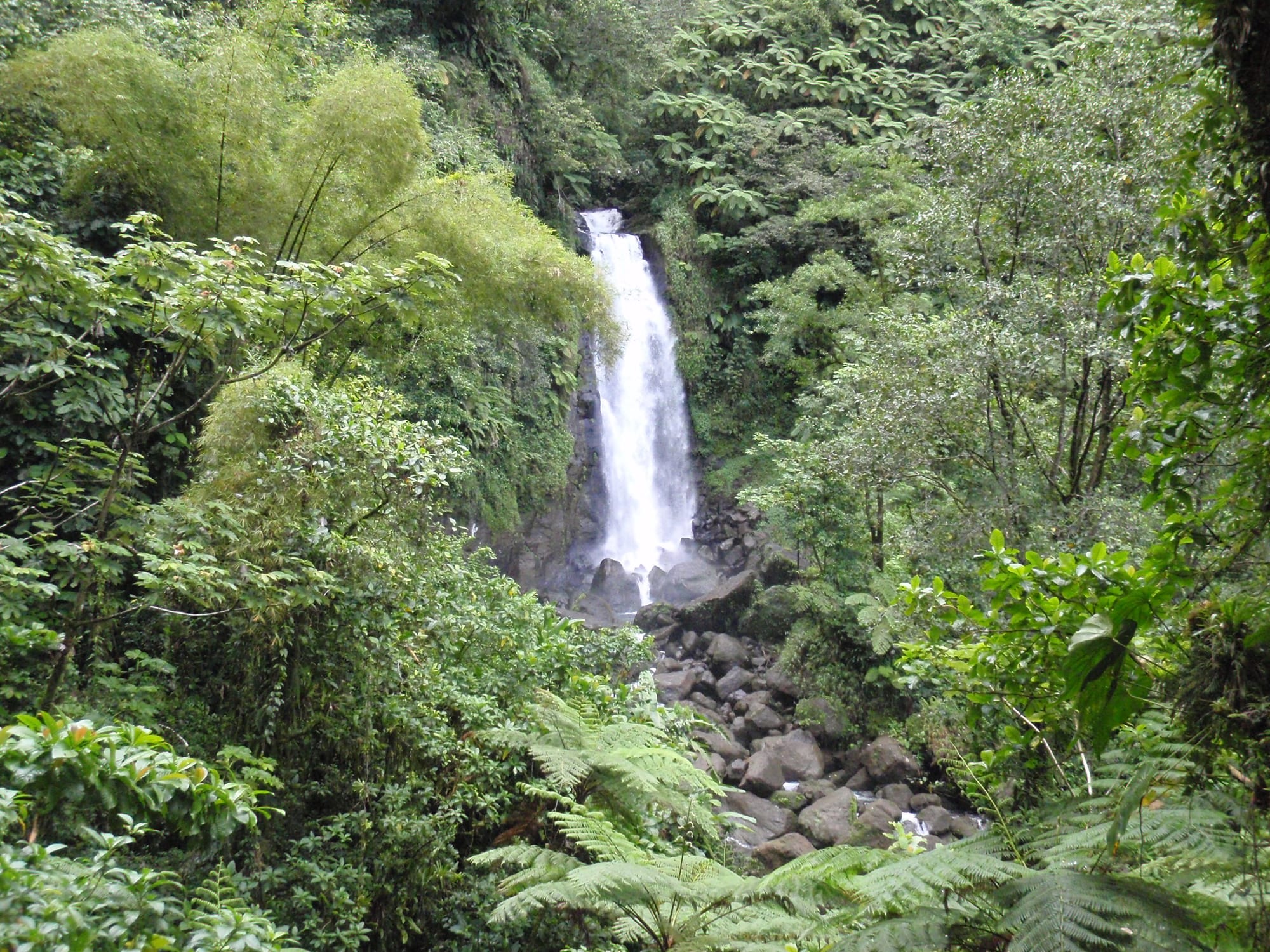
- A national parks pass covers Trafalgar Falls, the Boiling Lake trail, and other sites
- Daily Budget Midrange
- USD 150–300 (eco-lodge or small hotel, rental car, guided hikes and diving)
- Daily Budget Shoestring
- USD 70–110 (guesthouse, local food, buses)
✈️ Visa Requirements
Most visitors, including citizens of the US, Canada, the UK, the EU, and most Commonwealth countries, may enter without a visa; the length of stay granted varies by nationality and is set on arrival. An onward or return ticket may be requested.
- Typical Stay
- Visa-free entry for most Western passports; stay granted on arrival
🛡️ Safety
Dominica is generally safe, with low levels of violent crime, though petty theft and the occasional robbery occur. The real hazards are natural: flash floods and landslides on the trails and roads in heavy rain, strong currents on the exposed coasts, and hurricanes — Maria devastated the island in 2017.
Hike with a guide for the Boiling Lake and other long trails, check the forecast before heading into the interior, and never cross a flooded river.
🌦️ Climate
Tropical and very wet — the mountainous interior is among the rainiest places in the Caribbean. Rain is possible all year; the heaviest falls come from June to October, which overlaps the Atlantic hurricane season, and the first months of the year are drier.
- Drier Season
- Roughly Jan–May, still with frequent showers inland
- Wetter Season
- Jun–Oct, heaviest rain, hurricane risk
🚆 Transportation
Douglas-Charles Airport in the northeast handles regional flights plus a few nonstop services from the United States (Miami since 2021, Newark since 2025); its short runway limits larger jets, so many visitors still connect through Antigua, Barbados, or the French islands, or arrive by sea. A larger international airport is under construction at Wesley, funded through the citizenship programme and expected to be finished in 2027. On the island, shared minibuses are the main public transport; a rental car (or 4x4) suits the winding mountain roads.
- Driving
- On the left; roads are steep, narrow, and slow, and landslips are common after heavy rain
📅 Best Time to Visit
The first months of the year, before the June rains, for the driest weather and the best trail conditions, and the World Creole Music Festival falls in late October. Whale watching — Dominica has resident sperm whales — is good much of the year, best in the calmer months. Avoid the peak hurricane season if you can.
💱 Currency
The currency is the East Caribbean dollar (XCD), shared across the eastern Caribbean and pegged to the US dollar at 2.70. US dollars are widely accepted, with change usually given in EC dollars.
- Symbol
- $ (EC$)
- Currency Code
- XCD — East Caribbean dollar (2.70 to 1 USD)
💬 Language
English is the official language, used in government and schools. Most Dominicans also speak Kwéyòl (Antillean Creole), a French-based creole shared with the neighbouring French islands, and a distinct English-based dialect (Kokoy) is spoken in a few northern villages.
- Everyday Language
- Kwéyòl (Antillean Creole)
- Official Language
- English