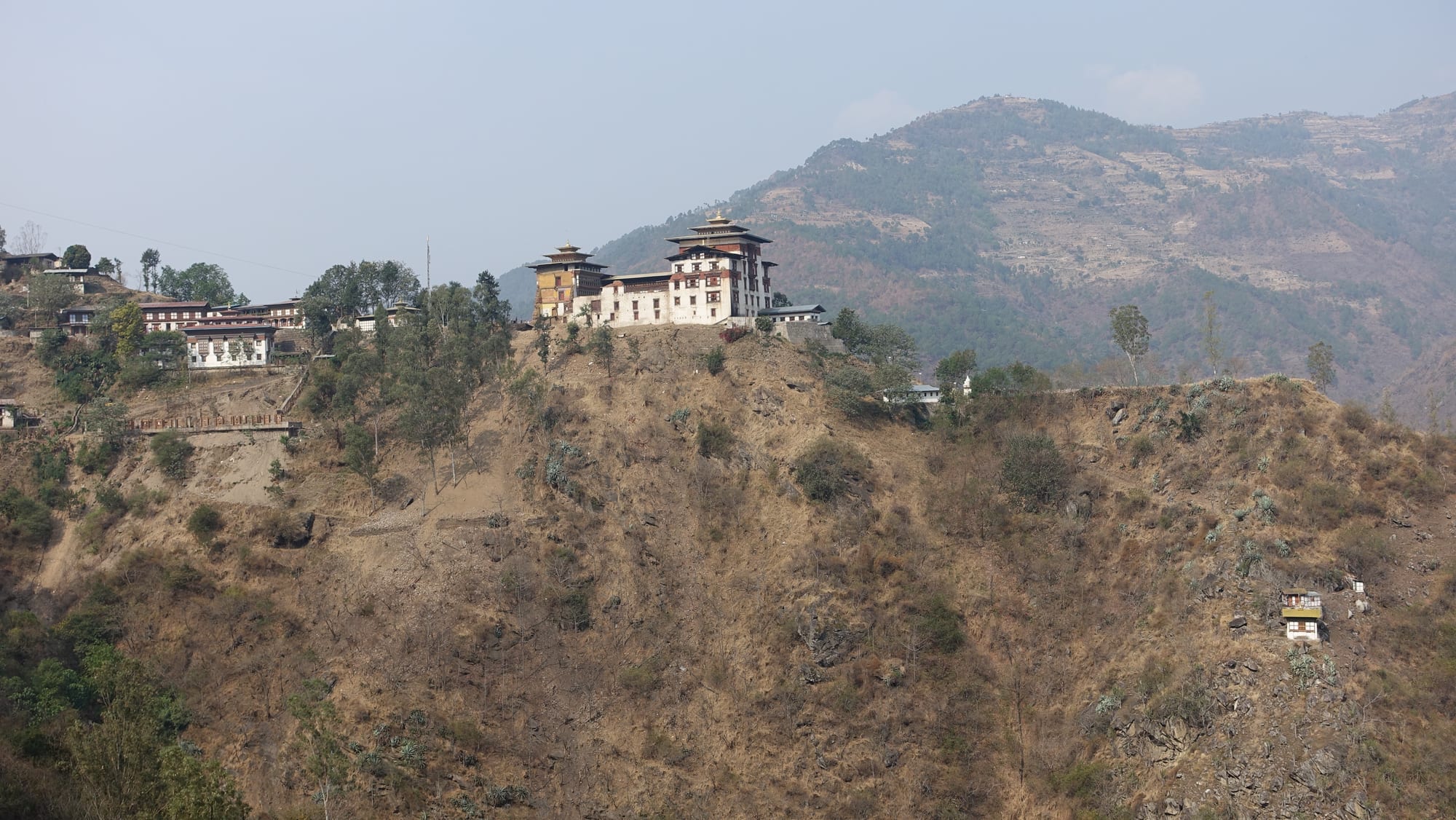
A white dzong with golden roofs perched on the edge of a dry, steep ridge, with terraced mountains behind in the haze

Bhutan

Eastern Bhutan

Trashigang Dzong, built in 1659 on a spur above the Gamri river in eastern Bhutan. (Franzfoto / Wikimedia Commons · CC BY-SA 3.0)

The eastern third of Bhutan, reached over the Thrumshing La or up from Samdrup Jongkhar on the Assam border — the least visited part of the kingdom, home of the Tshangla-speaking Sharchop, the ancestral valleys of the royal family in Lhuentse, Bhutan's finest weaving and the winter cranes of Bomdeling.

Explore Eastern Bhutan

History

Eastern Bhutan was, for most of its history, a patchwork of small valley principalities with their own ruling families. The Zhabdrung's government extended its authority here in the mid-17th century, and dzongs were built at Trashigang in 1659 and at Lhuentse, Mongar and Trashi Yangtse to control the valleys and the trade routes to Tibet and Assam. Chorten Kora was raised at Trashi Yangtse in 1740, and Drametse, above Mongar, has performed its drum dance for almost five centuries.

Lhuentse, in the Kurtoe region, holds a special place: the district is the ancestral home of the Wangchuck dynasty, and Jigme Namgyal, father of the first king, was born at Lhuentse Dzong in 1825.

The south-east was shaped by the frontier with British India. The Duars War of 1864–65 included fighting at Dewangiri, today's Dewathang near Samdrup Jongkhar, and the Treaty of Sinchula that ended it ceded the Assam and Bengal Duars and Dewangiri to the British. In the 20th century the east provided many of the state's civil servants and monks, but it remained remote until roads reached it from the 1960s. Sherubtse College at Kanglung, founded in 1966, became the country's first accredited college, and in 2003 the Royal Bhutan Army cleared Assam-based separatist camps from Bhutan's southern forests.

Culture & Customs

Most people in the east are Sharchop, "easterners", who speak Tshangla, sometimes called Sharchopkha, rather than Dzongkha at home. Kurtoepkha is spoken in Lhuentse, and Dzala in Trashi Yangtse. Eastern Bhutanese have a reputation for directness and hospitality, and form one of the country's main ethnic groups.

Weaving is the east's great art. Lhuentse, with villages such as Khoma, was historically the home of the country's most celebrated weavers, and hand-woven cloth is still made in homes across the region. Trashi Yangtse is known for its woodturning, above all turned wooden bowls, and for traditional handmade paper.

In the high valleys of Merak and Sakteng, the Brokpa herders keep a distinct culture, with their own language, dress and festivals, and weave clothing from yak hair. Religious life centres on the dzong tsechus and pilgrimages to sites such as Gom Kora near Trashigang, where Guru Rinpoche is said to have meditated, and Chorten Kora, whose spring festival draws Dakpa pilgrims from Arunachal Pradesh. The Drametse Ngacham, a masked drum dance, is performed at Drametse Lhakhang.

Daily Life

The east is largely rural, a region of scattered hillside villages rather than towns. Mongar and Trashigang are small administrative and market centres, with schools, a hospital at Mongar and shops. Kanglung has Sherubtse College. Samdrup Jongkhar is the trading gateway to Assam, with shops, warehouses and a steady flow of Indian goods.

Most families farm maize, rice, millet and potatoes on steep slopes, keep cattle, and grow oranges and areca nut in lower valleys. Weaving provides cash income in Lhuentse and around Trashigang. The Brokpa of Merak and Sakteng herd yaks and sheep, moving between seasonal pastures and producing milk, butter and yak hair.

Migration to Thimphu, Phuentsholing and abroad has emptied many villages, and new roads and the Kurichhu hydropower plant, which supplies the eastern districts, are slowly bringing change.

Food

The east eats more maize than rice. Maize is the traditional staple of the eastern districts, and butter tea is drunk throughout the day. Ema datshi and potato and cheese dishes are served here as everywhere, often with dried beef or pork and plenty of chillies, and freshwater fish and wild greens are gathered from the valleys.

The Brokpa diet of Merak and Sakteng is built on yak products: butter, fresh and dried cheese, dried yak meat and butter tea, sometimes with tsampa.

Ara, the home-distilled spirit, is made here from maize, rice or millet and is a central part of hospitality; eastern families often serve it warmed with butter and egg to guests. Ara is also made as an offering on auspicious days, and oranges grow in the lower valleys.

Attractions & Natural Wonders

The road east from Bumthang crosses the Thrumshing La through Phrumsengla National Park, with old-growth and fir forest, and drops to the hillside town of Mongar. Above Mongar, Drametse Lhakhang is the home of the drum dance. A side valley leads north to Lhuentse, with Lhuentse Dzong above the Kuri Chhu and the weaving village of Khoma.

Trashigang Dzong watches over the valley from its spur, with the town's small bazaar beside it. East of the town are the village of Radhi and the long walk or rough drive to Merak and Sakteng, in the Sakteng Wildlife Sanctuary. North of Trashigang are Gom Kora and, in Trashi Yangtse, Chorten Kora and Bomdeling Wildlife Sanctuary, where black-necked cranes winter.

In the south, the highway from Trashigang winds through Khaling, Wamrong and the forests of Pema Gatshel down to Samdrup Jongkhar, a border town on the plains of Assam and the gateway for journeys to Guwahati.

Cities in Eastern Bhutan

Planning basics

Budget

The same package and Sustainable Development Fee rules apply, but the east has few upmarket hotels, and most lodging in Mongar, Trashigang and Samdrup Jongkhar is simple and family-run. Longer itineraries mean more days of package fees rather than higher daily costs. Hand-woven textiles are the main purchase, and fine silk pieces can be expensive.

Daily Budget Midrange
Package of roughly USD 280–400 a day plus the SDF, and USD 30–100 or more for hand-woven textiles
Daily Budget Shoestring
Package of roughly USD 200–280 a day plus the SDF, and USD 10–20 for tips and small purchases

Buy weaving from the villages or cooperatives in Lhuentse and around Trashigang, where the weavers themselves benefit.

Safety

The east is very safe. The main risks are the long, steep and narrow roads with rockfall and landslides, especially in the monsoon, ice on the high passes in winter, and the distance from well-equipped hospitals; Mongar has a regional hospital. Treks to Merak and Sakteng cross high, remote country.

Allow extra time for road delays, carry warm clothing for the Thrumshing La, and trek to Merak and Sakteng with a guide. Check current official travel advice before travelling.

Climate

The east lies lower and is warmer than the western valleys, with deep, dry river gorges around Trashigang and Mongar that are hot in summer. The high passes, including the Thrumshing La and the Merak area, are cold and snowy in winter, and Samdrup Jongkhar in the southern foothills is subtropical, hot and very wet in the monsoon.

Summer
warm to hot in the valleys, 20–30°C; very wet around Samdrup Jongkhar; cloud and landslides on the roads
Winter
mild days in the Trashigang and Mongar valleys; frost and snow on the Thrumshing La and in Merak and Sakteng

Transportation

The lateral road climbs from Bumthang over the Thrumshing La, at about 3,800 metres, and descends to Mongar, a full day's drive; Trashigang is a further three hours or so. Trashi Yangtse and Lhuentse lie up side valleys off this road. Samdrup Jongkhar, on the Assam border, is an entry and exit point for travellers going to or from Guwahati, a long day's drive from Trashigang. Yonphula airstrip near Trashigang has limited domestic flights.

Plan the east as a one-way route, entering from Bumthang and leaving through Samdrup Jongkhar to Guwahati, to avoid retracing the long roads.

Best Time to Visit

Late autumn to early spring suits the east: November to February for the cranes at Bomdeling, and the Chorten Kora festival in early spring, when pilgrims come from Arunachal Pradesh. October and November are clearest on the Thrumshing La. The monsoon brings frequent landslides on the long roads.