History
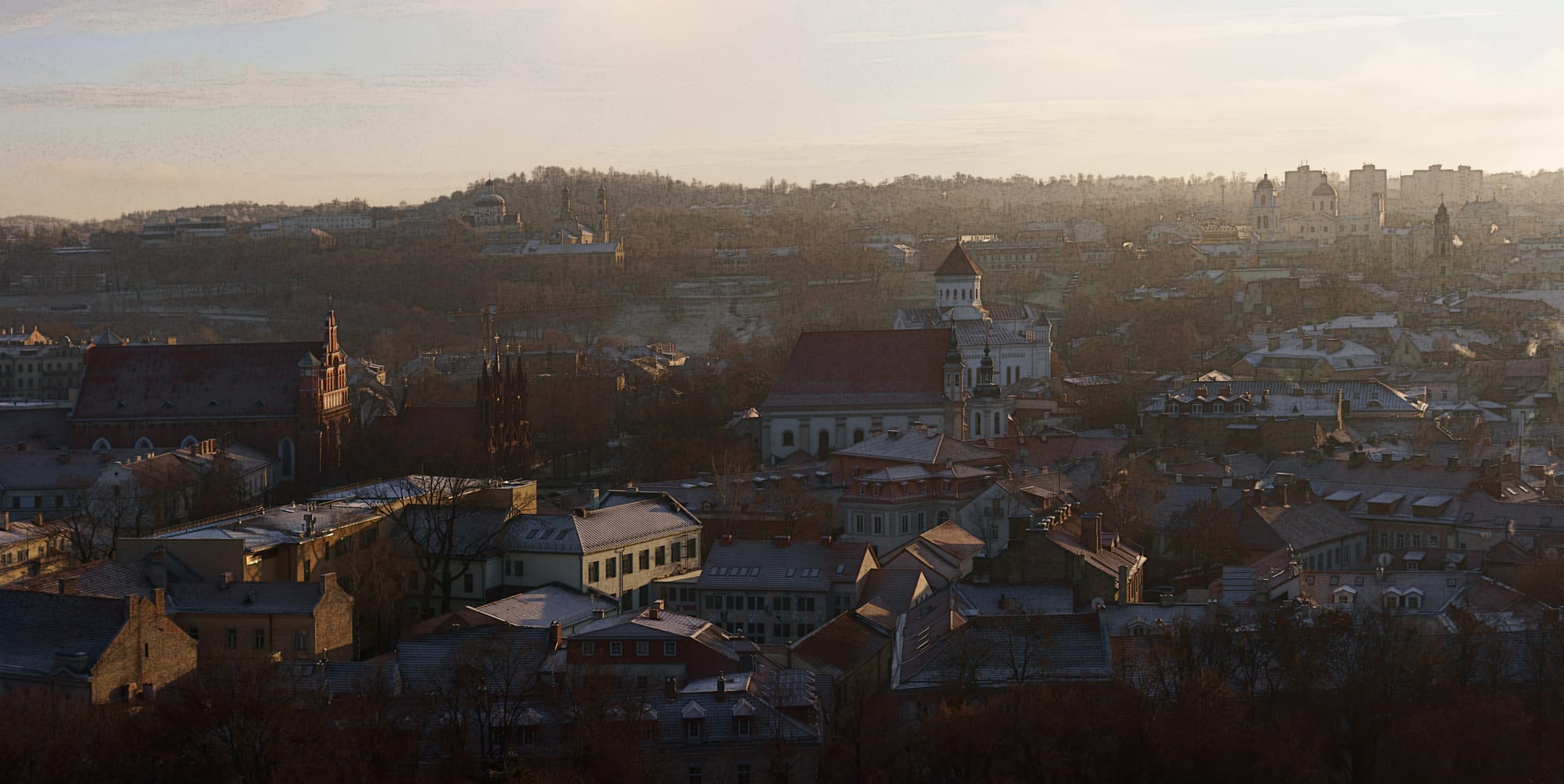
Eastern Lithuania is the historic heart of the state. Hillforts at Kernavė on the Neris were the centre of early Lithuanian power, and in the 14th century Grand Duke Gediminas moved his capital to Vilnius, first mentioned in his letters of 1323. Trakai, 28 kilometres west, was the family seat of Kęstutis and his son Vytautas, who brought Karaim and Tatar settlers from the Crimea around 1400 and completed the island castle. Kaunas grew from a castle on the Nemunas into a Hanseatic trading town.
Under the Polish–Lithuanian Commonwealth Vilnius became a Baroque city of churches and the seat of a university founded in 1579. It also became the "Jerusalem of the North", a centre of Jewish learning associated with the Vilna Gaon, and Litvak communities filled the towns of the region. After the partitions the whole region fell to the Russian Empire, and Kaunas was ringed with forts in the late 19th century.
Between the wars the region was split: Poland seized Vilnius in 1920, so Kaunas served as the temporary capital, gaining ministries, a university and modernist buildings. In 1940 the Japanese consul Chiune Sugihara issued visas in Kaunas that saved thousands of Jewish refugees. The Holocaust then destroyed the Jewish communities, with mass murders at Paneriai near Vilnius and the Ninth Fort in Kaunas. Vilnius returned to Lithuania in 1939, and in 1991 it was the scene of the deadly Soviet assault on the TV tower.