History
The land around the Tuul river was a seat of power long before the modern city. The Kereit khans, rivals and early allies of Temüjin, camped in the Tuul valley, and the steppe east of today's capital is linked in legend to the young Genghis Khan. The city itself began in 1639 as Örgöö, a mobile monastery camp founded for Zanabazar, the first Jebtsundamba Khutughtu and head of Mongolian Buddhism. It moved many times before settling on the Tuul in 1778, and grew as Ikh Khüree — known to foreigners as Urga — a town of temples, monks and Chinese trading quarters.
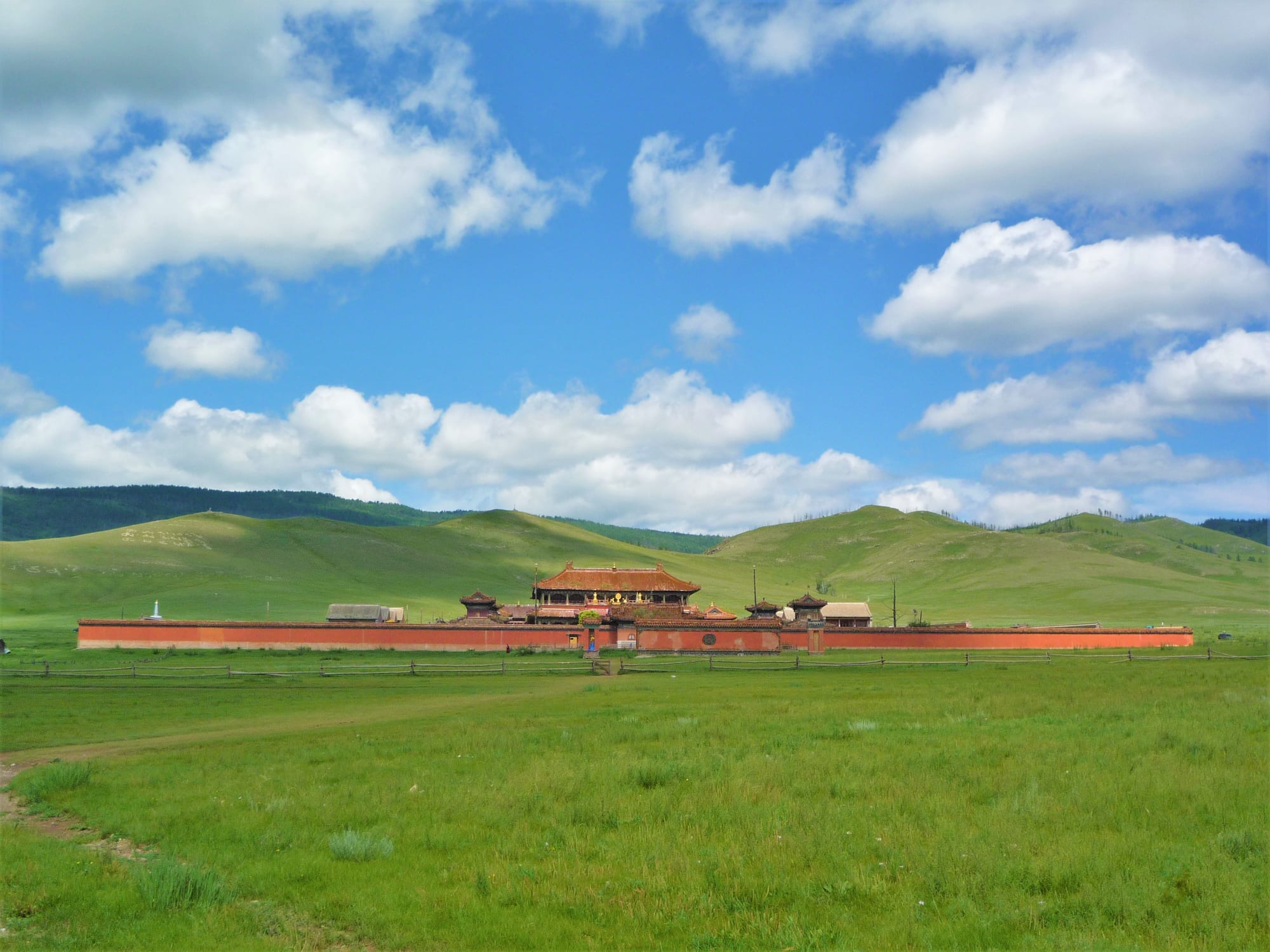
In 1727 the Kyakhta treaty fixed the Russian–Qing border in the north of today's Selenge province, and the tea caravans to Siberia passed through Urga. The same year the Qing emperor ordered Amarbayasgalant Monastery built to honour Zanabazar. After 1911 Urga became the capital of the Bogd Khan's theocratic state, and in 1921 revolutionary troops under Damdin Sükhbaatar took the Chinese garrison at Kyakhta Maimaicheng on the border before marching on the capital with Soviet help. In 1924 the city was renamed Ulaanbaatar, "Red Hero".
The purges of the 1930s destroyed most of the monasteries around the capital, including Manzushir on the slopes of the Bogd Khan mountain. The communist decades built a Soviet-style city of apartment blocks and factories, and in 1961 Darkhan was founded as a planned industrial town. Since 1990 the capital has been the stage for the country's politics, including the democratic protests on its main square, and its growth has been driven by migration from the countryside.