History · Guyana
Guyana: Land of Many Waters
An English-speaking corner of South America built on Dutch dykes and sugar — enslaved Africans and indentured Indians, a race-divided politics, decades of decline, and a sudden oil boom
By Worldlore Editorial · 30 September 2026
A Caribbean country on the South American mainland
Guyana sits on the north-east shoulder of South America, but it belongs to the Caribbean — the only country in mainland South America with English as its official language, a member of CARICOM, and shaped by the same forces as the sugar islands: Dutch and then British colonisation, African slavery, and Indian indentured labour. Its roughly 800,000 people are split into two large communities, Indo-Guyanese and Afro-Guyanese, and that division has organised its politics since the 1950s. Since 2019, offshore oil has made it one of the fastest-growing economies in the world.
A short history
- pre-1600
Arawak and Carib
Indigenous nations along the coast and rivers.
- 1616
Dutch colonies
Essequibo is founded; Berbice and Demerara follow.
- 1763
Berbice rebellion
A slave revolt holds much of the colony for months.
- 1814–1831
British Guiana
Britain takes the colonies and unites them.
- 1838–1917
Indenture
About 240,000 Indians are brought to the sugar estates.
- 1950–1955
The PPP splits
Jagan and Burnham divide along ethnic lines.
- 1966
Independence
Guyana becomes independent under Forbes Burnham.
- 1978
Jonestown
909 people die in a cult murder-suicide in the interior.
- 1992
Free election
Cheddi Jagan wins, 28 years after being forced out.
- 2015 / 2019
Oil
A giant offshore field is found, then comes on stream.
Dutch dykes and sugar
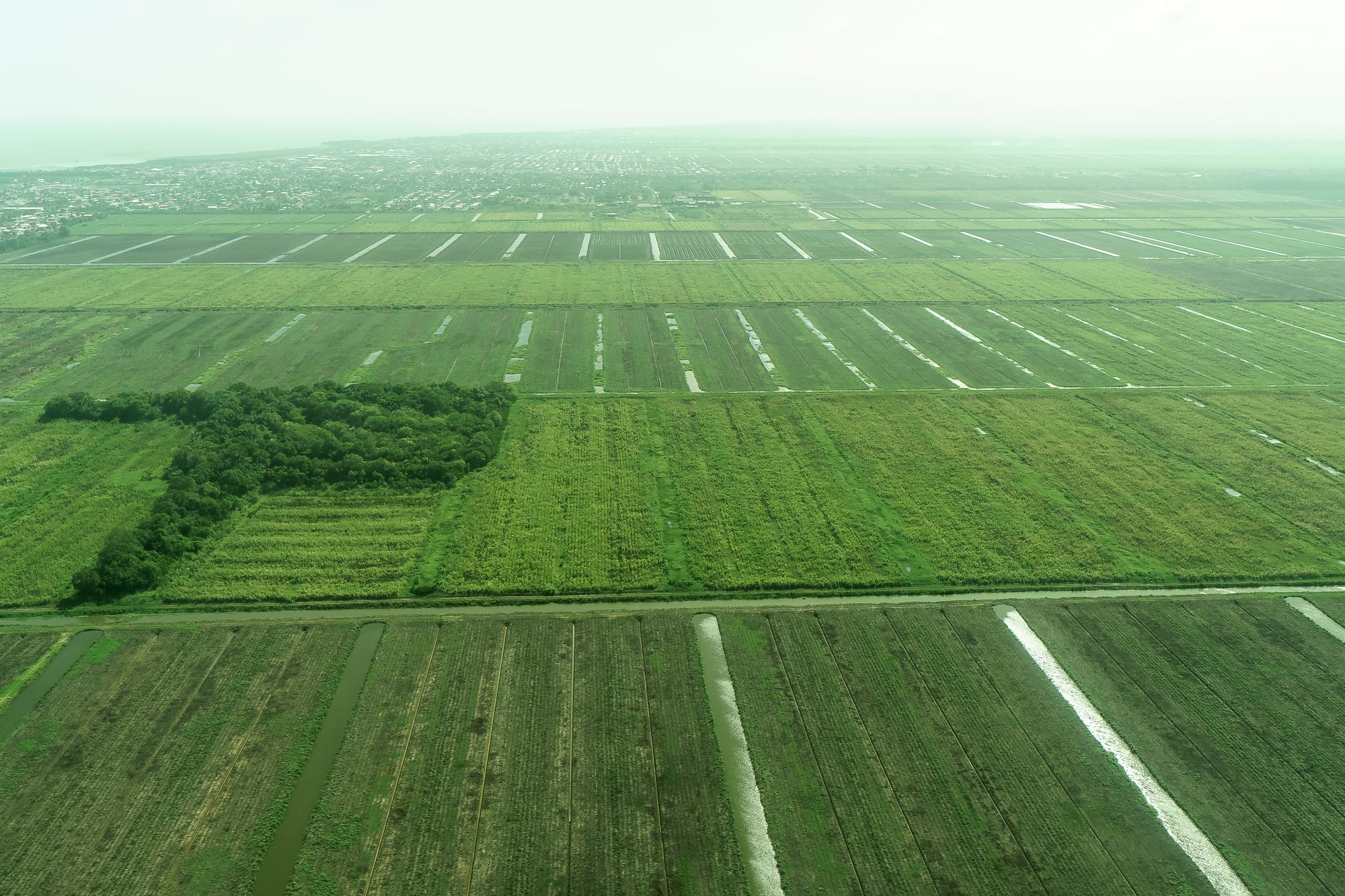
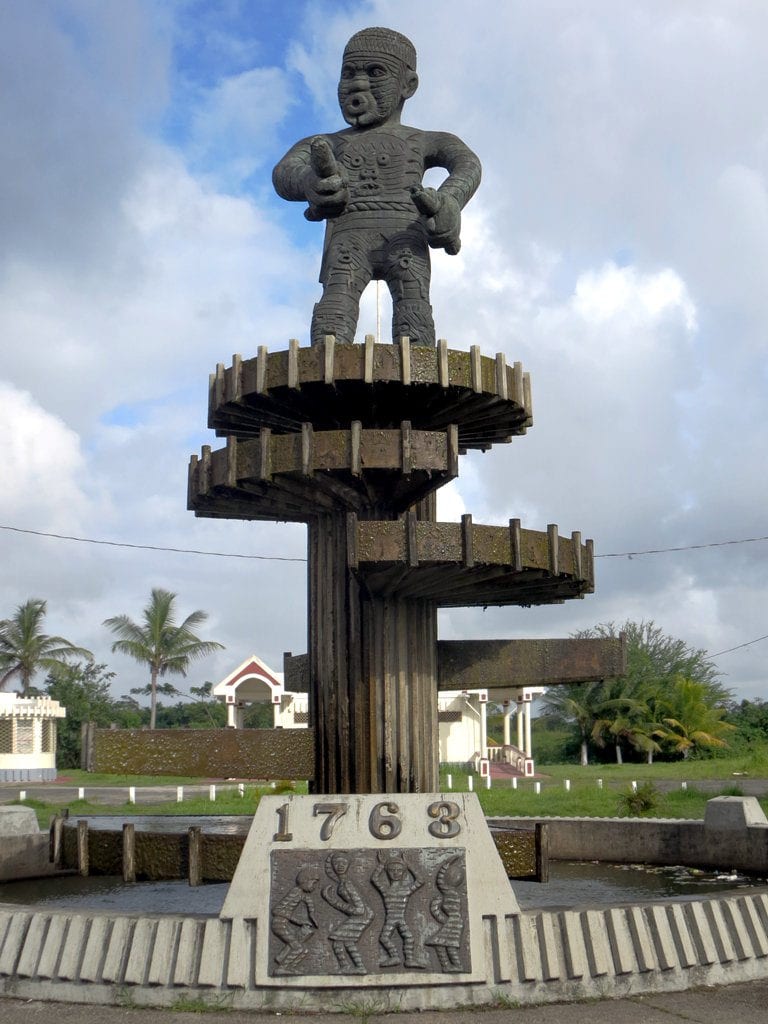
The coast and rivers were home to Arawak and Carib peoples, and the region carried the El Dorado legend that drew Walter Raleigh up the Orinoco. From 1616 the Dutch established three river colonies — Essequibo first, then Berbice and Demerara — and built sugar plantations on the low-lying coast, drained by an elaborate system of dams and canals. That engineered coastal plain, and the sea wall that still protects Georgetown, is Guyana's most distinctive physical feature. The estates were worked by enslaved Africans, and in 1763 a rebellion in Berbice, led by a man remembered as Cuffy, held much of the colony for months before it was put down in 1764.
British Guiana
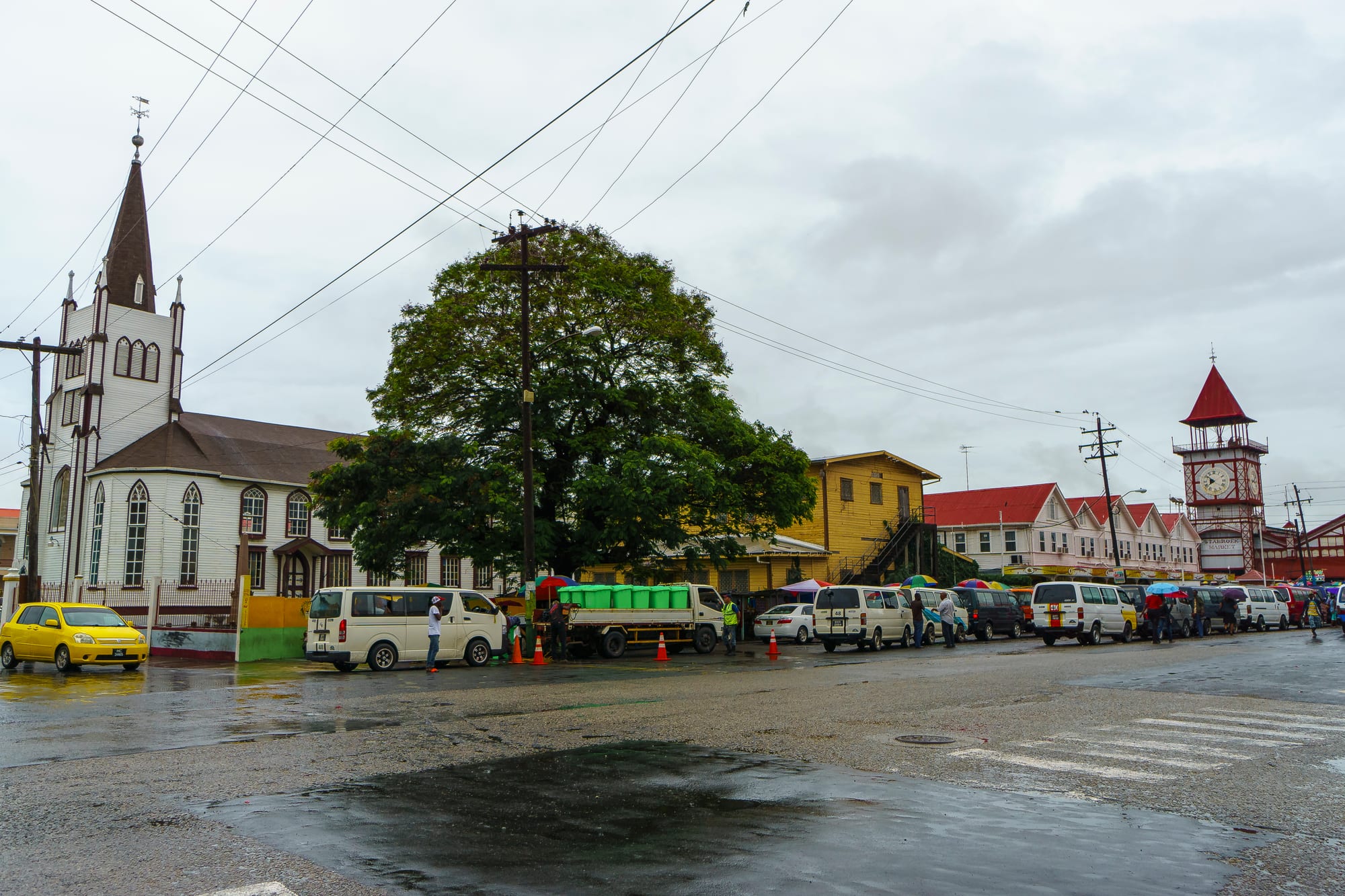
Britain seized the colonies during the wars with revolutionary and Napoleonic France, received them formally in 1814, and united them as British Guiana in 1831. After slavery was abolished in the 1830s, freed people left the estates and pooled their money to buy abandoned plantations and found their own villages. To replace their labour, planters brought in indentured workers — some Portuguese and Chinese, and about 240,000 Indians between 1838 and 1917. Indo-Guyanese became the sugar and rice population.
Jagan, Burnham, and the Cold War
Cheddi Jagan and Forbes Burnham founded the multiracial People's Progressive Party in 1950. It won the 1953 election — after which Britain, alarmed by its leftism, suspended the constitution within months and sent troops. The party then split along ethnic lines: Jagan kept the PPP, with its Indo-Guyanese base, and Burnham formed the People's National Congress, with an Afro-Guyanese base.
The two founders
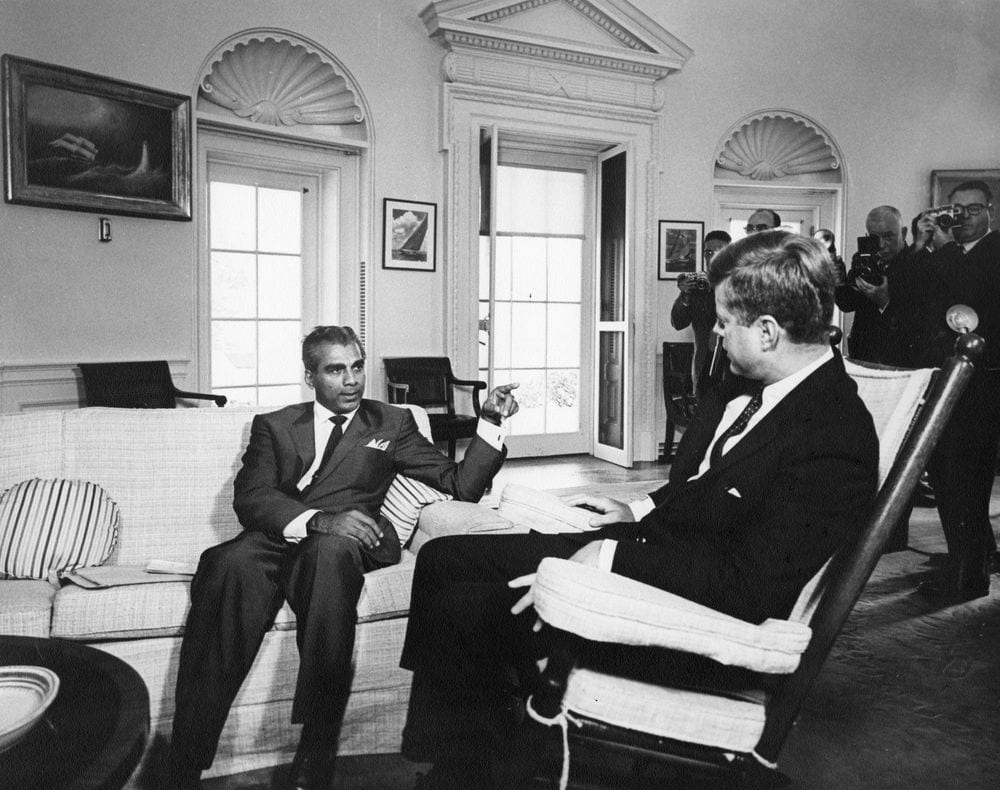
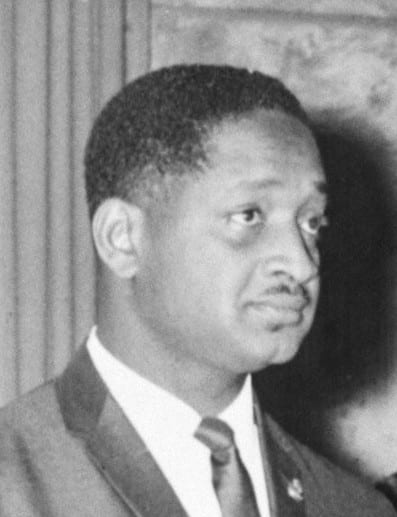
A switch to proportional representation, pushed by London and Washington, let Burnham form a coalition in 1964, and Guyana became independent under him on 26 May 1966.
Decline, Jonestown, and recovery
Burnham's Guyana became an authoritarian socialist "co-operative republic" that nationalised the major foreign-owned industries, held elections widely seen as fraudulent, and drove the economy into collapse and shortage. Large numbers of Guyanese emigrated. In 1978 the American Peoples Temple cult, settled in the north-western jungle, murdered a visiting US congressman, and 909 people died at Jonestown itself in a mass murder-suicide.
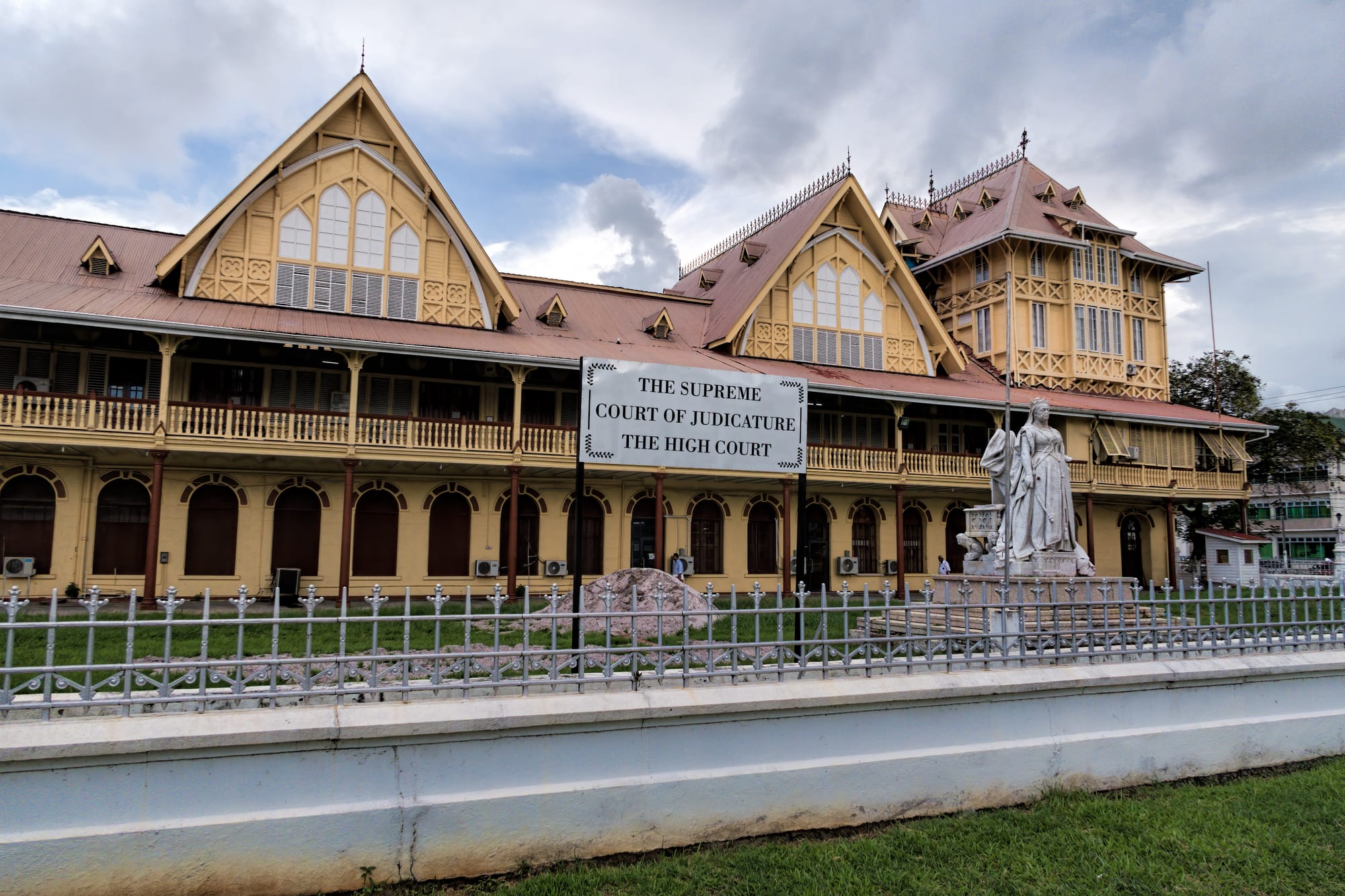
Under pressure, Guyana held a free election in 1992, won by Jagan — 28 years after he had been forced out. His PPP then governed for 23 years. The disputed 2020 election, whose vote tabulation was widely seen as fraudulent and which took five months of recounts and court challenges before the PPP's Irfaan Ali was sworn in, showed how raw the ethnic divide remains. Ali and the PPP/C were re-elected in September 2025.
Oil, and Venezuela
In 2015 ExxonMobil found oil off Guyana's coast, the first of discoveries since described as the largest addition to global oil reserves since the 1970s, and production began in 2019. Guyana has since been among the fastest-growing economies anywhere. The boom has sharpened an old danger: Venezuela claims the Essequibo region, more than two-thirds of Guyana's territory, with the offshore block where the oil was found lying off its coast, a dispute rooted in an 1899 arbitration and now before the International Court of Justice.
What Guyana carries
Guyana's landscape was engineered by the Dutch, its population assembled by the British from Africa and India, and its politics frozen since the 1950s into a contest between the descendants of those two labour forces. Decades of authoritarian decline emptied the country of much of its talent. Oil has now made it suddenly rich — and put a far larger prize on the table of both its internal divide and its border dispute.