Attractions & Natural Wonders · Mauritania
Mauritania: Seven Attractions and Natural Wonders
Medieval caravan towns buried in sand, a geological bullseye visible from space, one of the longest trains on earth hauling iron ore through the Sahara, and a coastal park where fishermen have long worked alongside wild dolphins
By Worldlore Editorial · 30 September 2026
The gateway to the western Sahara
Mauritania stretches from the Atlantic coast deep into the Sahara, a mostly desert country of about 5.4 million people bridging the Arab Maghreb and sub-Saharan West Africa. Its medieval caravan towns, built on the salt-and-gold trade routes that once linked Timbuktu to Morocco, are slowly being reclaimed by the dunes; its coast holds one of the richest fishing grounds and most important bird sanctuaries in the world. Tourism is small-scale and mostly organised through desert expeditions.
The seven below span the Adrar desert region, the coast, and the far interior. The cool season (November to March) is the only realistic time for desert travel; summer heat is extreme.
1. Chinguetti
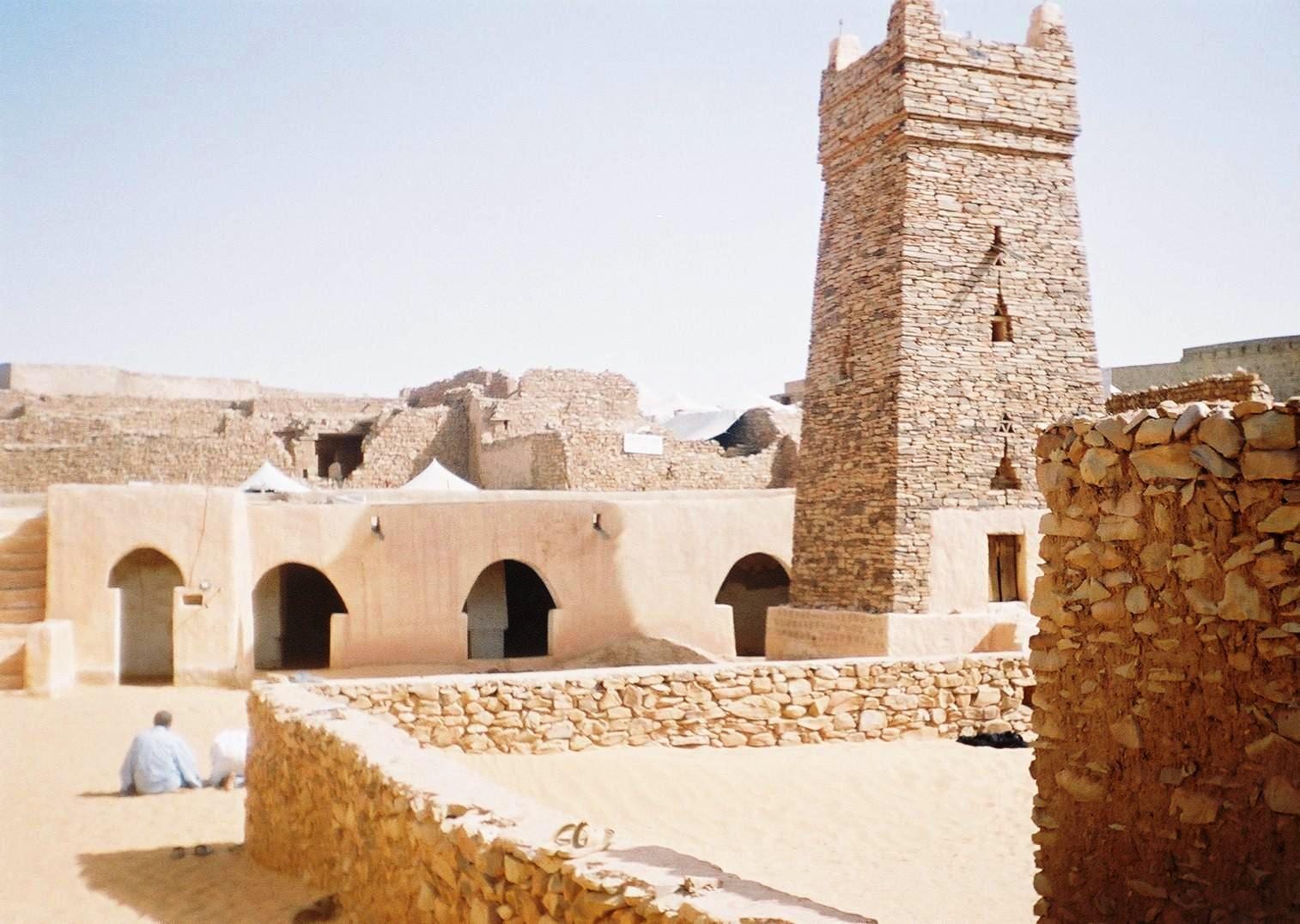
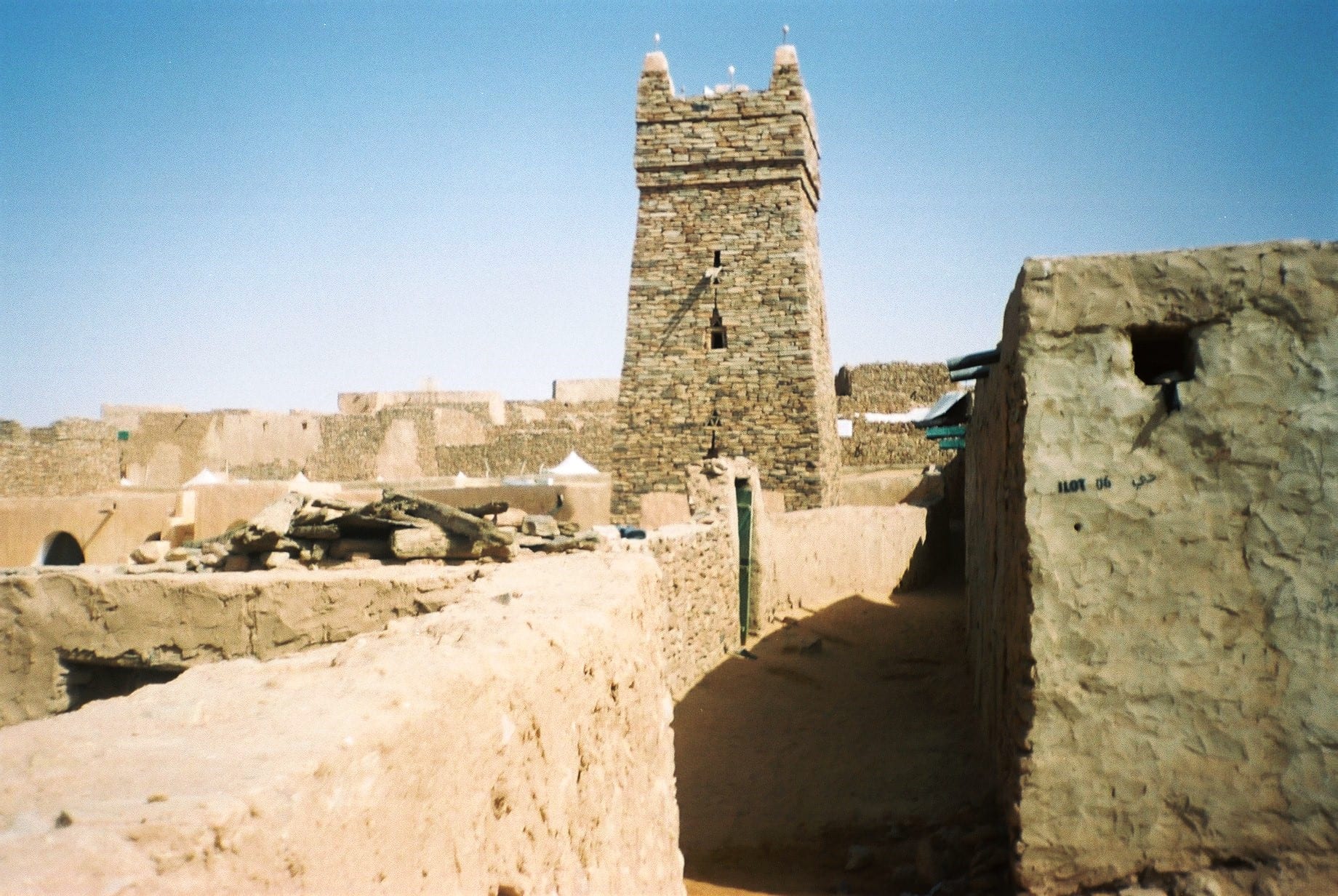
Chinguetti, founded in the 13th century, was for centuries a major stop on the trans-Saharan pilgrimage and trade route and a renowned centre of Islamic scholarship, long regarded as a holy city in its own right. Its old quarter, built of dry stone and mud, still holds several private manuscript libraries with centuries-old texts on theology, law, and astronomy, alongside the town's distinctive square-minaret mosque. Sand dunes now press directly against its walls. It is a UNESCO World Heritage Site.
It is the usual base for desert excursions into the surrounding Adrar region.
2. Ouadane
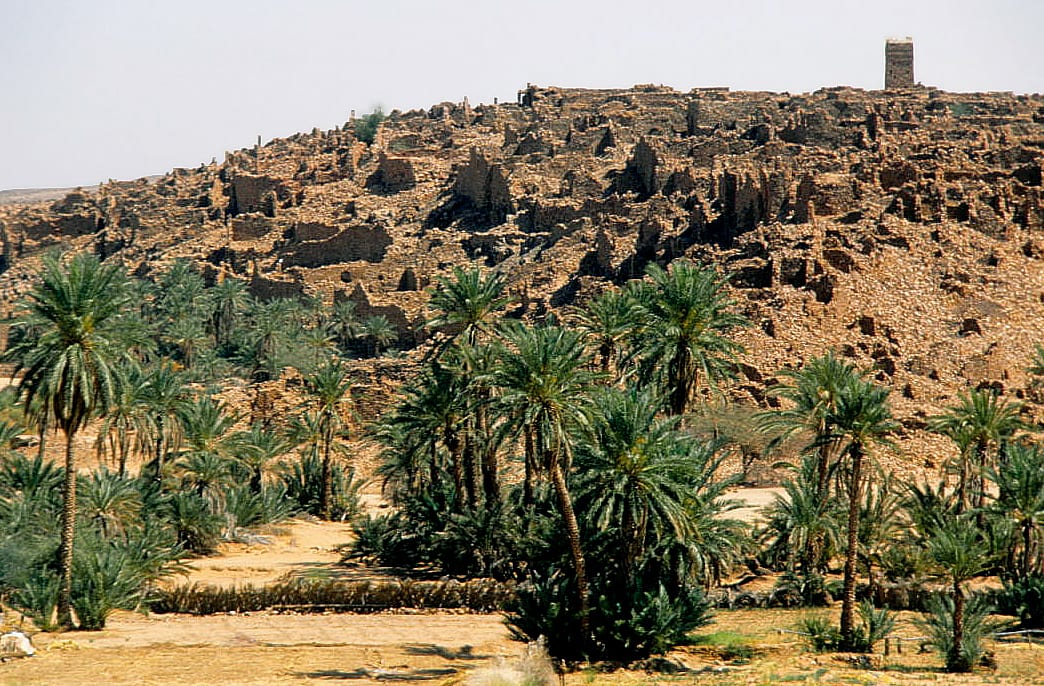
Ouadane, a medieval staging post for salt caravans, is now largely ruined — a hilltop tumble of stone houses and mosques abandoned as trade routes shifted, with a smaller inhabited village alongside. Along with Chinguetti, Tichit, and Oualata, it forms a single UNESCO World Heritage Site recording the caravan-town network that once linked West Africa to the Mediterranean.
It is one of the more atmospheric, least-restored ruins in the region.
3. Banc d'Arguin National Park
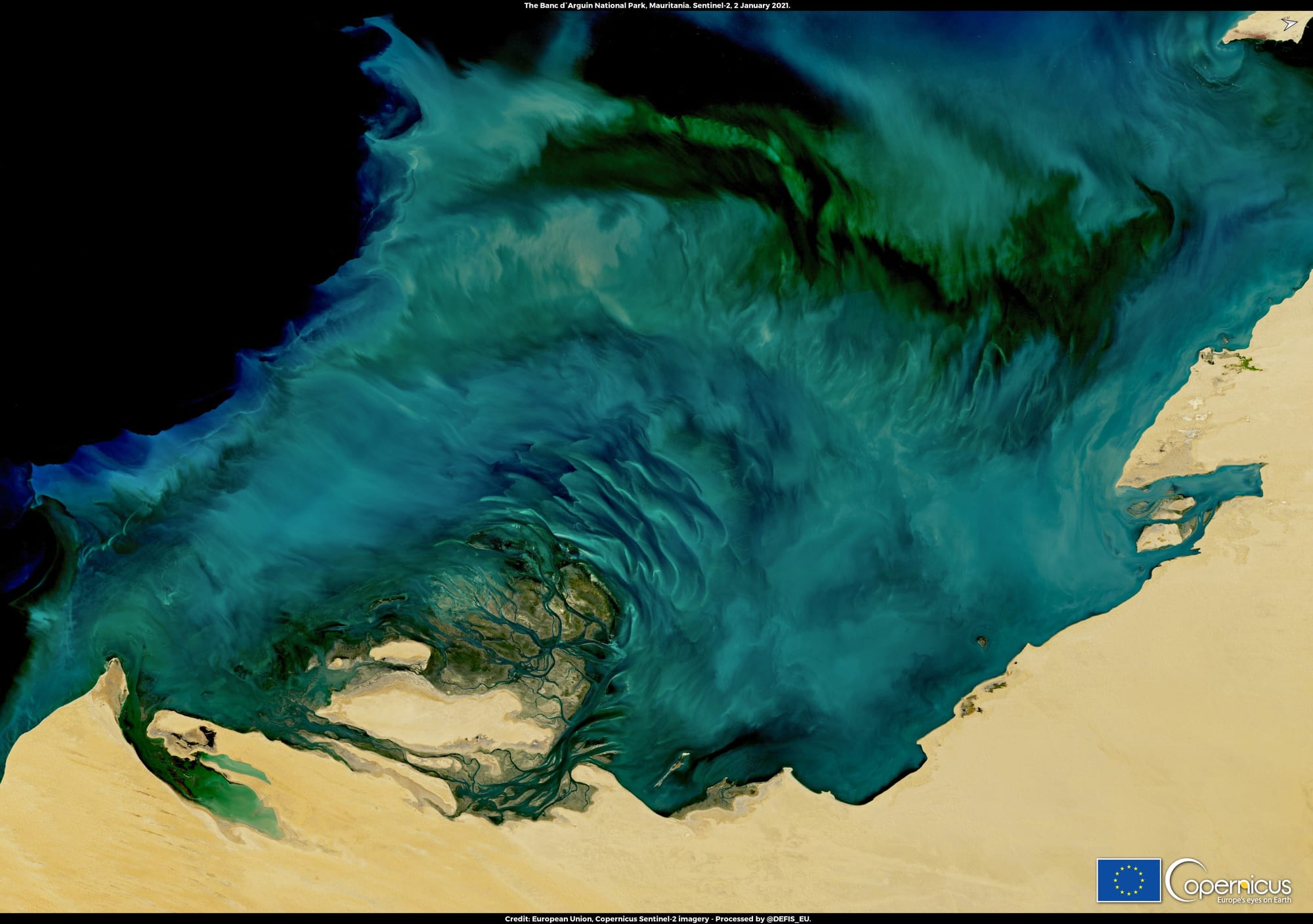
Banc d'Arguin, on the Atlantic coast, is a vast expanse of shallow water, mudflats, and dunes that hosts one of the largest concentrations of wintering shorebirds on earth — millions of migratory birds from as far as Siberia — as well as dolphins and Mediterranean monk seals. The Imraguen fishing community here is known for a traditional technique of fishing alongside wild dolphins, which drove mullet schools toward the shore. It is a UNESCO World Heritage Site.
Access is by 4x4 or traditional sailing lighter from Nouakchott or Nouadhibou, with local guides essential.
4. Nouakchott
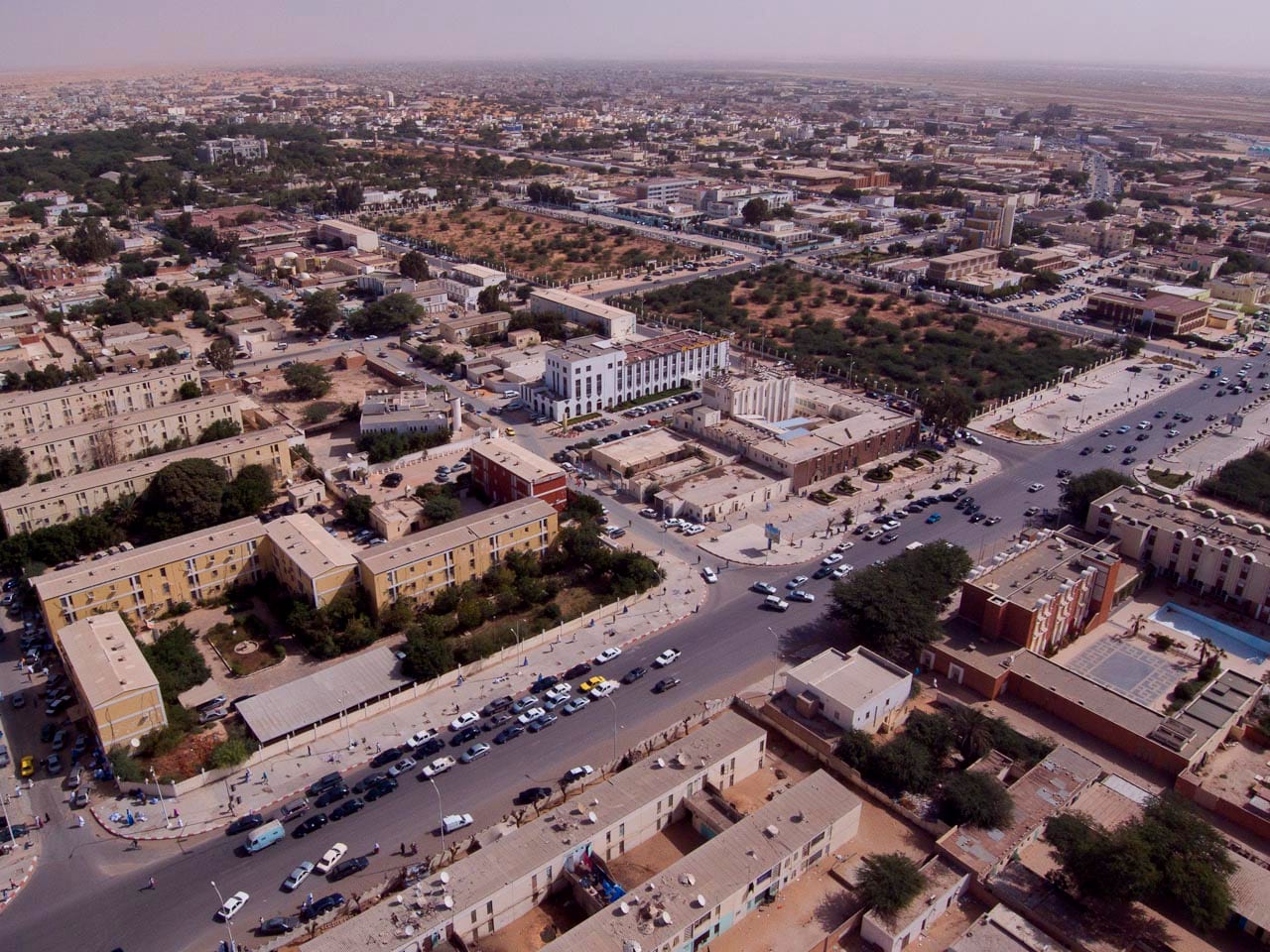
Nouakchott, the capital, grew from a small fishing town, enlarged from 1958 for a planned 15,000 people, to nearly 1.5 million today, spreading across the coastal sand with little natural water. Its main sights are practical rather than monumental: the busy fish market and port where wooden pirogues land the daily catch, the National Museum, and the Saudi-funded Grand Mosque.
It is the country's main air gateway and the starting point for desert and coast trips.
5. The Terjit oasis
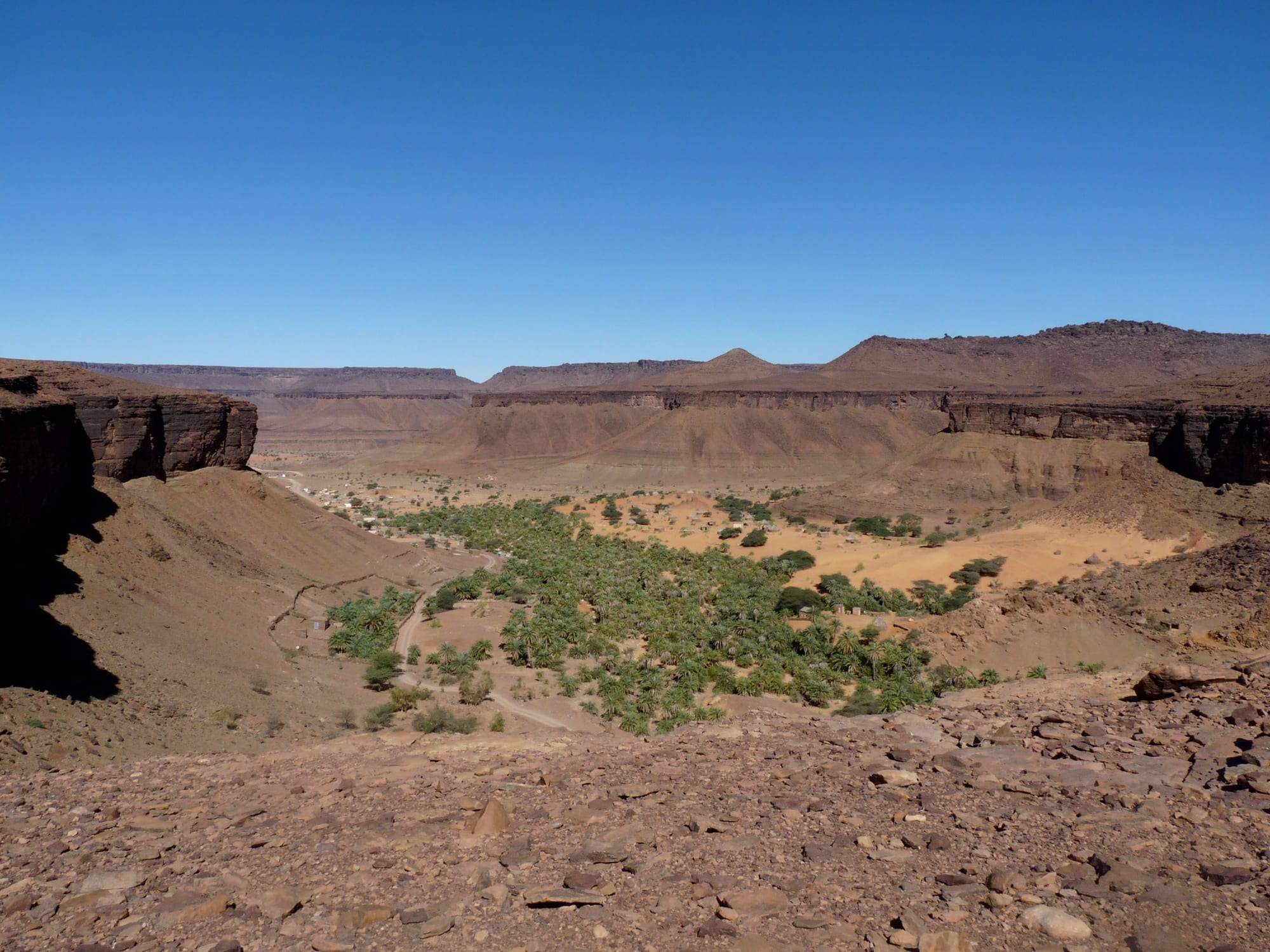
Terjit, a narrow gorge in the Adrar plateau, is a startling green slash of date palms and natural spring-fed pools squeezed between bare rock walls — one of the most-visited natural spots in the desert interior, and a popular overnight camp for travellers exploring the Adrar. Swimming in the cool pools is a welcome contrast after a day in the desert heat.
It lies about 45 kilometres by road south of Atar.
6. The iron ore train
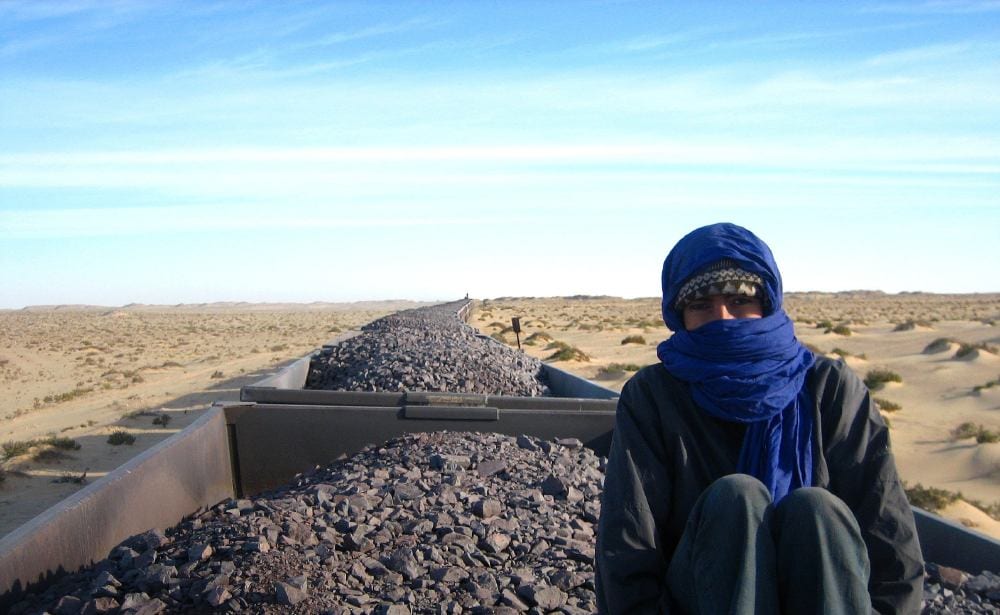
The train that hauls iron ore from the mines at Zouérat to the port at Nouadhibou is up to 3 kilometres long — among the longest and heaviest trains in the world. A handful of intrepid travellers ride it in an open ore wagon (a free, rough, unofficial, and genuinely gruelling overnight journey through the desert) as one of the more extreme rail experiences anywhere.
It is not for casual travellers — expect iron dust, cold desert nights, and no facilities at all.
7. The Richat Structure
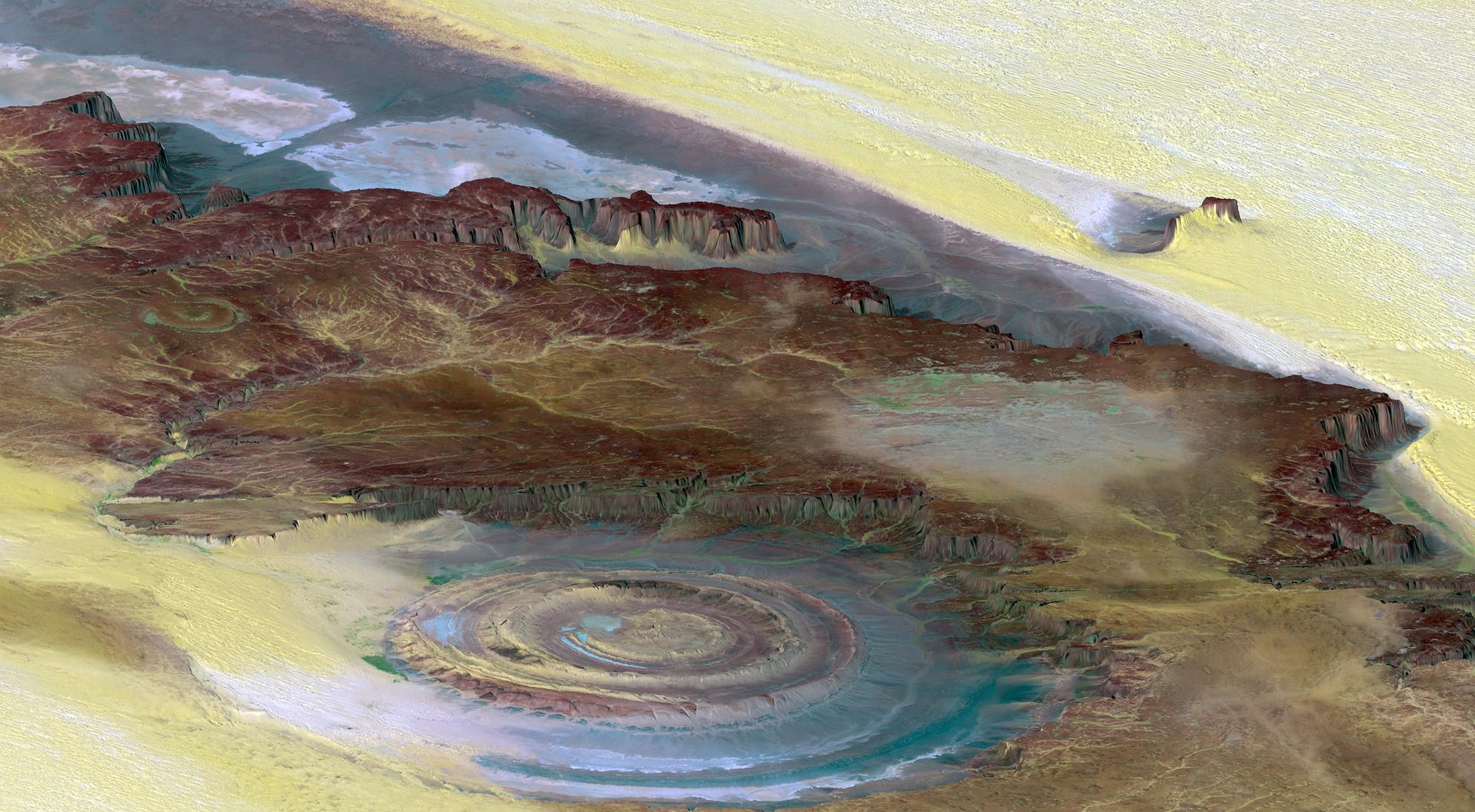
The Richat Structure, near Ouadane, is a huge eroded geological dome about 40 kilometres across, its concentric rock rings so symmetrical that astronauts have used it as a landmark — long assumed to be an impact crater, now understood to be the result of uplift and erosion. From the ground it is difficult to appreciate; it is best known from orbit, and Ouadane is the closest town to it.
Before you go: a practical note
Most of Mauritania's interior and its border areas with Mali and Algeria carry heightened security advisories due to the risk of terrorism and kidnapping linked to instability in the wider Sahel, and mined areas remain near the Western Sahara border. The Adrar region around Chinguetti, Ouadane, and Atar, along with Nouakchott and the coast, are the areas most visited and generally covered by organised desert-tour operators; check current government advice and travel with an experienced local guide.
A typical trip is a week to ten days focused on the Adrar desert towns and Terjit, often combined with the coast at Nouakchott or Banc d'Arguin.