Culture & Customs · Yemen
Yemen: The Dagger, the Verse and the Welcome
A deeply Muslim country of Sunni and Zaydi traditions, where a guest is greeted with a blessing, a curved dagger marks a man's standing, and poetry is still composed aloud at weddings and in the settling of disputes
By Globeway Editorial · 30 September 2026
A visitor reaches the door of a Yemeni home and, before stepping inside, calls out "Allah, Allah" more than once. The words are a courtesy as much as a blessing: they let the household know that a man is entering, so that the women of the family can cover up if needed. From within comes the host's welcome, "Hayakum Allah", may God greet you, and the guest replies "Allah ya hayakum", and you too. Then the talk begins. The small exchange at the threshold holds a good deal of Yemeni culture: faith woven into everyday speech, careful respect for the privacy of the home, and a welcome framed as a blessing.
Faith, identity and values
Islam is the state religion, and according to the US State Department more than 99 per cent of Yemenis are Muslim. Most follow either the Shafi'i school of Sunni Islam or Zaydi Islam, a distinct branch of Shia Islam; there are no official figures, but the US government estimated in 2024 that roughly 60 to 65 per cent are Sunni and 35 to 40 per cent Shia, mostly Zaydi. There are also followers of other Sunni schools and of Ismaili and Twelver Shia Islam, while Jews, Baha'is, Hindus and Christians together make up less than 1 per cent, many of them refugees or foreign residents.

Since 2014, Yemen has been divided by a war between the government and the Houthi movement, known as Ansar Allah, which has its historical roots in a Zaydi revivalist movement, and the country has been divided between rival authorities. A UN-brokered truce in 2022 brought several years of relative calm, but fighting resumed in 2026. This article is written to explain Yemeni culture, which is shared across the country's communities, and not to encourage travel.
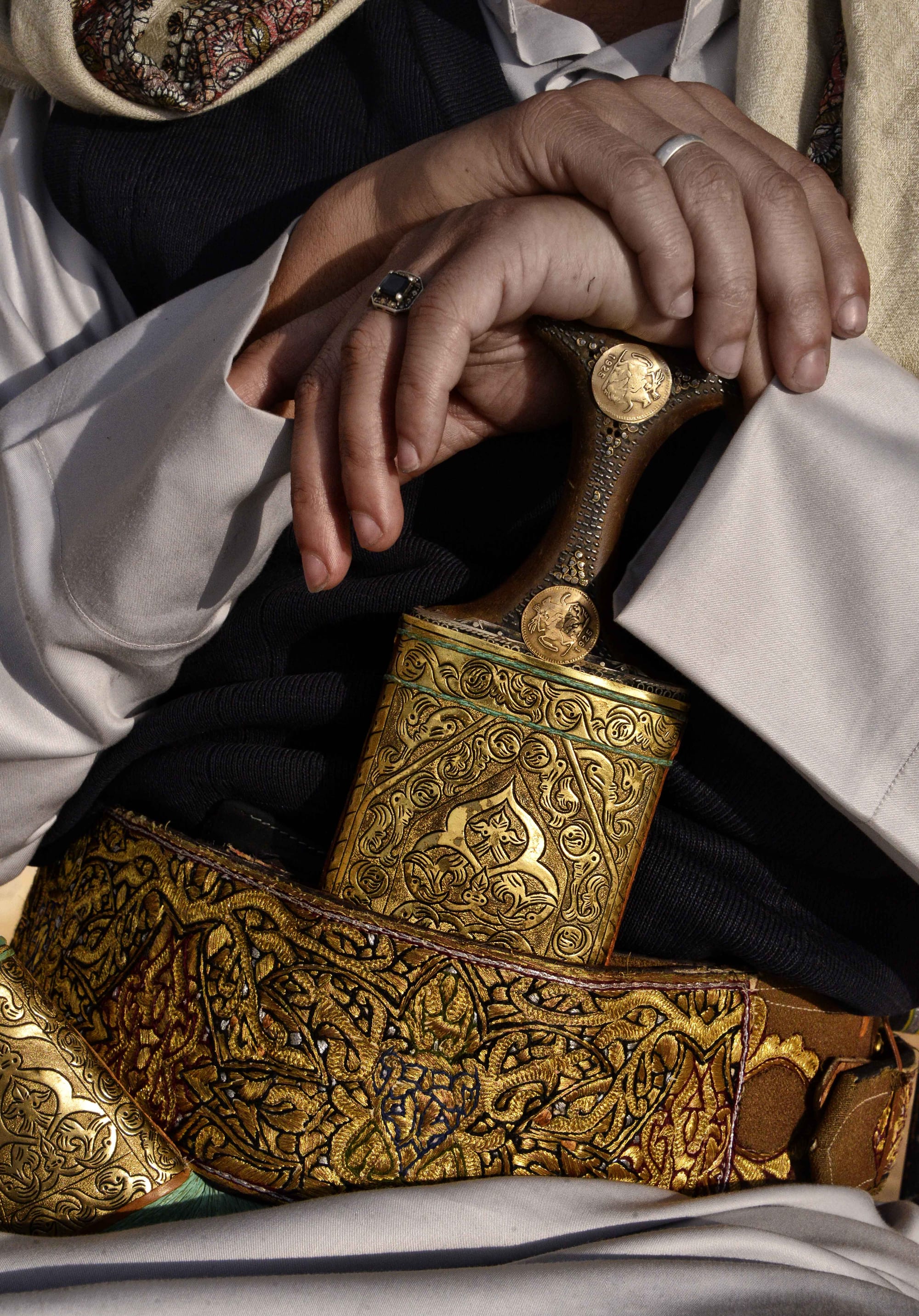
Social life rests on family, faith and honour, and few objects express honour more visibly than the jambiya, the short curved dagger worn by many men. In the capital, NPR found that most men wore one tucked into the front of an embroidered belt over their robes, and that a fine jambiya was the ultimate status symbol, admired more than any clothing. The jambiya is a customary part of Eid dress, and the value of a fine one depends above all on the material and craftsmanship of its hilt.
Greetings and meeting people
Everyday speech is full of blessings. Beyond the host's "Hayakum Allah", a group may be greeted with "Yijmakum ala khair", may God gather you in goodness, to which the reply is "Wa min qaal", and he who said it. Someone who looks tired, hurt or unwell is met with "Yassin alaykum", a word of sympathy and a prayer for recovery. Newly married couples are greeted with "Dam Allah al-surur", may happiness last for ever, and they answer "Surur da'iam", always, for all.
Privacy within the home is taken seriously, which is why a male visitor announces himself on entering. Many social occasions, weddings above all, are organised in separate spaces for men and for women, and visitors should expect the sexes to be hosted apart.
Hospitality and being a guest
Communities share the work of hospitality on big occasions. At weddings, neighbours of the groom's family traditionally help to prepare the banquets for guests, a custom of mutual help known as al-garm, and coffee and refreshments are served throughout long celebrations that run late into the night.
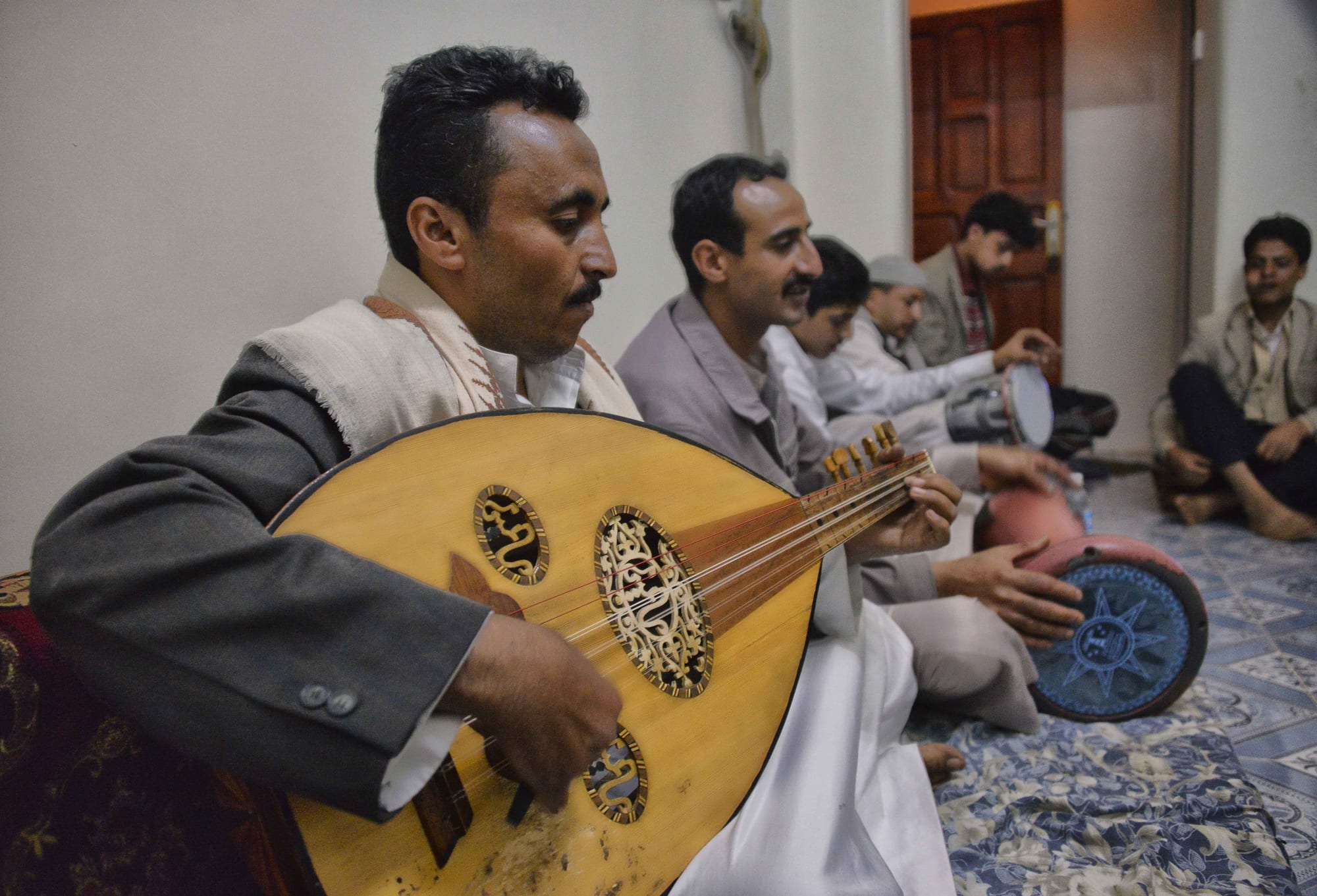
The afternoon gathering, the magyal, is one of the central institutions of Yemeni social life: friends, relatives or colleagues sit together after lunch through the afternoon, talking, and on festive occasions a chanter or singer leads songs in which the company joins. It is at these gatherings, and at wedding evenings known as samra, that the classic Song of Sana'a has traditionally been performed.
Festivals and life's big moments
Ramadan is welcomed with songs, and many city families return to their home villages to spend the month with relatives. In the countryside the fast is traditionally broken with dates and fruit, followed after prayers by dishes such as shafoot, flatbread soaked in buttermilk and yogurt with herbs. The nights are long and sociable: mosques fill for extended prayers and Quranic recitation, friends gather to talk until dawn, and those who can afford it give to the poor. Eid al-Adha brings the sacrifice of sheep, goats or calves, with the meat divided among relatives, friends, neighbours and the poor. Before Eid, markets fill with families buying new jambiyas and henna, which both men and women use to decorate the body and dye the hair. Henna practices are also on UNESCO's list of intangible heritage.
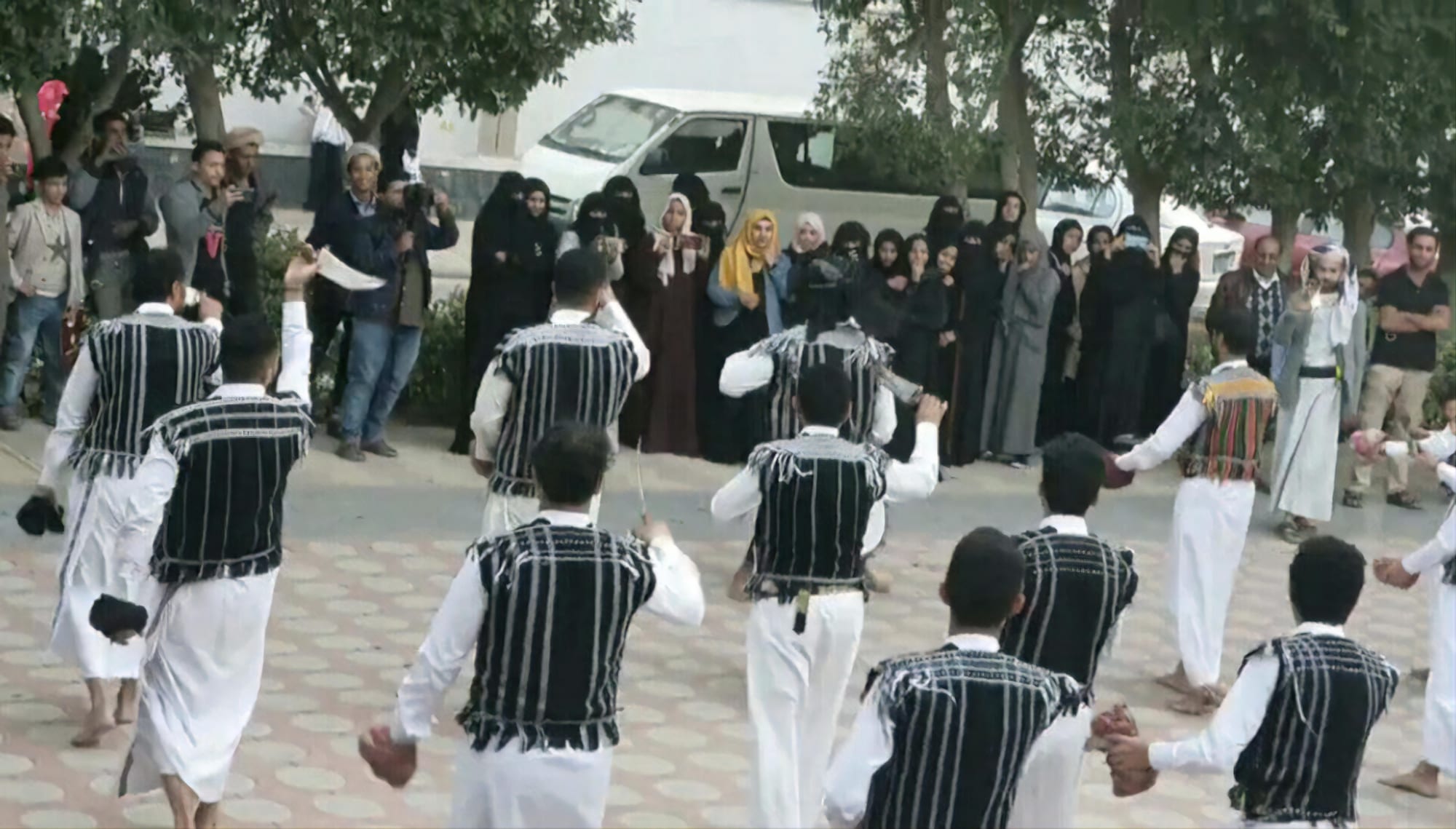
Weddings are the grandest family occasions and customs vary by region; in some areas the groom meets most of the costs, while in others the bride's side furnishes the new home. Celebrations usually last several days, with men and women celebrating separately. On the henna night, henna is applied to the hands and feet of the bride and groom, and guests give gifts of money. In the zaffa, the wedding procession, the groom walks slowly through lit streets carrying a sword while chanters sing religious songs, and afternoon gatherings with chanting and song fill the days. Guests who meet the couple in the first days of marriage wish them lasting happiness.
The birth of a child is also marked in stages. In many families, women are invited to the house on the seventh day after the birth, and the new mother is later honoured with fattah, pieces of bread mixed with ghee and honey. The husband traditionally meets the costs of these celebrations and prepares a decorated room to receive the visitors.
Arts, crafts and music
The Song of Sana'a, on UNESCO's list of intangible heritage, is one of the most celebrated Yemeni musical traditions. It draws on poetic traditions dating back to the fourteenth century, in both Yemeni dialect and classical Arabic, and its poetry is known for its wordplay and emotional power. A solo singer is accompanied by the qanbus, the Yemeni lute, and the sahn nuhasi, a copper tray balanced on the thumbs and struck lightly with the other eight fingers. Although named after the capital, UNESCO describes it as a tradition practised throughout Yemen.
Poetry is the great popular art. Among the tribes, as the anthropologist Steven Caton found, verse is almost always spoken or chanted and is composed in the course of performance, often on the spot, demanding wit and presence of mind, since a poet may be challenged in verse at any moment. It is performed at weddings and religious festivals, and it plays a part in the mediation of disputes, where a well-made poem is thought to help persuade the parties towards a peaceful settlement. In the Hadramawt, the Hadrami Dan gathering, added to UNESCO's list in 2025, brings singers and poets together with an audience seated in rows or circles: the performance opens with the chanting of the word dan, and poets improvise verses to the chosen melody, accompanied by the oud, flute, violin and drums, and often with food and tea.
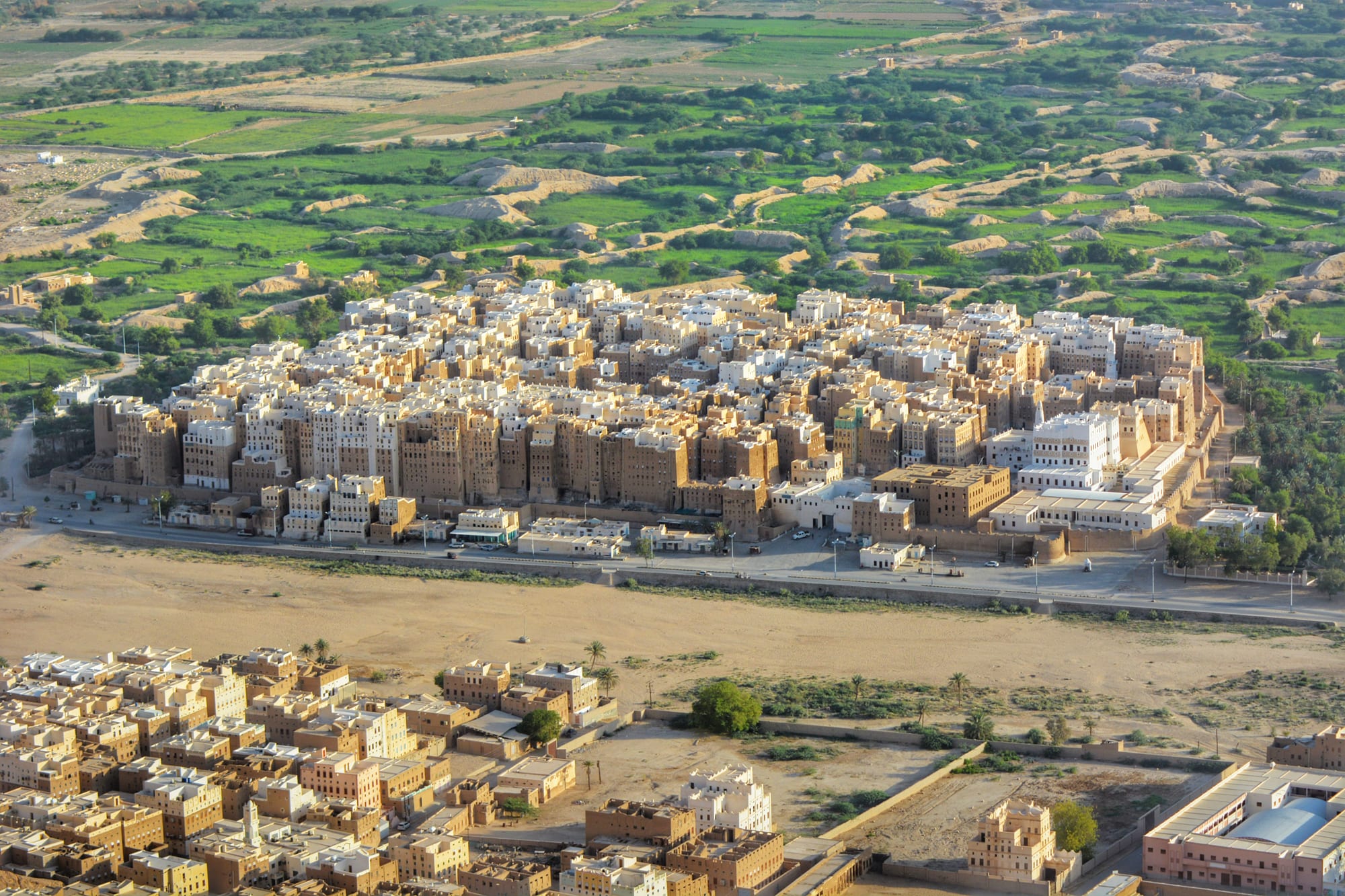
Crafts are closely tied to dress and faith. Jambiya blades are forged by blacksmiths in the back alleys of old markets, and Yemen shares with other Arab countries a UNESCO listing for the engraving of gold, silver and copper, in which words, symbols, geometric patterns and verses of the Quran are cut by hand into decorative and ceremonial objects. Arabic calligraphy is also on UNESCO's list. Architecture is Yemen's most monumental art: the Old City of Sana'a, a World Heritage site placed on the danger list in 2015, is known for its dense tower houses of rammed earth and burnt brick, rising several storeys above stone ground floors and decorated with geometric patterns of fired brick and white gypsum, while the sixteenth-century walled town of Shibam, with its sun-dried mud-brick towers, is one of the oldest examples of urban planning based on building upwards.
Dos and don'ts for visitors
- Do check the latest government travel advice before any trip; the UK advises against all travel to the whole of Yemen because of unpredictable security conditions, and most governments advise against all travel.
- Do reply to the welcome "Hayakum Allah" with "Allah ya hayakum".
- Do announce yourself when entering a home; male visitors traditionally call out "Allah" so that the household knows they are coming in.
- Do expect men and women to be hosted separately at weddings and many other gatherings.
- Do offer good wishes at Eid, and congratulate newly married couples with "Dam Allah al-surur".
- Don't press people about the war or its politics; many Yemenis have lost relatives, homes or livelihoods.
What to take away
Yemen's customs have endured through years of war because they live in everyday speech and gatherings — the blessing at the door, the verse composed on the spot, the song shared through a long afternoon — and they speak of a people for whom welcome and honour remain close to the heart.