💰 Budget
Puerto Madryn is cheaper than Ushuaia or El Calafate but costs more than much of northern Argentina. The big expenses are tours: a day on Península Valdés, a whale-watching boat from Puerto Pirámides or a penguin trip each adds a large amount, and park entry is charged separately. Watching whales from the beaches near the city costs nothing.
- Daily Budget Midrange
- USD 120–230 (hotel, a peninsula tour or boat trip, seafood and lamb dinners)
- Daily Budget Shoestring
- USD 45–80 (hostel bed, seafood lunches or self-catering, buses and beach whale watching)
Rooms fill fastest in the peak whale months and in January and February; a hire car shared between several people can cost less than separate peninsula tours.
📅 Best Time to Visit
The whale season runs roughly from May or June to December and is the busiest time of year. Penguins are on the Chubut coast from about October to March. December to February is beach season, warm and dry but windy; in January sea lions give birth and the whales are gone.
⏳ Suggested Number of Days
Two or three days allow a full day on the peninsula and time in the city. Four or five suit visitors who also want the penguin colonies and the Welsh towns of the Chubut valley. Season makes the biggest difference, since the wildlife on show changes through the year.
- First Visit
- 2–3 days
- With Surroundings
- 4–5 days
🚆 Transportation
The centre and seafront are walkable, and local buses and taxis cover the rest of the city. Buses run to Puerto Pirámides and to Trelew, but the peninsula's wildlife sites are far apart, so most visitors join a tour or hire a car.
Fill the tank before driving onto the peninsula, drive slowly on gravel and watch for guanacos and sheep on the road.
🛬 Airport & Station Connections
El Tehuelche Airport is about 5 km north-west of the city, but most visitors fly into Almirante Marcos A. Zar Airport at Trelew, about an hour south by road, which has flights from Buenos Aires. Long-distance buses link the city's terminal with Buenos Aires and the rest of Patagonia, and cruise ships call at the central pier.
🚶 Walkability
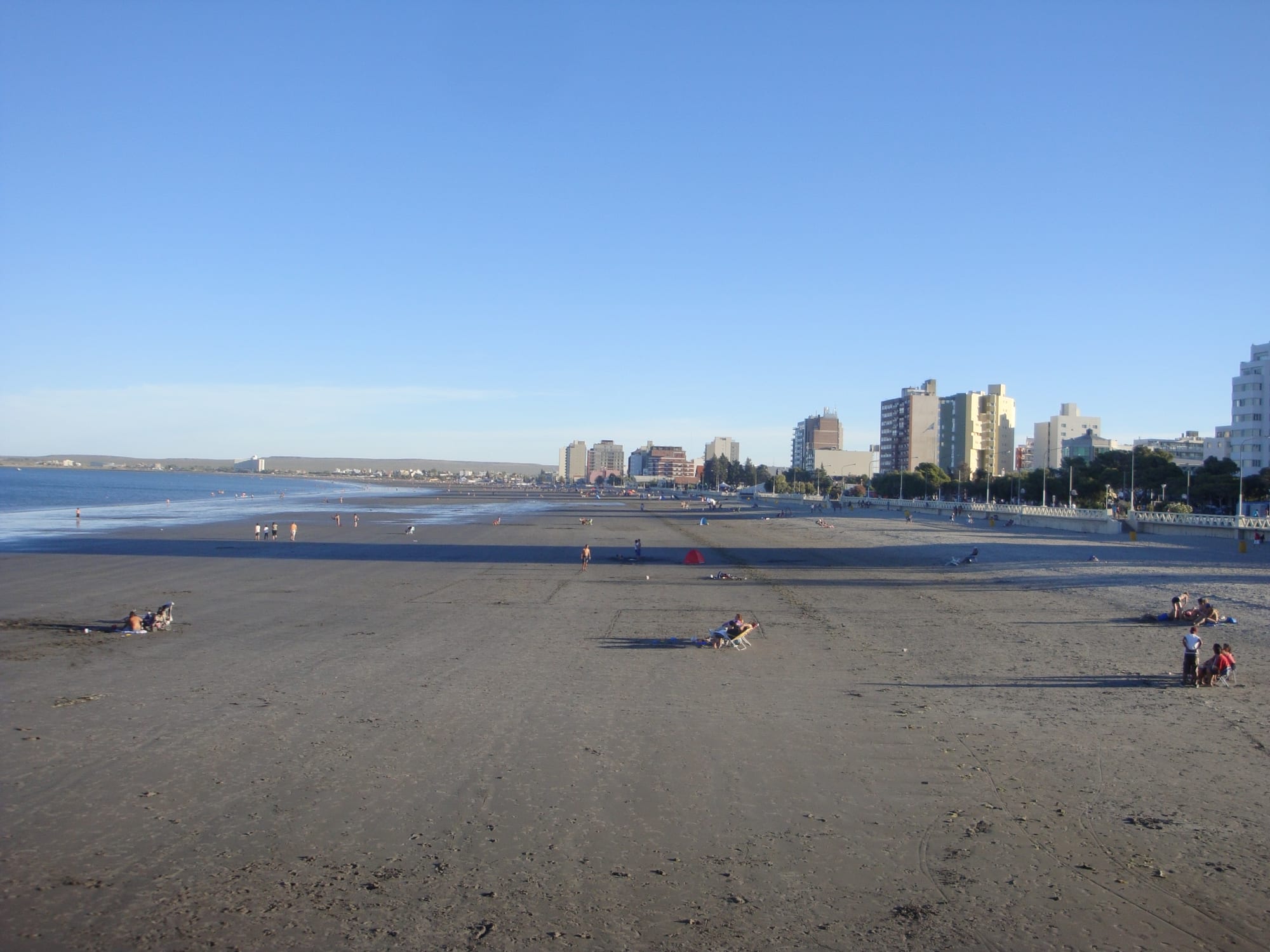
The centre is compact, flat and pleasant on foot, and the seafront promenade runs beside the beach. Beyond the city the distances are large and the wind can be strong, so the beaches, Punta Loma and the peninsula need transport.
🛡️ Safety
Argentina is relatively safe by regional standards, and violent crime against visitors is uncommon. Puerto Madryn is a calm city with only occasional petty theft. The real risks are on the road and the coast: long drives on the peninsula, wind, strong sun and cold water.
Keep well back from wildlife on the beaches, follow ranger instructions at the reserves, and carry water and sun protection on peninsula trips. Check current official travel advice before travelling.
🌦️ Climate
A cool, dry, desert climate with only about 150–200 mm of rain a year. Summer, December to February, brings very warm afternoons after pleasant mornings, while winters are cool with chilly mornings. Wind is a constant feature.
- Summer
- the warmest season, well above the annual average of about 13°C, with very warm, dry afternoons, cooler mornings and strong winds
- Winter
- cool and dry, well below the annual average of about 13°C, with chilly mornings
🤝 Local Customs
The city mixes descendants of Welsh, Italian and Spanish settlers with newer arrivals from the rest of Argentina and a sizeable Bolivian community. Welsh heritage is a point of pride, celebrated on the anniversary of the landing each July. Greetings among friends are a kiss on the cheek, and dinner starts late.
Tipping around 10 per cent in restaurants is customary. On the beaches and in the reserves, keep the distance from animals that rangers ask for and never feed them.
💳 Common Payment Methods
The currency is the Argentine peso. Cards are accepted in most hotels, restaurants and tour agencies, and ATMs are found in the centre. Some cash is useful for buses, park entry and small shops, and prices in pesos change often with inflation.