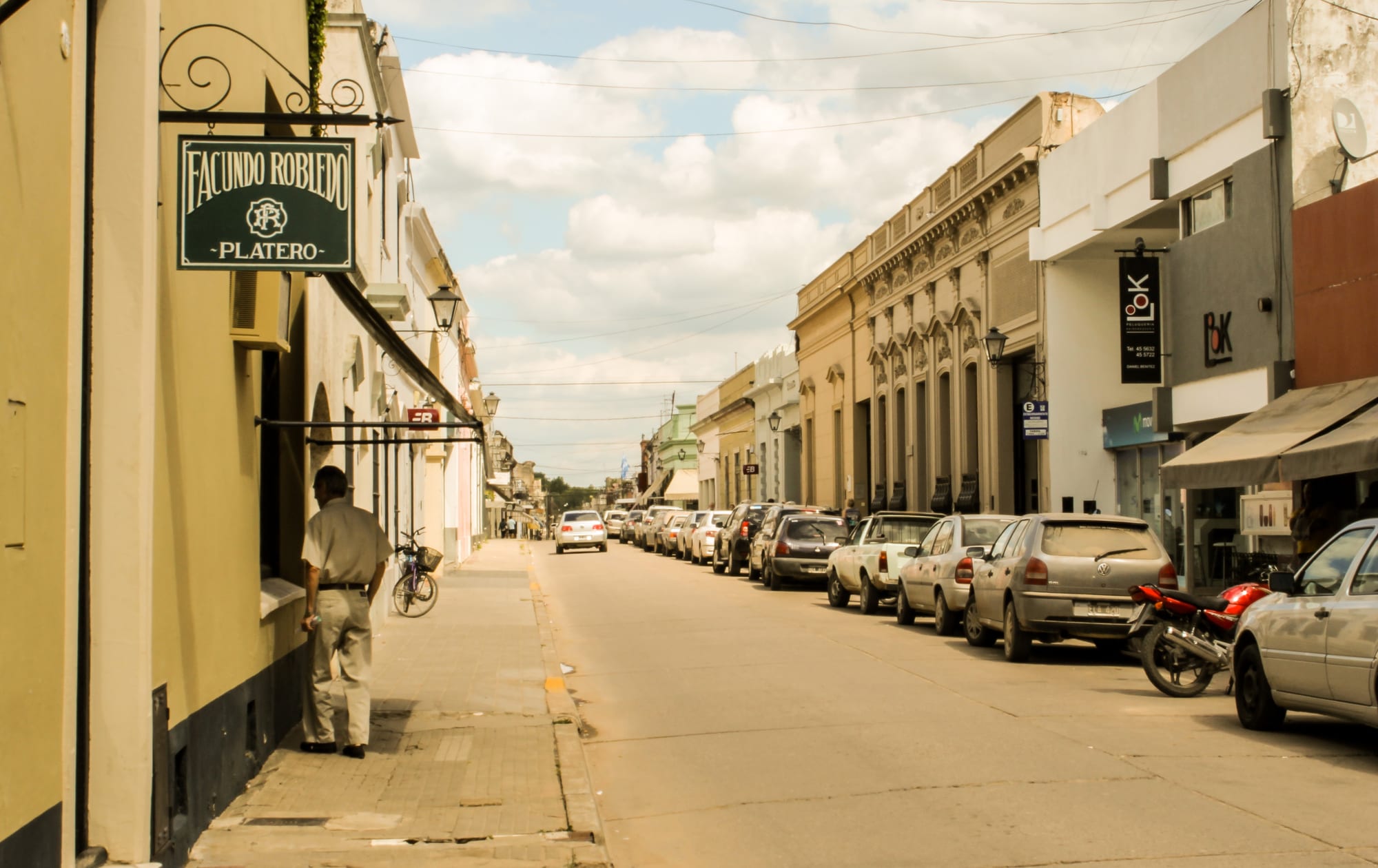
A quiet street of low ochre and cream façades with parked cars and a silversmith's hanging sign on the left

Buenos Aires, Argentina

San Antonio de Areco

Calle Alsina, the main street of San Antonio de Areco. (Lauder388 / Wikimedia Commons · CC BY-SA 4.0)

A small pampas town on the Areco River, about 113 km north-west of Buenos Aires, founded as a rural parish in 1730. Known as the cradle of Argentina's gaucho tradition, it keeps a historic centre of low Italianate houses, workshops of silversmiths and leather-workers, museums of country life and the oldest traditional festival in the country.

Neighbourhoods

  • The historic centre
    • First-time visitors
    • Historic district
    • Crafts

    The protected old quarter around the main square and the parish church, with streets of Italianate and creole houses built between about 1870 and 1930. Silversmiths' and saddlers' workshops, small museums, cafés and old general stores fill the blocks.

    Open in Maps
  • The riverside
    • Parks
    • Quiet walks

    Large parks of willows and lawns along the Areco River at the edge of the centre, crossed by the old bridge. Locals picnic and walk here at weekends.

    Open in Maps

Things to do

Gaucho heritage

  • Parque Criollo y Museo Gauchesco Ricardo Güiraldesmuseum

    The town's main museum, devoted to gaucho life and to the writer Ricardo Güiraldes, and a national historic monument, as is the old La Blanqueada pulpería — a country store and bar.

    Open in Maps
  • Museo Las Lilas de Arecomuseum

    A private museum of the work of Florencio Molina Campos, the painter whose humorous pictures of gauchos became famous across Argentina.

    Open in Maps
  • Silversmiths' and craftsmen's workshopsattraction

    Areco's plateros work silver into belts, knife handles, spurs and mate fittings, alongside rawhide braiders, saddlers and weavers; several workshops in the centre sell their work.

    Open in Maps

The town and the river

  • Puente Viejolandmark

    The old bridge over the Areco River, a national historic monument.

    Open in Maps
  • Parish church of San Antonio de Padualandmark

    The town's parish church, a national historic monument; the town dates its birth to its declaration as one of the first rural parishes in 1730.

    Open in Maps
  • Ricardo Güiraldes's tomblandmark

    The writer's grave in the historic section of the town cemetery, declared a national historic tomb in 2014.

    Open in Maps

Seasonal events

  • Fiesta de la TradiciónNovember

    Held since 1939 to honour the man of the countryside and his customs, and considered the oldest criollo festival in Argentina, with a parade of gauchos on horseback through the town, riding displays, folk music and dancing.

Eat and drink

Long-standing places and food districts in San Antonio de Areco. Hours, ratings and directions come from your maps app, always current.

Food districts

  • Restaurants in the historic centreneighborhood

    Parrillas, cafés and old-style bars around the main square and Calle Alsina, serving grilled beef, empanadas and home-made pasta.

    Open in Maps
  • Riverside parrillasneighborhood

    Grill restaurants close to the river parks, busiest at weekend lunchtimes.

    Open in Maps

Experience San Antonio de Areco

History

The banks of the Areco River were Querandí country, and the region suffered a large Indigenous raid, a malón, in 1714. Jesuits had settled along the river in the 17th century, and on 23 October 1730 the authorities in Buenos Aires declared San Antonio de Areco one of the first seven rural parishes of the province — the date taken as the town's birth. It grew as a frontier settlement of the pampas, and after the British invasions of 1806 and 1807 it was one of the towns that received British prisoners.

In the mid-19th century immigrants from Spain, Croatia, Italy and Ireland arrived in the town. The Italianate-creole houses of the centre were built between about 1870 and 1930, and in 1978 the old centre was marked out as a protected heritage zone.

Areco's identity was fixed by Ricardo Güiraldes, son of an old local family. His 1926 novel Don Segundo Sombra, modelled on the real gaucho Segundo Ramírez, made the town a symbol of rural tradition. In 1939 residents organised the first Fiesta de la Tradición, and in 2015 a national law declared San Antonio de Areco the National Capital of Tradition.

Culture & Customs

San Antonio de Areco calls itself the cradle of tradition, and the gaucho — the horseman of the pampas — is at the centre of its culture. The Fiesta de la Tradición, held each November since 1939, is considered the oldest criollo festival in Argentina: the whole town turns out, and gauchos in their finest clothes parade on horseback through the streets towards the old pulpería La Blanqueada, followed by displays of horsemanship, folk music and dancing.

The town is equally known for its craftsmen. Areco's silversmiths, the plateros, make belts, knife handles, spurs, buckles and mate fittings; alongside them work sogueros who braid rawhide, saddlers, blacksmiths, potters and weavers of the pampa loom. Locals speak of the artesano arequero as a recognised tradition of its own.

Literature and painting reinforce the gaucho image. Güiraldes's novel is the town's book, and his grave lies in the historic section of the cemetery. A private museum shows the work of Florencio Molina Campos, whose affectionate, humorous paintings of country people were reproduced on calendars across Argentina. For a town of its size Areco has an unusual number of museums — eight, two of them public.

Daily Life

About 23,000 people lived in the town at the 2022 census, a rise of about 16 per cent since 2010. It is the seat of a rural partido of the same name, whose economy rests on farming and on the crafts and tourism that the town's heritage attracts. For a farming community it has an unusual number of craftsmen, about a hundred, working in traditional trades.

Life follows the rhythm of a pampas town. Shops close for a long midday break, the square and the river parks fill in the late afternoon and on weekends, and Sunday lunch is an asado with the family. Weekends bring visitors from Buenos Aires, many of them day-trippers, while weekdays are quiet. The historic centre is a protected heritage zone, and many of its houses have been restored as shops, workshops, cafés and guesthouses.

The estancias around the town combine cattle farming with tourism, offering riding, asados and stays to visitors from the capital and abroad.

Food

Food in Areco is country food. The asado — beef ribs, flank, sausages and morcilla (blood sausage) grilled slowly over wood embers — is the centre of any celebration, and at the estancias it is served at long tables after a morning on horseback. Empanadas, baked turnovers of minced beef, are the everyday snack, and locro, a thick stew of maize, beans, squash and meat, is eaten on national holidays and in winter.

Mate, the bitter infusion of yerba mate drunk from a gourd through a metal straw, is shared at every hour, often in gourds fitted with the silver of local plateros. Sweet tooths are served by dulce de leche, the thick milk caramel spread on bread and folded into pastries, and by the facturas of the town's bakeries.

The old country stores and bars — pulperías and almacenes — were once the social centres of rural life, places to buy supplies, drink and play cards, and a few in and around the town keep the atmosphere, serving cold meats, cheese and drinks to visitors.

Planning tools

Budget

Areco is cheaper than Buenos Aires, and a day trip from the capital costs little beyond the bus fare and lunch. The main extra costs are a night in a historic guesthouse and a day at a nearby estancia, which usually includes an asado and riding. Prices rise during the November festival.

Daily Budget Midrange
USD 110–200 (historic guesthouse, parrilla meals, an estancia day with lunch)
Daily Budget Shoestring
USD 40–65 (simple guesthouse or campsite, empanadas and a set lunch, walking)

Book well ahead for the Fiesta de la Tradición weekend, and treat all peso prices as provisional.

Best Time to Visit

Spring (October–November) and autumn (March–May) are the most pleasant, and November brings the Fiesta de la Tradición, the busiest time of year. Summer is hot, and winter cool and damp with frosty mornings, but the town is open all year and weekends are livelier than weekdays.

Suggested Number of Days

Many visitors come for a day from Buenos Aires; one night allows a slower look at the town and its evenings. Add a day or two to stay on a working estancia in the surrounding countryside.

First Visit
1–2 days
With Surroundings
2–3 days

Transportation

The historic centre and the riverside are small enough to cover on foot, and bicycles are a popular way to get around. Taxis and remises (booked cars) take visitors to estancias and outlying sights.

Most estancias arrange transfers from the town; agree them when booking.

Airport & Station Connections

San Antonio de Areco lies about 113 km north-west of Buenos Aires, off National Route 8 — usually around two hours by road. Long-distance buses run from Retiro in Buenos Aires, and the nearest airports are those of the capital.

Walkability

Very walkable: the flat, compact grid of the historic centre, the square, the river parks and the main museum are all within a short stroll of each other. Pavements in the old streets are narrow and some are uneven.

Safety

Argentina is relatively safe by regional standards, and violent crime against visitors is uncommon. San Antonio de Areco is a quiet country town, and the ordinary precautions of any small place are enough.

Take normal care with valuables during the festival crowds, and wear a helmet when riding at an estancia. Check current official travel advice before travelling.

Climate

The humid pampas climate, with the southern hemisphere's seasons — summer is December to February. Summers are hot with thunderstorms; winters are cool and damp, with frost on clear nights.

Summer
hot and humid, often above 30°C, with heavy thunderstorms
Winter
cool and damp, with days of about 8–15°C and frost on clear nights

Local Customs

Gaucho dress — the boina beret, bombachas (baggy trousers), the silver-trimmed belt and the facón knife — is worn with pride, not as costume, especially at the festival. Mate is shared everywhere, and greetings are with a single kiss on the cheek. Life is slower than in the capital, and many shops close for a long midday break.

Ask before photographing gauchos and craftsmen at work. Tip about 10 per cent in restaurants. Riding at estancias is done in long trousers and closed shoes.

Common Payment Methods

The currency is the Argentine peso (ARS). Cards are accepted in most guesthouses and restaurants, but small workshops, kiosks and market stalls may prefer cash, and the town has only a few ATMs, so it is wise to bring some pesos from Buenos Aires.