💰 Budget
A day trip from Buenos Aires is inexpensive: the train fare is low and the commuter launches cost far less than private tours. Island guesthouses, private boat trips and riverside restaurants are the main costs, and prices rise at weekends and in summer.
- Daily Budget Midrange
- USD 110–200 (island guesthouse, guided boat trip, riverside meals)
- Daily Budget Shoestring
- USD 35–60 (train from Retiro, commuter launch, market snacks)
The commuter launches are the cheapest way to see the delta; use a SUBE card on the train, and treat all peso prices as provisional.
📅 Best Time to Visit
Spring and autumn are the most pleasant times for the river. Summer weekends are hot and very busy, with families from the city heading for the islands, while weekdays are quieter in every season. Winter is cool and damp but calm on the water.
⏳ Suggested Number of Days
Most visitors come for a day from Buenos Aires. Staying one or two nights on an island gives time for the quieter channels and for the slower pace of delta life.
- First Visit
- 1 day
- With Surroundings
- 2–3 days
🚆 Transportation
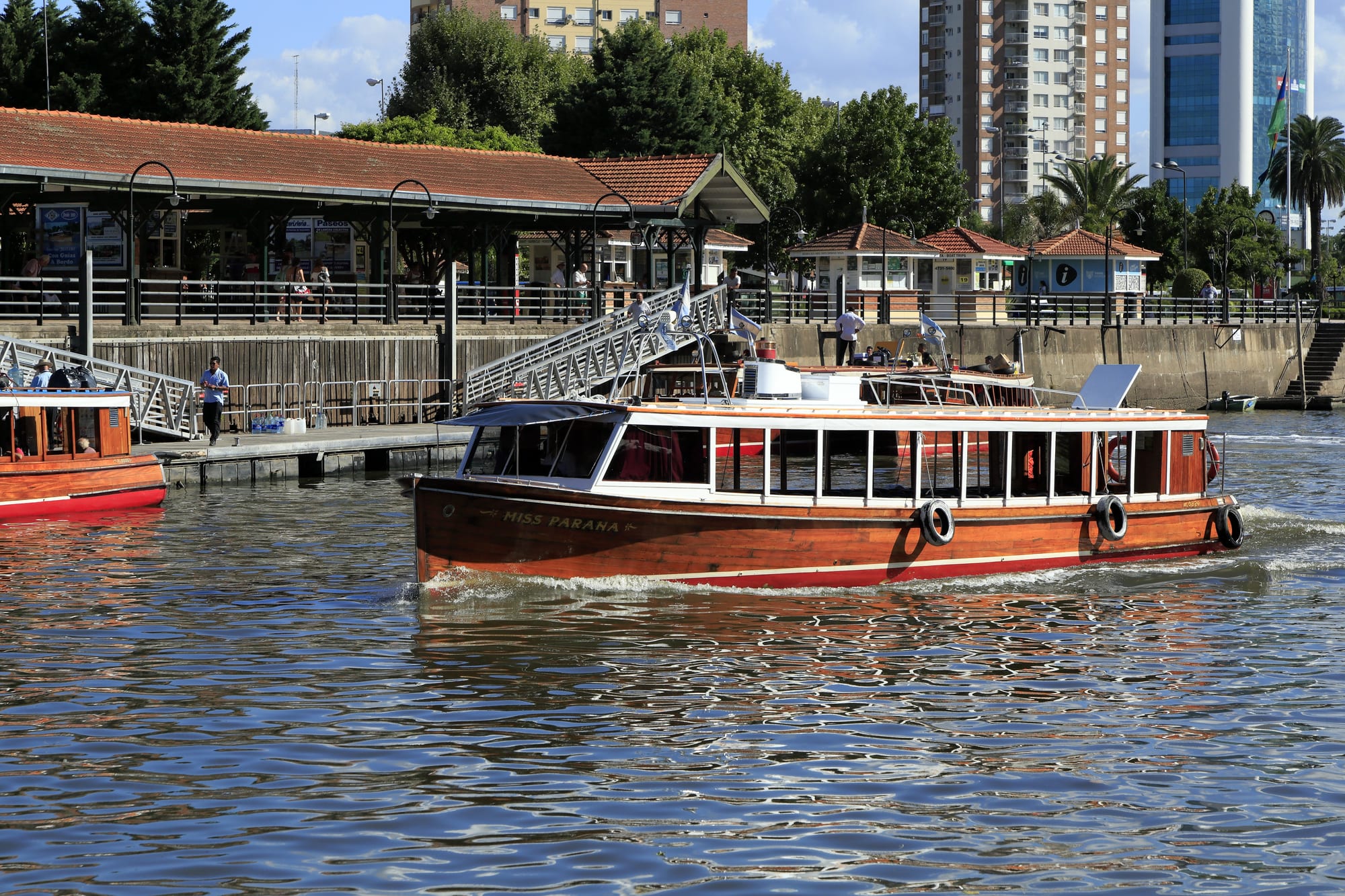
Tigre's centre is compact and walkable. The islands of the delta have no roads: commuter launches run on fixed routes from the river passenger station, and private water taxis and tourist boats fill the gaps. Kayaks and rowing boats can be hired for the calmer channels.
Check the return times of the commuter launches before going far into the delta, as services thin out in the evening.
🛬 Airport & Station Connections
Tigre is about 28 km north of central Buenos Aires. Mitre Line trains run from Retiro station to Tigre station every 10 to 30 minutes, and the scenic Tren de la Costa runs from Maipú station in Olivos, which connects by footbridge with a branch of the Mitre Line, to Delta station. Buses also link the town with the capital.
🚶 Walkability
The stations, the river station, the Puerto de Frutos and Paseo Victorica are all within an easy walk of each other on flat riverside streets. The delta beyond is a place for boats, not walking.
🛡️ Safety
Argentina is relatively safe by regional standards, and violent crime against visitors is uncommon. Tigre's tourist centre is busy and calm by day; the usual care with phones and bags applies on crowded trains and at the market. On the water the main risks are currents and the wash of passing boats.
Wear a life jacket in small boats and kayaks, and keep phones and bags close on the train. Check current official travel advice before travelling.
🌦️ Climate
Humid subtropical, like Buenos Aires, with the southern hemisphere's seasons — summer is December to February. Summers are hot and humid with thunderstorms and mosquitoes on the islands; winters are mild and damp. The river can rise and flood low ground.
- Summer
- hot and humid, often above 30°C
- Winter
- mild and damp, about 8–15°C
🤝 Local Customs
The delta has its own rhythm: islanders depend on the commuter launches to reach the mainland. Weekend life revolves around rowing, the asado and mate on the riverbank. Greetings are with a single kiss on the cheek.
Respect private jetties and gardens on the islands, which are people's homes. Tip about 10 per cent in restaurants.
💳 Common Payment Methods
The currency is the Argentine peso (ARS). Cards and phone payments work in most restaurants and shops in town; market stalls, island kiosks and some guesthouses prefer cash. ATMs are in the town centre, not on the islands, so carry enough pesos before heading into the delta.