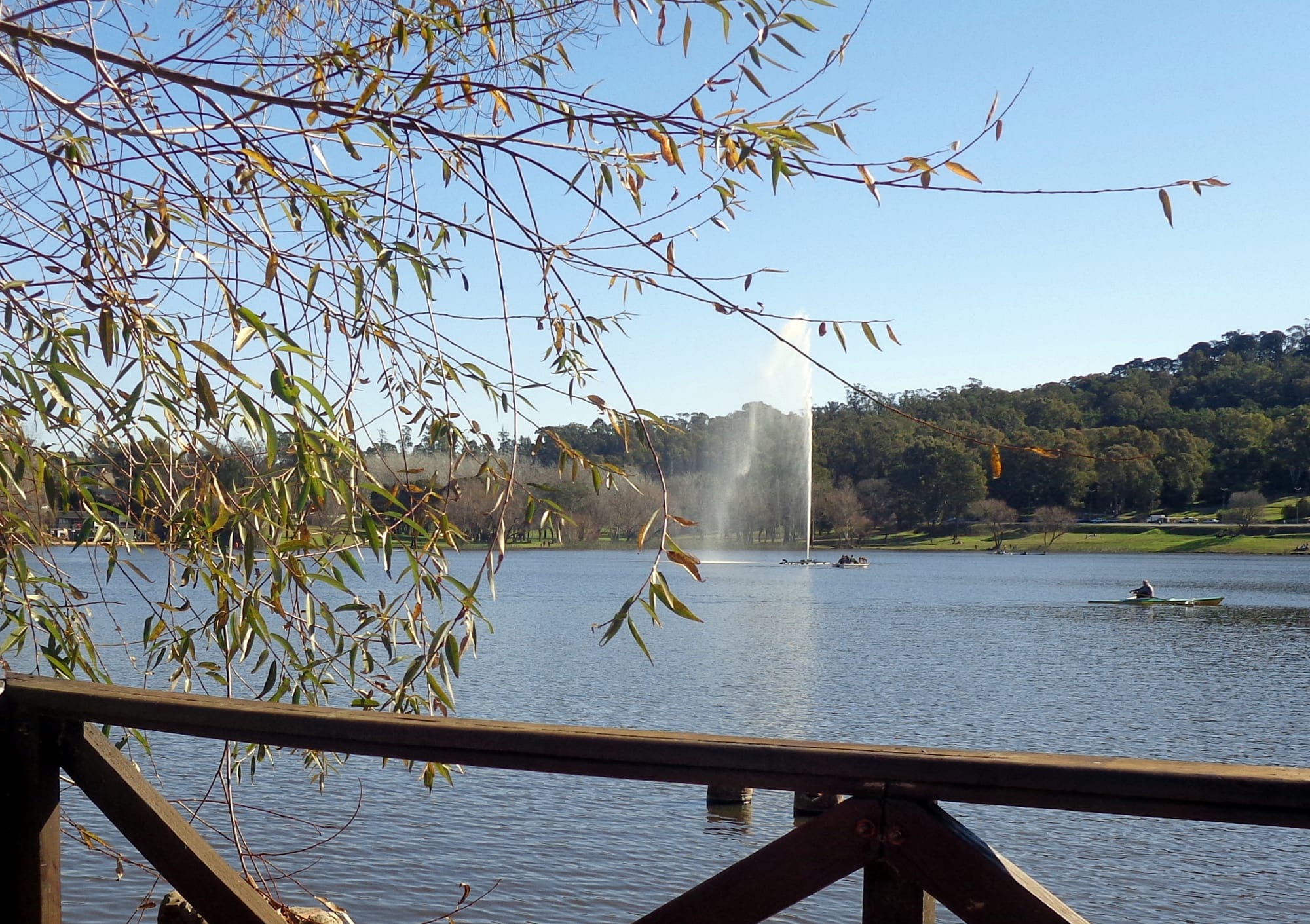
A calm lake with a tall fountain jet and a rowing boat, framed by willow branches, with wooded hills behind

Buenos Aires, Argentina

Tandil

The Lago del Fuerte in Tandil, below wooded hills. (Roberto Fiadone / Wikimedia Commons · CC BY-SA 4.0)

A city at the foot of the Tandilia hills in the south-east of Buenos Aires Province, founded as a frontier fort in 1823. Granite quarries, cattle and immigrant charcuterie built it; today it is a university city and a year-round getaway, known for its hills and balancing rocks, its salami and cheeses, and its Easter Way of the Cross.

Neighbourhoods

  • The centre
    • First-time visitors
    • Shopping
    • Best for food

    The grid of streets around the main square and the parish church, with the shops, cafés, restaurants and delicatessens of the commercial circuit, and most of the city's hotels within walking distance.

    Open in Maps
  • Parque Independencia and the Lago del Fuerte
    • Parks
    • Views
    • Families

    The hillside park that commemorates the city's founding, with lookouts over the rooftops, and below it the lake formed by a dam on the Arroyo del Fuerte, used for water sports and fishing.

    Open in Maps
  • The sierras
    • Nature
    • Walking and climbing
    • Quiet stays

    The rocky hills on the edge of the city — Cerro El Centinela, the Movediza hill and the Calvario — where cabins, country guesthouses and walking and climbing routes lie among granite outcrops and pine woods.

    Open in Maps

Things to do

Rocks and hills

  • Piedra Movedizalandmark

    The site of the famous rocking stone of about 300 tonnes, which balanced on the edge of a hill until it fell and broke on 29 February 1912; a fixed replica was placed there in May 2007.

    Open in Maps
  • Cerro El Centinelaviewpoint

    A hill named after a seven-metre granite rock standing upright on a small base, with views over the valley, walks and riding trails among the outcrops.

    Open in Maps
  • Monte Calvariolandmark

    A granite hill with the Way of the Cross, whose Calvario monument was inaugurated in 1943, and a large cross; it is the focus of Tandil's Holy Week.

    Open in Maps

Parks and the lake

  • Parque Independenciapark

    The hillside park above the centre that commemorates the founding of the city, with paths, monuments and views over Tandil.

    Open in Maps
  • Lago del Fuertepark

    The 19-hectare lake formed by a concrete dam on the Arroyo del Fuerte, with water sports, sport fishing and space for recreation.

    Open in Maps

Markets

  • Feria de Artesanos and Feria de Saboresmarket

    Crafts and local food fairs held on the Diagonal Arturo Illia in Parque Independencia, where makers sell cheeses, salami and other regional products.

    Open in Maps

Seasonal events

  • Semana SantaMarch or April (Holy Week)

    Holy Week is one of Tandil's main holiday periods, when the Catholic liturgy and the Way of the Cross on Monte Calvario draw believers from across the country as well as visitors.

Eat and drink

Long-standing places and food districts in Tandil. Hours, ratings and directions come from your maps app, always current.

Tandil classics

  • Cheese and charcuterie shopsneighborhood

    Delicatessens in the centre and along the roads into the hills sell Tandil's salame, which has a protected designation of origin, salamines, cured meats and local cheeses.

    Open in Maps
  • Picada and regional-food restaurantsneighborhood

    Restaurants serving picadas and regional food, still the favourites of visitors as the city's cafés, bars and breweries have multiplied.

    Open in Maps
  • Restaurants in the centreneighborhood

    Parrillas, pasta houses and bars around the main square, where a picada of local cheese and salami is the usual start.

    Open in Maps

Experience Tandil

History

The Tandilia hills were long known to the Indigenous peoples of the pampas, and the name Tandil is often linked to the great rocking stone that once stood on a hill above the valley. The city itself began as a frontier outpost: on 4 April 1823 Governor Martín Rodríguez founded Fuerte Independencia here, one of a line of forts pushing the frontier of Buenos Aires southwards. In time the original inhabitants were assimilated and mingled with the growing European population.

The arrival of the railway in 1883 transformed the town. Italian, Spanish and Basque-French immigrants built a trade in charcuterie and cured sausages, Danish settlers pushed forward the dairy industry, and granite quarries in the surrounding hills drew stoneworkers who built an early labour movement in the city. The Hotel de la Piedra Movediza, the first of its kind, opened in 1865, and visitors came to see the rocking stone of about 300 tonnes that moved without falling — until 29 February 1912, when it toppled and broke.

In 1943 the Calvario monument and Way of the Cross were inaugurated, making Tandil a destination for Holy Week. The National University of Central Buenos Aires Province, founded in 1974, added a student population, and in May 2007 a fixed replica of the Piedra Movediza was placed on its old site.

Culture & Customs

Holy Week has long been Tandil's great season. Since the 1940s the Way of the Cross on Monte Calvario has drawn pilgrims and visitors to the city at Easter, with the Catholic liturgy and processions marking the days before Easter Sunday. In recent decades the city has become a year-round destination, especially on long weekends.

The city is proud of its food and of the immigrants who created it. Italian, Spanish and Basque-French families built the tradition of cured sausages, Danes the dairy industry, and Tandil even has a monument to the salame, an iron sausage that toured the country before being installed. Craft and food fairs in Parque Independencia keep the tradition visible.

Tandil is also a sporting city. It is the home town of the tennis player Juan Martín del Potro, the 2009 US Open champion nicknamed the Tower of Tandil, and of several other national sporting figures. The granite hills make it a centre for climbing, mountain biking and riding, and the university gives the city a young population and an active cultural life.

Daily Life

Tandil had about 146,000 people at the 2022 census and is the main city of the partido of the same name. Its economy combines farming and food — dairy, cheeses and charcuterie — with leather, wool, clothing and knife-making, the National University of Central Buenos Aires Province, which has more than 11,000 students, and tourism. Quarrying, once central, remains a debated local issue because of its effect on the hills.

Since passenger trains were suspended in 2016, links with Buenos Aires depend on the road and long-distance buses. Neighbourhoods spread from the centre's grid towards the hills, where cabins and houses sit among pine woods and granite.

The rhythm is that of a provincial city: a long midday break, evenings in the centre and around the lake, and weekends in the hills or at the family asado. Visitors arrive in waves on long weekends and at Easter, filling cabins and restaurants and then leaving the city to its residents.

Food

Tandil's name is attached above all to its salame. The cured sausage made here, a tradition brought by immigrant families, holds a protected designation of origin, and smaller salamines and other embutidos (cured sausages) fill the shelves of delicatessens. Local cheeses, from soft fresh cheeses to firmer aged varieties, complete the picture.

The classic way to eat them is the picada: a board of sliced salame, cheeses, cured meats, olives and bread, shared with beer, wine or vermouth before or instead of a meal. Many visitors take home cheese and salami bought directly from producers' shops in town and on the roads into the hills.

Beyond the picada, Tandil eats as the rest of the pampas does: the asado of grilled beef and sausages, pasta in the Italian tradition, empanadas, and dulce de leche in desserts and pastries. Restaurants serving picadas and regional food remain the visitors' favourites, and the craft and food fairs in Parque Independencia give local producers a place to sell directly.

Planning tools

Budget

Tandil is cheaper than Buenos Aires for both rooms and meals, though cabins and hotels fill and prices rise over long weekends and at Easter. A car or taxis are useful for reaching the hills, which adds to the cost for visitors without their own transport.

Daily Budget Midrange
USD 100–190 (hotel or cabin in the hills, parrilla dinners, guided walks or climbing, taxis)
Daily Budget Shoestring
USD 40–65 (hostel or simple cabin, picadas and set lunches, city buses)

Book early for Easter and long weekends; picnics of local cheese and salami are a cheap and local way to eat. Treat all peso prices as provisional.

Best Time to Visit

Spring (September–November) and autumn (March–May) are best for walking and climbing in the hills. Easter brings crowds for the Holy Week celebrations, and long weekends fill the city all year. Summer is warm, and winter is cold and windy, with frosts.

Suggested Number of Days

A long weekend of two or three days suits most visitors, which is how many Argentines come. An extra day allows more time for walking, riding or climbing in the surrounding hills.

First Visit
2–3 days
With Surroundings
3–4 days

Transportation

City buses run through the centre and out towards some of the hills, and taxis and remises are easy to find. A car or bicycle makes the scattered viewpoints, rocks and country restaurants much easier to reach.

Distances to the hills are short but often uphill; many visitors hire a car, a bicycle or a guide for the day.

Airport & Station Connections

Tandil is about 360 km south of Buenos Aires — around five hours by road — and most visitors arrive by long-distance bus or car. Passenger trains have been suspended since 2016. The Héroes de Malvinas airport, 18 km north-west of the centre, serves the city.

Walkability

The centre is flat and easy to walk, and Parque Independencia and the lake are within reach on foot, though the park climbs steeply. The rocks and hills on the edge of town are best reached by car or bus, and then explored on foot.

Safety

Argentina is relatively safe by regional standards, and violent crime against visitors is uncommon. Tandil is a calm provincial city; the main risks are in the hills, where granite can be slippery and weather can change quickly.

Use guides for climbing and keep to marked paths on the hills. Check current official travel advice before travelling.

Climate

A temperate climate, with the southern hemisphere's seasons — summer is December to February. Summers are warm with cool nights; winters are cold for Argentina, windy and frosty, and autumn colours the parks.

Summer
warm by day, often in the high 20s °C, with cool nights
Winter
cold and windy, with frequent frosts and nights below 0°C

Local Customs

Tandil is proud of its food traditions — a picada of local salami and cheese with a drink is the classic way to welcome friends. Holy Week is a religious occasion for many, and processions and the Way of the Cross are attended with respect. Greetings are with a single kiss on the cheek.

Dress modestly and keep noise down at the Calvario during Holy Week. Tip about 10 per cent in restaurants.

Common Payment Methods

The currency is the Argentine peso (ARS). Cards and phone payments are widely accepted in the centre; small shops, fairs and country restaurants may prefer cash. ATMs are common in the centre, and some visitors also bring US dollars in good condition.