💰 Budget
Buenos Aires is the most varied place in Argentina to spend money. A café lunch, a neighbourhood parrilla or a milonga costs little; a top-end steakhouse, a dinner-and-tango show or a hotel in Recoleta or Palermo costs much more. Peso prices change often, and how a traveller pays — card or cash — can make a difference.
- Daily Budget Midrange
- USD 110–200 (boutique hotel, parrilla dinners, a tango show, museum tickets and taxis)
- Daily Budget Shoestring
- USD 45–70 (hostel in San Telmo or Palermo, set-menu lunches, pizza and empanadas, Subte and buses)
Look for the weekday menú del día at lunch and use a SUBE card on public transport; many sights — the cemetery, Plaza de Mayo, the San Telmo fair, the Palermo parks — cost little or nothing. Treat all peso prices as provisional.
📅 Best Time to Visit
Spring (October–November) and autumn (March–May) are the most pleasant, with warm days and, in November, purple jacaranda blossom along the avenues. January and February are hot and humid, and many porteños leave for the coast, so parts of the city are quiet. Winter is mild and damp, a good season for theatre, opera and the cafés.
⏳ Suggested Number of Days
Three or four days covers the main barrios at a relaxed pace. Allow five to seven to add day trips into the delta, the pampas or across the river to Uruguay. Evenings start late here, so slower days with late nights suit the city's rhythm.
- First Visit
- 3–4 days
- With Surroundings
- 5–7 days
🚆 Transportation
The Subte, opened in 1913 and the oldest underground railway in the Southern Hemisphere, has six underground lines that cover the centre and the inner barrios, and a very dense network of buses, the colectivos, reaches everywhere else. Commuter trains run from Retiro, Constitución and other terminals to the suburbs. Taxis and ride-hailing apps are widely used, and the city has a public bike-share scheme and many protected cycle lanes.
Buy a rechargeable SUBE card, which works on the Subte, buses and trains; at night, use app-based or radio taxis rather than hailing on the street.
🛬 Airport & Station Connections
Most international flights land at Ezeiza (Ministro Pistarini International Airport), about 22 km south of the city — usually 45 minutes to over an hour by taxi or transfer, depending on traffic. Aeroparque Jorge Newbery, about 2 km from downtown on the riverfront in Palermo, handles most domestic and regional flights. Long-distance buses use the Retiro terminal, and ferries cross the Río de la Plata to Colonia del Sacramento and Montevideo in Uruguay.
🚶 Walkability
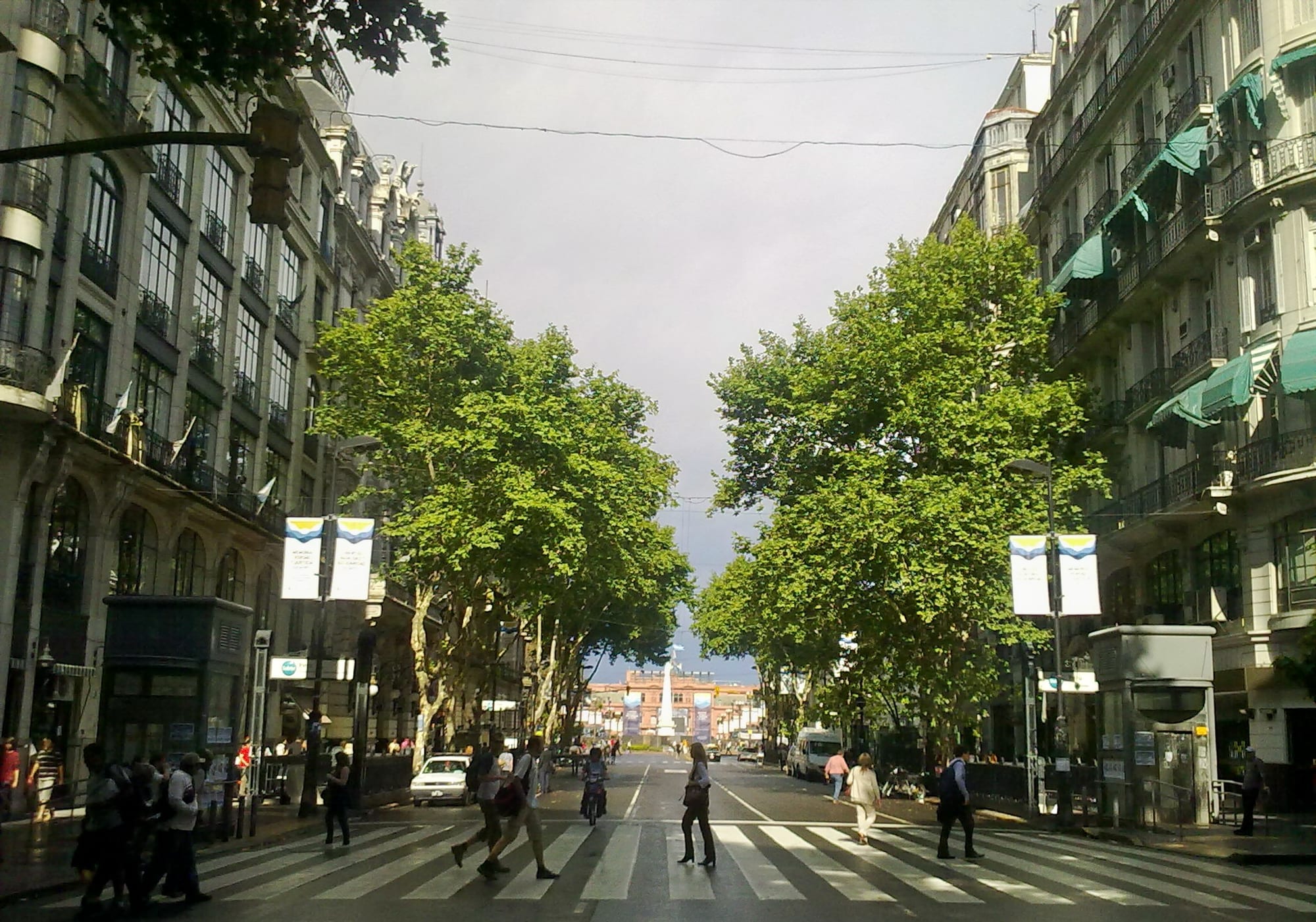
The city is flat and laid out on a grid, and the centre, San Telmo, Recoleta and Palermo are all pleasant to walk, with tree-lined streets and cafés on most corners. Distances between barrios are long, though — Plaza de Mayo to Palermo is several kilometres — so most visitors mix walking with the Subte or taxis. Pavements can be broken, and dog mess is common.
🛡️ Safety
Argentina is relatively safe by regional standards, and violent crime against visitors is uncommon. In Buenos Aires the problem is petty theft: bag-snatching, phone grabs by thieves on motorbikes, pickpockets on crowded Subte lines and in San Telmo, and distraction scams. La Boca beyond the Caminito strip is best avoided after dark, and protests are frequent around Plaza de Mayo and the Congress.
Keep phones out of sight on the street, carry little at the Sunday fair, use app or radio taxis at night, and avoid the edges of demonstrations. Check current official travel advice before travelling.
🌦️ Climate
Humid subtropical, with the southern hemisphere's seasons — summer is December to February. Summers are hot and sticky with heavy thunderstorms; winters are mild, damp and grey, and frost is rare. Rain falls in every season.
- Summer
- hot and humid, often above 30°C, with sudden thunderstorms
- Winter
- mild and damp, about 8–17°C, rarely freezing
🤝 Local Customs
Friends and acquaintances greet with a single kiss on the right cheek, men included. Meals are late: lunch around one or two, dinner rarely before nine. Tipping about 10 per cent in restaurants is usual, and sharing mate is a sign of friendliness. Football loyalties run deep, so club shirts are worn with care around rival grounds. Politics is discussed openly, but the dictatorship and the Malvinas/Falklands are serious subjects.
Dress is smart-casual in the evening; in churches, cover shoulders and keep voices low. At milongas, the cabeceo — a nod across the room — is the traditional invitation to dance.
💳 Common Payment Methods
The currency is the Argentine peso (ARS). Cards are accepted in most hotels, restaurants and shops, and contactless and phone payments are common; small cafés, kiosks and fair stalls may prefer cash. ATM withdrawals carry fees and limits, so many visitors also bring some US dollars in good condition. Watch for counterfeit notes in change.