💰 Budget
Brussels is one of the dearer cities in Belgium. Frites, waffles and a beer in a café remain cheap, and the metro, trams and buses keep transport costs down.
- Daily Budget Midrange
- USD 180–320 (mid-range hotel, restaurant dinners, museum tickets, day trips by train)
- Daily Budget Shoestring
- USD 90–150 (hostel or budget hotel, frites and bakery meals, metro and tram)
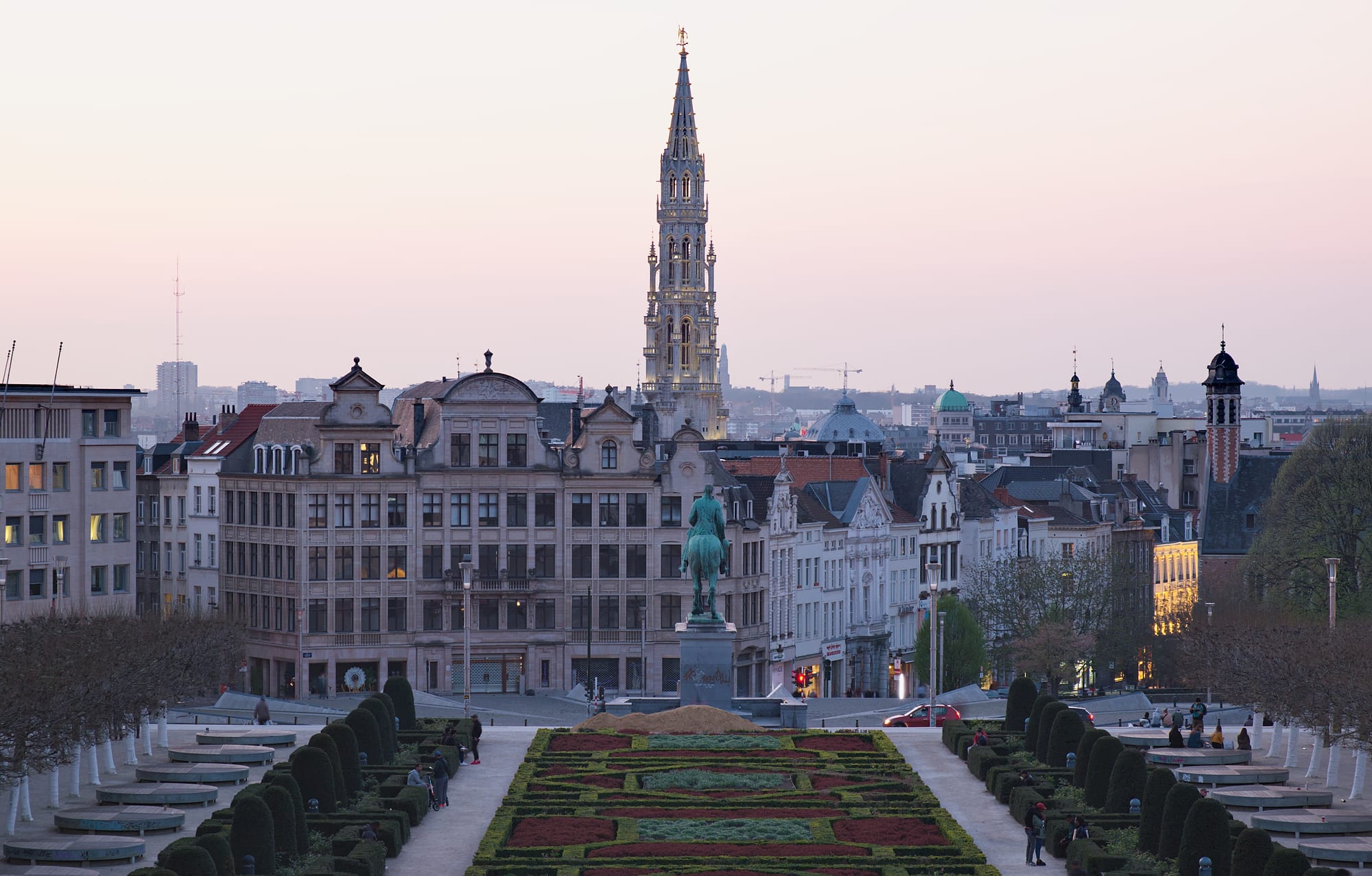
The Grand-Place, the Saint-Hubert arcades, the Mont des Arts and the comic murals cost nothing.
📅 Best Time to Visit
April to June and September bring the brightest weather without the biggest crowds. The Ommegang fills the Grand-Place at the turn of June and July, and 21 July brings the National Day parade. August brings the Flower Carpet in even-numbered years; December has the Winter Wonders.
⏳ Suggested Number of Days
Two to three days cover a first visit to the centre, the upper town and the main museums. Four or five allow time for the outer municipalities and short trips by train or bus. Weekday visits find the European Quarter busy.
- First Visit
- 2–3 days
- With Surroundings
- 4–5 days
🚆 Transportation
The STIB runs the metro, the premetro (underground trams), trams and buses across the 19 municipalities; the metro is the only rapid transit system in Belgium. Three main railway stations — Brussels-South, Brussels-Central and Brussels-North — are joined by the North–South connection under the centre, and local trains also stop at smaller stations. A car is more hindrance than help, and the centre has a large car-free zone.
Look for trams before crossing tracks, and buy train tickets at the machine or in the app before boarding.
🛬 Airport & Station Connections
Brussels Airport is at Zaventem, about 12 km east of the city, reached by train, bus, taxi or the motorway. Brussels South Charleroi Airport is about 50 km south-west and linked by bus. Eurostar trains from London, Paris, Amsterdam and Cologne arrive at Brussels-South, also called Brussels-Midi.
🚶 Walkability
The historic centre inside the Small Ring covers less than 5 square kilometres and is easy on foot, though it climbs steeply from the lower town around the Grand-Place to the upper town of the Royal Palace, the Sablon and the museums. The Poelaert lift links the Palace of Justice with the Marolles. The European Quarter, Saint-Gilles and Ixelles are a longer walk or a short metro or tram ride away.
🛡️ Safety
Belgium is generally safe, with low levels of violent crime against visitors. In Brussels the main risk is pickpocketing, above all at the major railway stations, around the Bourse and in the European Quarter, and some streets around Midi and the Anneessens quarter call for care after dark.
Keep bags zipped on the metro and at Brussels-Midi, take extra care around the station at night, and look for trams and cyclists before crossing. Check current official travel advice before travelling.
🌦️ Climate
An oceanic climate with warm summers and cool winters, shaped by marine air from the Atlantic. Rain is possible in any month and falls on about 135 days a year, and heatwaves have become more frequent in recent summers.
- Summer
- mild to warm, 18–24°C, with hot spells above 30°C
- Winter
- cool and damp, with daytime highs around 6°C and infrequent snow
🤝 Local Customs
Brussels is officially bilingual, French and Dutch, though French is far more widely spoken and English is common; it is polite to ask which language someone prefers. Service is included in restaurant bills, so tipping is modest. Cafés serve beer and light dishes, while coffee and cakes are taken in a salon de thé.
Rounding up the bill is plenty; a tip is a sign of appreciation rather than an expectation. Street signs and station names appear in both languages, so one place may have two names.
💳 Common Payment Methods
Belgium uses the euro. Card and phone payment are widely accepted, but a little cash is useful for flea-market stalls, some bakeries, small cafés and frites stands.