💰 Budget
Costs vary sharply. The centre has the cheapest rooms and simple meals, while the resorts around the bay and on the private islands are among the most expensive in the state. Boat trips round the islands and the crossing to Ilha Grande are the main extra costs, and prices rise on Fridays, weekends, holidays and through the summer.
- Daily Budget Midrange
- USD 110–210 (inn on the bay, seafood dinners, an island boat trip, app taxis)
- Daily Budget Shoestring
- USD 40–70 (hostel bed in the centre, per-kilo lunches, local buses, the slower ferry)
Anyone staying a night before the boat to Ilha Grande is better off in the centre, close to the piers, than in a resort far out on the bay.
📅 Best Time to Visit
April to June and August to October bring drier, settled weather and lower prices. December to March is the summer and boating season, but also the wettest time, when heavy rain can bring flooding and landslides; the bay is crowded at New Year and Carnival. July is a winter school-holiday month.
⏳ Suggested Number of Days
The town itself needs only a day or two, and many visitors simply pass through on the way to the islands. Allow four to six days to include a stay on the islands and the coast to the west. Weather can stop boats, so a spare day is useful.
- First Visit
- 1–2 days
- With Surroundings
- 4–6 days
🚆 Transportation
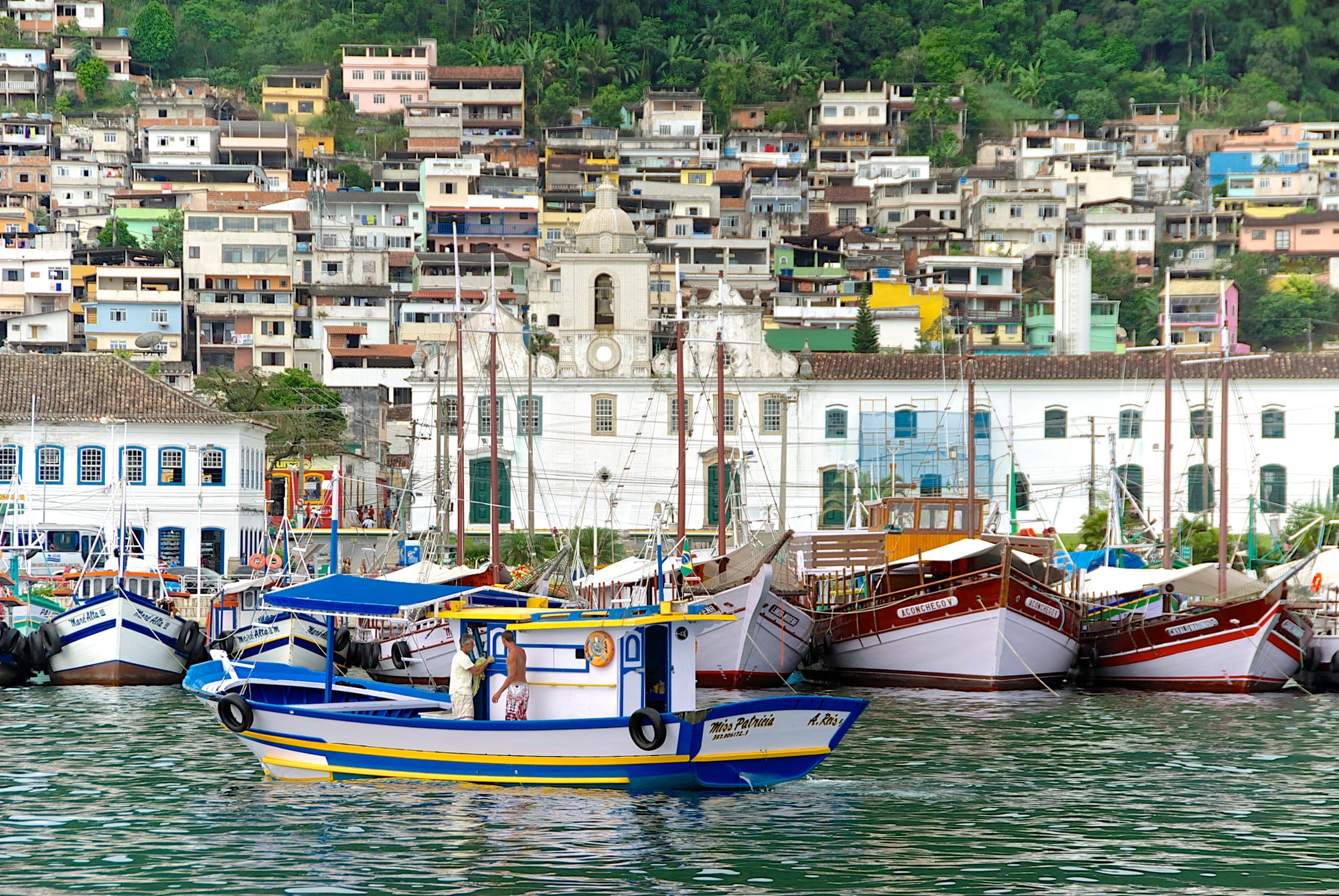
The town has some 28 urban bus lines, and app taxis are easy to find. Most of the bay is seen by boat: schooners and smaller boats run day trips round the islands from the centre, and ferries and private boats cross to Vila do Abraão on Ilha Grande, the slower ferries taking about 90 minutes. A car is useful for the beaches along the Rio–Santos Highway.
Boat touts approach visitors at the piers; check the departure time and the boat itself before paying.
🛬 Airport & Station Connections
Angra dos Reis lies on the Rio–Santos Highway between Rio de Janeiro and Paraty, and most visitors arrive by road. Daily intercity buses from Rio de Janeiro and São Paulo, and coaches from Belo Horizonte and other cities, use the bus station about 2.5 km from the centre. The small Angra dos Reis Airport serves the town.
🚶 Walkability
The historic centre and the quays are compact and easy to walk, though hot in summer. Beyond the centre the town stretches for kilometres along a winding coast road hemmed in by hills, so buses, taxis or boats are needed. Vila do Abraão on Ilha Grande is entirely on foot.
🛡️ Safety
Brazil has high rates of crime, including violent crime, and it is the main practical concern for visitors — though very unevenly distributed. The hills around the town are prone to landslides in heavy summer rain, as in the deadly landslides at the start of 2010.
Use app taxis at night, keep valuables out of sight around the bus station and piers, heed warnings during heavy rain, and use repellent against dengue. Check current official travel advice before travelling.
🌦️ Climate
A tropical monsoon climate: hot and humid, with heavy rain concentrated in the summer months. Summer is December to February. Mountains rising straight from the bay make it one of the wetter stretches of the coast; January 2013 brought more than 800 mm of rain in a single month.
- Summer
- hot, humid and wet; the record is about 39°C
- Winter
- warm and drier; the lowest temperature on record is about 9°C
🤝 Local Customs
Angra is a working port as much as a resort, and life in the centre is informal. Beachwear belongs on the beaches and boats; a shirt is expected in shops and restaurants. Restaurants usually add a 10 per cent service charge to the bill. Many islands in the bay are private, and their beaches and piers are not open to visitors.
Dress modestly when visiting the colonial churches, and ask before photographing fishermen or worshippers during the festivals.
💳 Common Payment Methods
The currency is the Brazilian real (R$). Cards and the instant Pix transfer system are widely accepted in the town and on most tour boats, but some cash is useful on the islands and at small kiosks and stalls.