💰 Budget
Paraty is priced for visitors, especially in summer, at Carnival and New Year and during FLIP, when rooms in the historic centre fill and rise steeply. Staying just outside the centre, eating set lunches and using local buses to the beaches keep costs down; boat trips around the bay and cachaça tastings add to them.
- Daily Budget Midrange
- USD 120–230 (guesthouse in or near the centre, restaurant dinners, a boat trip, a day at Trindade)
- Daily Budget Shoestring
- USD 40–70 (hostel dorm, set lunches, local buses, beaches and trails)
Book ahead for FLIP, Carnival and New Year; walking the historic centre and the nearer beaches costs nothing.
📅 Best Time to Visit
April to June and August to October are drier and calmer, with lower prices. December to March is hot, busy and wet, the time for beaches and boat days but also heavy rain. July brings FLIP and Brazilian school holidays.
⏳ Suggested Number of Days
Two or three days suit a first visit. Allow four to six to take in the wider coast, the forest and the nearby islands. Rain can stop boat trips, so a spare day helps in summer.
- First Visit
- 2–3 days
- With Surroundings
- 4–6 days
🚆 Transportation
The historic centre is closed to cars and is walked. Local buses leave the bus station, a short walk from the centre, for Trindade, Paraty-Mirim and other beaches. Boats leave the harbour for the islands and beaches of the bay, and some remote beaches are reached only by trail or boat.
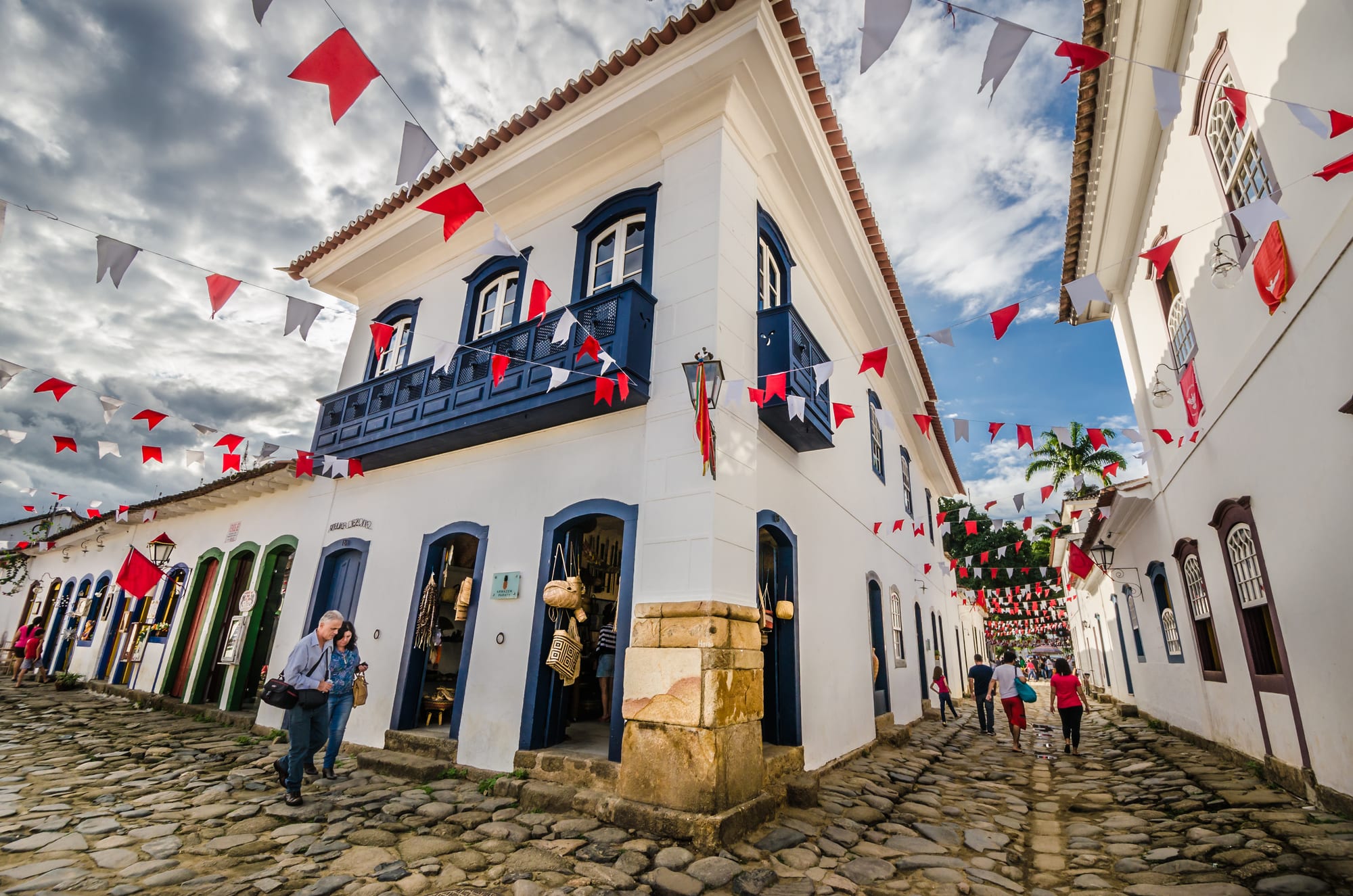
Wear flat, sturdy shoes: the large, uneven paving stones of the centre are hard going, especially when wet.
🛬 Airport & Station Connections
Paraty has no airline service. It lies about 258 km by road from Rio de Janeiro, roughly four hours by intercity bus from the Novo Rio terminal, and buses also run from São Paulo. Most visitors arrive by bus, hire car or transfer along the coastal road through Angra dos Reis.
🚶 Walkability
The historic centre is small, flat and car-free, and everything in it is a few minutes' walk. The rough stone paving makes for slow going, and the streets can flood briefly at the highest tides. Beaches beyond Jabaquara need a bus, a boat or a long walk.
🛡️ Safety
Brazil has high rates of crime, including violent crime, and it is the main practical concern for visitors — though very unevenly distributed. Paraty itself is calmer than Rio, and the main practical risks are petty theft, trails and roads after dark, and summer storms.
Keep valuables out of sight, use repellent against dengue, and take care on wet stone streets and forest trails. Check current official travel advice before travelling.
🌦️ Climate
Tropical and humid, with forested mountains rising behind the bay. Summer is December to February: hot and wet, with heavy rain. Winter, June to August, is warm by day and drier.
- Summer
- hot and humid, often around 30°C, with heavy downpours
- Winter
- mild to warm and drier, often around 20–25°C by day
🤝 Local Customs
Paraty is a small town with a strong sense of tradition, from its religious festivals to the Caiçara fishing communities and the Indigenous village and quilombo in the municipality. A service charge is usually added to restaurant bills. Churches expect modest dress.
Ask before photographing people, especially in the Indigenous and quilombo communities; leave no litter on trails and beaches.
💳 Common Payment Methods
The currency is the Brazilian real (R$). Cards and Pix are widely accepted in the centre's shops and restaurants. Carry some cash for boat trips, beach kiosks and small villages such as Trindade.