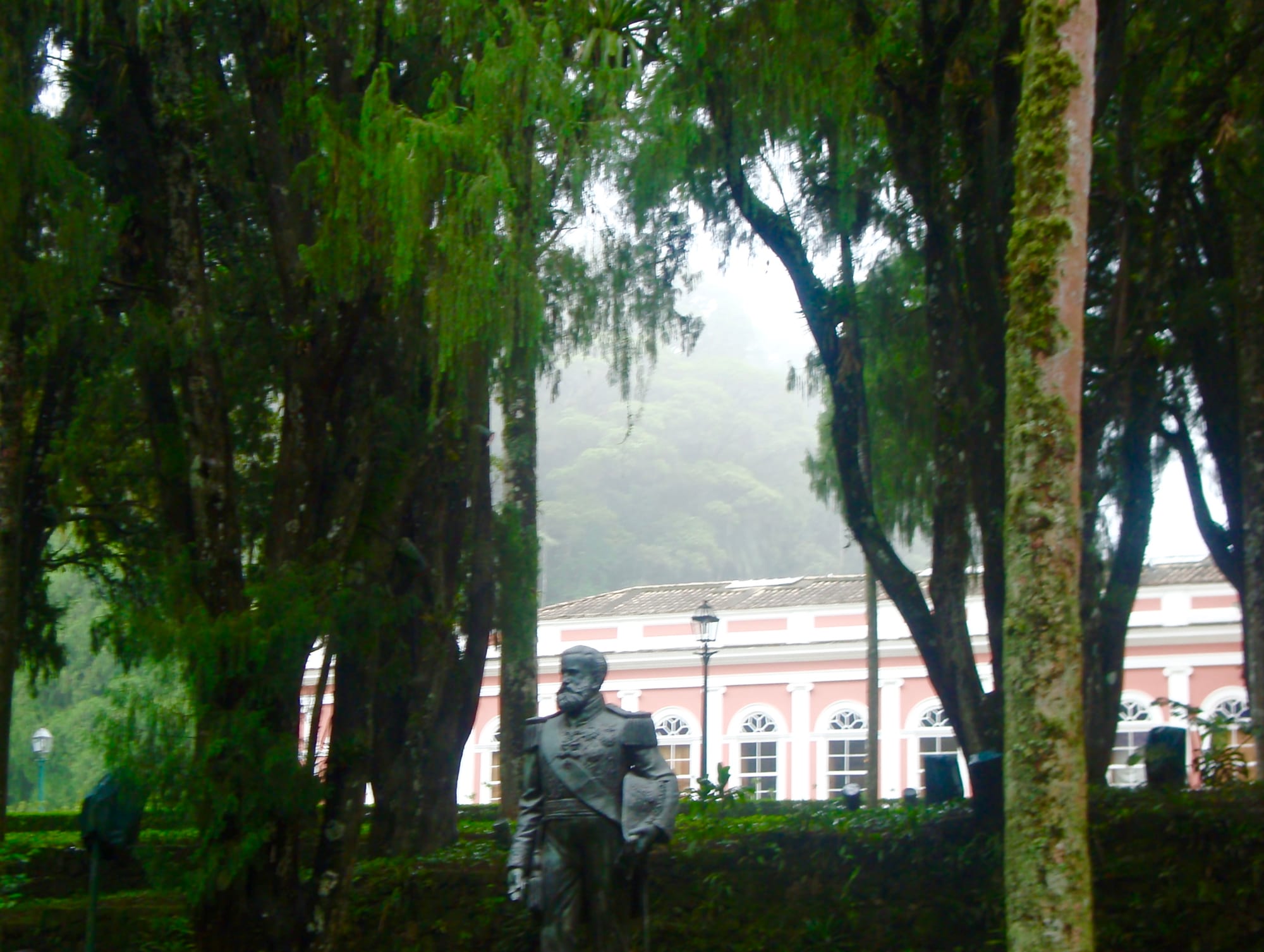
A bronze statue of Emperor Pedro II among tall trees in mist, with the long pink and white palace behind

Rio de Janeiro, Brazil

Petrópolis

The former summer palace of Pedro II, now the Imperial Museum, in its gardens in Petrópolis. (Virginia Lucia Campos Mendonça / Wikimedia Commons · CC BY-SA 4.0)

A mountain city in a valley of the Serra dos Órgãos, north of Rio de Janeiro, planned in the 1840s around Emperor Pedro II's summer palace and settled by German immigrants. The court spent its summers here, and the emperor is buried in its cathedral. Today it is the largest city of the state's mountain region, known for its palaces, beer and cool climate.

Neighbourhoods

  • Centro Histórico
    • First-time visitors
    • Historic district
    • Museums

    The planned imperial town, with the Imperial Museum, the cathedral, the Crystal Palace, the Rio Negro Palace and the 19th-century mansions of the Avenida Koeler within walking distance. Most of the city's sights, cafés and many hotels are here.

    Open in Maps
  • Quitandinha
    • Architecture
    • Quiet and residential

    A district in the south of the city on the Quitandinha river, dominated by the vast former casino hotel of the Palácio Quitandinha beside its lake.

    Open in Maps
  • Itaipava
    • Best for food
    • Shopping
    • Country houses

    A district further out along the valley, where the land falls lower and the city gives way to country houses, restaurants, breweries and shopping streets popular with weekenders from Rio.

    Open in Maps

Things to do

Imperial Petrópolis

  • Imperial Museummuseum

    Pedro II's summer palace, begun in 1845, now one of the most-visited museums in Brazil, with collections from the monarchical past of Brazil.

    Open in Maps
  • Cathedral of Petrópolislandmark

    The Gothic Revival cathedral of Saint Peter of Alcantara, built from 1884 to 1925, where Emperor Pedro II and members of his family, including Princess Isabel, lie in the Imperial Mausoleum.

    Open in Maps
  • Crystal Palacelandmark

    A palace in the historic centre, listed among the city's sights.

    Open in Maps
  • Rio Negro Palacelandmark

    The palace that became the official summer residence of the presidents of the republic in 1903 and remains one of the president's official residences, though it is rarely used.

    Open in Maps

Later landmarks

  • Palácio Quitandinhalandmark

    A huge former luxury casino hotel, where the Rio Treaty was signed in 1947 in the presence of US President Harry Truman.

    Open in Maps
  • Santos Dumont House Museummuseum

    A small hillside house of 1918 built for the aviation pioneer Alberto Santos-Dumont, known as A Encantada, with stairs that must be started on the right foot and an alcohol-heated shower.

    Open in Maps
  • Bohemia Breweryattraction

    The brewery of the Bohemia beer brand in the centre of Petrópolis, a city recognised as the state's beer capital.

    Open in Maps

Short trips from the city

  • Serra dos Órgãos National Parkpark

    Brazil's third national park, created in 1939, protecting the peaks and forests of the mountain range across parts of Petrópolis, Teresópolis and Magé.

    Open in Maps

Seasonal events

  • BauernfestJune–July

    The festival of the German settlers, with German food, beer, music and dance, held each year since 1989 and marking the start of the winter high season.

  • Rock the Mountainyearly

    A large music festival celebrating Brazilian music and culture, held in Petrópolis each year.

Eat and drink

Long-standing places and food districts in Petrópolis. Hours, ratings and directions come from your maps app, always current.

Petrópolis classics

  • Breweries of the cityneighborhood

    Petrópolis is one of the largest beer-producing centres in Brazil, home to Bohemia and Grupo Petrópolis, and a growing number of smaller breweries pour their own beer.

    Open in Maps
  • Centro Histórico caféscafe

    Cafés and confeitarias near the museum and the cathedral serving coffee, cakes and the city's chocolate.

    Open in Maps

Food districts

  • Itaipavaneighborhood

    A district of shops, breweries and restaurants, popular with weekend visitors.

    Open in Maps

Experience Petrópolis

History

Emperor Pedro I passed this way in 1822 on the road to Minas Gerais, stayed at a farm owned by a priest named Correia and found the climate so pleasant that he planned a summer palace there. He abdicated in 1831 before it was built. On 16 March 1843 his son, Pedro II, signed a decree ordering both a settlement, to be peopled by German immigrants, and the summer palace, begun in 1845. The town was planned by the engineer Major Julius Friedrich Koeler, with the palace, public buildings and commerce in the centre and districts for the settlers around it.

For the rest of the empire Petrópolis was the summer capital in all but name. The court moved up from Rio each year, Pedro II spent at least forty summers here, diplomats lived in the town for most of the year, and wealthy families came to escape yellow fever on the coast. In 1877 the first telephone line in Brazil was strung from the palace.

After the republic was declared in 1889 and the imperial family went into exile, the city remained a summer seat for presidents at the Rio Negro Palace and was the state capital from 1894 to 1902. In 1947 the Quitandinha hotel hosted the signing of the Rio Treaty. On 15 February 2022 extreme rainfall caused floods and mudslides that destroyed parts of the city and killed at least 231 people.

Culture & Customs

Petrópolis's identity rests on its imperial past. The palace that became the Imperial Museum is one of the most-visited museums in Brazil, Pedro II is entombed in the cathedral, where Princess Isabel and the Count of Eu were later also buried.

The German settlers left a strong mark on the city's street names, family names and festivals. The Bauernfest, the festival of the German settlers, has been held each winter since 1989, with music, folk dance, food and beer, and opens the winter high season. Portuguese, Afro-Brazilian, Italian, Syrian, French and Lebanese communities also shaped the city, and the Serra Serata is an annual festival of Italian culture.

Beer is part of the culture: a 2017 law recognised Petrópolis as the state's beer capital, and breweries large and small are a source of local pride. The city also hosts a regular calendar of cultural events, including the Rock the Mountain music festival.

Daily Life

The 2022 census counted about 279,000 people in the municipality, the largest in the state's mountain region; the population has been roughly stable or slightly falling since around 2000. The city stretches along narrow valleys from the historic centre through the districts of Itaipava and Pedro do Rio, where the land falls lower; most people live in the neighbourhoods that line the rivers and climb the slopes on either side.

The economy combines tourism with brewing — Grupo Petrópolis and Bohemia are based here — clothing, especially the wholesale and retail shops of Rua Teresa, chocolate-making and services.

The steep valleys shape everyday life. Housing climbs the hillsides, and when summer storms break, rivers rise fast and slopes can give way, as they did with deadly results in February 2022. Since then rebuilding and the safety of homes on the slopes have been constant local concerns. Winters are the busy season for visitors, and weekends in the centre and Itaipava are crowded.

Food

The cool climate and immigrant history give Petrópolis a different menu from the coast. German heritage shows in the traditional German dishes served especially at the Bauernfest, such as sausages, sauerkraut, Sauerbraten and Black Forest cake, washed down with beer, and Itaipava has many of the city's restaurants.

Beer is central. Petrópolis is one of Brazil's largest brewing centres: the Bohemia brand began here in the 19th century, Grupo Petrópolis produces Itaipava and other brands, and craft breweries have multiplied. Chocolate is the other local product, made in the city and sold in shops in the centre and along Rua Teresa.

Coffee and cake in a confeitaria near the palaces is part of a visit, as are the everyday Brazilian staples of rice, beans and grilled meat at per-kilo lunch restaurants. In winter, a hot chocolate or a cold local beer after a walk through the centre is the typical end to a day.

Planning tools

Budget

Petrópolis is cheaper than Rio's beach districts. Museum tickets are modest, the historic centre is walkable and local buses are cheap. Prices rise at weekends and in winter, when Rio families come up for the cool weather, and around the Bauernfest.

Daily Budget Midrange
USD 100–200 (hotel in the centre or Itaipava, restaurant dinners, museum tickets, taxis)
Daily Budget Shoestring
USD 40–65 (hostel or simple guesthouse, per-kilo lunches, local buses, walks in the centre)

Weekdays are quieter and cheaper; a number of restaurants close early in the week, so check before going.

Best Time to Visit

May to September is cooler and drier, the high season for visitors from Rio, with the Bauernfest in June and July and cold winter nights. Summer, December to March, is warm and rainy, the season when storms can bring floods and landslides; spring and autumn are a good balance.

Suggested Number of Days

Many visitors come for a day from Rio, but one or two nights allow a calmer visit. Three or four days give time for the surrounding mountains and national park as well.

First Visit
1–2 days
With Surroundings
3–4 days

Transportation

The historic centre is walked, and local buses run between the centre, the main bus station and the outer districts. Taxis and app taxis serve places further out such as Quitandinha and Itaipava. A car is useful for the mountains around the city.

The roads in the hills are steep and winding; allow extra time in rain and fog.

Airport & Station Connections

Petrópolis is about 40 km north of Rio de Janeiro, reached by frequent intercity buses from the Novo Rio terminal, climbing the Serra on a mountain road. Buses also connect it with Belo Horizonte, São Paulo and other cities. Rio's Galeão airport is the nearest airport for most visitors.

Walkability

The centre is compact and pleasant on foot, with avenues of 19th-century mansions linking the museum, the cathedral and the palaces. The city spreads up narrow, hilly valleys, so places outside the centre need a bus or taxi.

Safety

Brazil has high rates of crime, including violent crime, and it is the main practical concern for visitors — though very unevenly distributed. The mountain towns are calmer than Rio de Janeiro, though summer storms bring landslide risk in the Serra.

Keep valuables out of sight, follow local warnings during heavy summer rain, and avoid hillside areas after storms. Check current official travel advice before travelling.

Climate

A tropical highland climate, much cooler than Rio on the coast. Summer is December to February: warm and humid with frequent heavy rain and thunderstorms. Winter, June to August, is dry and relatively cold, with cold nights.

Summer
warm and humid, averaging about 23°C in the warmer months, with storms and heavy rain
Winter
drier and cool, with the coldest month averaging about 15°C and cold nights

Local Customs

Petrópolis is proud of its imperial past and its German, Portuguese and Afro-Brazilian roots, and it has long been a retreat from the heat of Rio. A service charge is usually added to restaurant bills. Churches and the museum expect respectful behaviour.

Bring a warm layer even in summer for the evenings; dress modestly in the cathedral and keep quiet near the imperial tombs.

Common Payment Methods

The currency is the Brazilian real (R$). Cards and Pix are accepted almost everywhere. A little cash is useful for buses, small cafés and market stalls.