A white statue in a garden above a calm blue bay full of moored boats, framed by tree branches and a tiled roof

Rio de Janeiro, Brazil

Armação dos Búzios

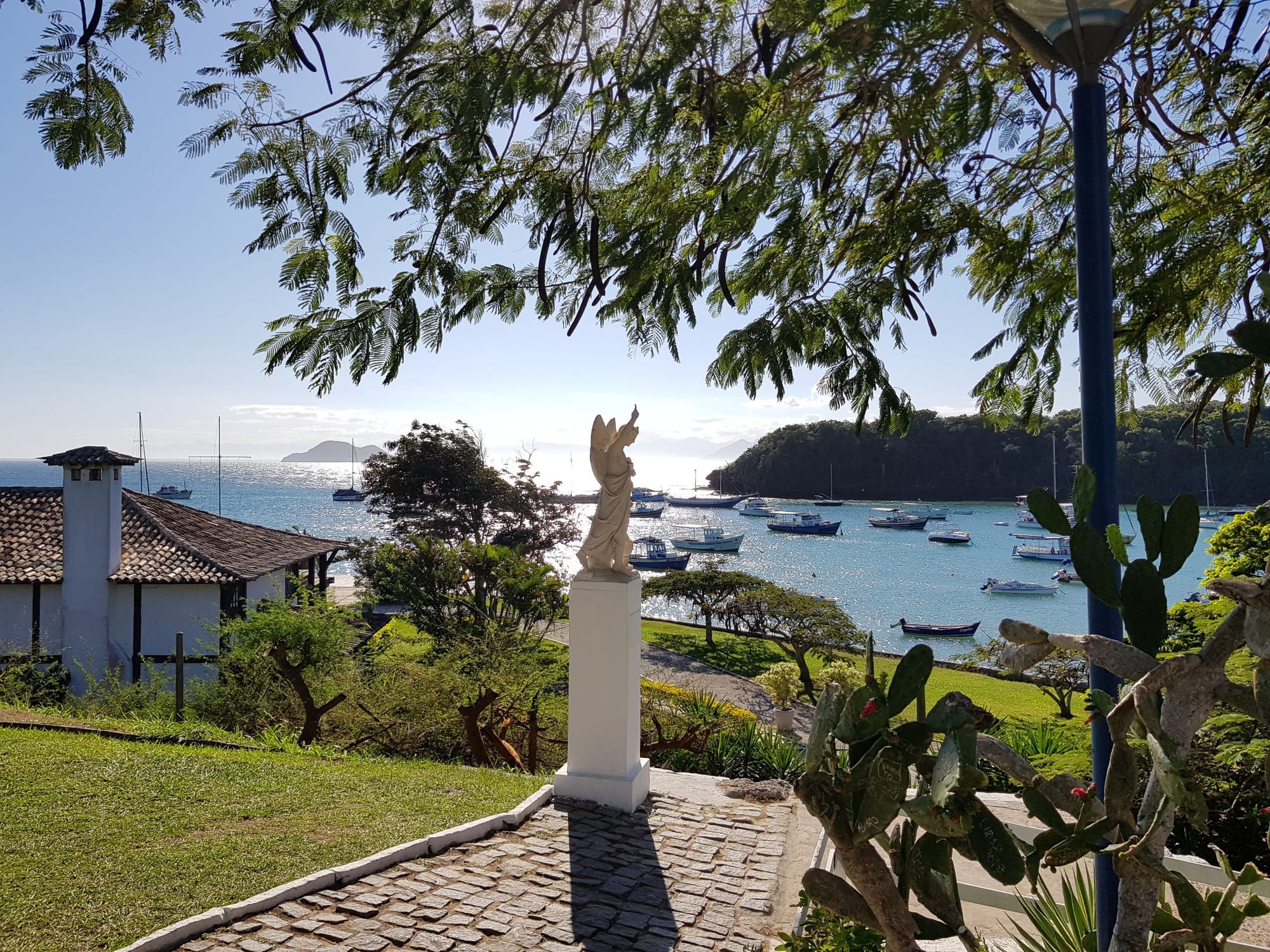
The view from the Sant'Ana church over the bay at Praia dos Ossos, Armação dos Búzios. (Arthur Bomfim / Wikimedia Commons · CC BY-SA 4.0)

A peninsula in the Lakes Region (Região dos Lagos), about 170 km east of Rio de Janeiro, with more than twenty small beaches. Once a whaling and fishing village, it became famous after Brigitte Bardot's visit in 1964 and is now a resort of guesthouses, boutiques and restaurants along the Rua das Pedras that fills with visitors in summer.

Neighbourhoods

  • Centre, Rua das Pedras and Orla Bardot
    • First-time visitors
    • Nightlife
    • Best for food

    The old village by the Armação and Ossos beaches, where the stone-paved Rua das Pedras and the waterfront Orla Bardot are lined with restaurants, bars, boutiques and galleries. The streets are busiest late in the evening.

    Open in Maps
  • Ferradura and the western beaches
    • Beaches
    • Families
    • Quiet and residential

    The sheltered side of the peninsula facing the bay, with calm, clear water at Ferradura, João Fernandes and Azeda, and residential streets of holiday houses and guesthouses a short ride from the centre.

    Open in Maps
  • Geribá and the ocean beaches
    • Beaches
    • Surfing
    • Young crowd

    The open-sea side of the peninsula, where longer beaches such as Geribá and Brava catch the waves and draw surfers, with beach bars and newer holiday developments behind them.

    Open in Maps
  • Manguinhos
    • Local life
    • Water sports

    A beach area where, with the old centre, the first holiday houses stood until the 1960s, now with a more everyday, residential feel than the resort streets.

    Open in Maps

Things to do

Beaches and the bay

  • Ferradura, João Fernandes and Azedabeach

    Among the most popular beaches on the peninsula's calm western side, with clear water for swimming and snorkelling.

    Open in Maps
  • Geribá and Bravabeach

    Beaches facing the open sea on the eastern side, wilder, with waves for surfing and other water sports.

    Open in Maps
  • Praia dos Ossos and the Sant'Ana churchlandmark

    A small beach named after the whale bones once found on it, overlooked by the hilltop Sant'Ana chapel, built with stone and whale oil.

    Open in Maps
  • Costa do Sol State Parkpark

    A state park protecting coastal vegetation, lagoons and beaches across six municipalities of the Lakes Region, including Búzios.

    Open in Maps

Short trips from the town

  • Cabo Frioattraction

    The larger neighbouring city, about 24 km away, with fine white-sand beaches on both the ocean and the lagoon.

    Open in Maps
  • Arraial do Caboattraction

    A town beyond Cabo Frio known for very clear turquoise water, boat trips and diving.

    Open in Maps

Eat and drink

Long-standing places and food districts in Armação dos Búzios. Hours, ratings and directions come from your maps app, always current.

Búzios classics

  • Rua das Pedrasneighborhood

    The main street of the resort, lined with restaurants, bars and cafés that stay busy late into the night.

    Open in Maps
  • Orla Bardotneighborhood

    The waterfront promenade beyond the Rua das Pedras, with restaurants and bars looking out over the boats in the bay.

    Open in Maps

Beach food

  • Beach kiosks at Ferradura and Geribáneighborhood

    Kiosks and beach restaurants serving grilled fish, fried shrimp, cold beer and caipirinhas on the sand.

    Open in Maps

Experience Armação dos Búzios

History

Before the Portuguese, the peninsula was Tupinambá country. In the 16th century French traders came for brazilwood and allied with the Tupinambá, until the Portuguese drove them out after violent clashes that also left the Indigenous population greatly reduced. For a long time afterwards the coves were used for smuggling, slave-trading and whaling: Praia dos Ossos, the beach of bones, was named after the whale bones that piled up on the shore, the village lamps burned whale oil, and the Sant'Ana chapel on the hill above was built with stone and whale oil.

After the slave trade was abolished around 1850, Búzios settled into a quieter life of farming and fishing. By the mid-20th century it was already a discreet escape for some of Rio's high society, but it remained a small fishing village and a district of Cabo Frio.

That changed in 1964, when the French actress Brigitte Bardot came with her Brazilian-based boyfriend Bob Zagury. She returned and spent Christmas in a house on the Rua das Pedras, and the world's press followed her to the isolated village. Tourism and building followed her fame, and Búzios later became a municipality of its own. The waterfront promenade is named Orla Bardot in her honour.

Culture & Customs

Búzios trades on an image of easy, cosmopolitan beach life that dates from the Bardot years — a fishing village where film stars, artists and Rio's wealthy mixed with local fishermen. That image still shapes the town: boutiques, galleries and restaurants occupy the old houses of the centre, and the evening walk along the Rua das Pedras and the Orla Bardot is the social centre of the resort.

The peninsula has two characters. The western beaches, facing the bay, are calm and clear, suited to families, swimming and snorkelling, while the eastern beaches face the open sea and draw surfers, water-sports fans and a younger crowd. Schooner trips round the beaches and out to an island are part of a visit, and the fishing boats still anchored off Armação and Ossos recall the old village.

Visitors come from across Brazil and from abroad, especially in the summer holidays. Nightlife runs late, with bars and clubs filling only towards midnight.

Daily Life

The 2022 census counted about 40,000 people in the municipality. Tourism dominates the economy — guesthouses, restaurants, shops, boat trips and building work — and many residents moved here from elsewhere in Brazil and abroad to work in it, while older fishing families remain in the original neighbourhoods by the bay.

Life follows the seasons. From December to Carnival the town is full, traffic clogs the narrow roads and the beaches are crowded; in winter many businesses slow down and the town belongs largely to residents. Most locals live away from the resort streets, in neighbourhoods away from the beaches, and commute to work in the hotels and restaurants. Growth has brought pressure on water, roads and the coast, and the balance between building and protecting the beaches and hillsides is a constant local issue. Parts of the peninsula's remaining coastal vegetation and beaches now lie inside the Costa do Sol State Park.

Food

Seafood is the heart of eating in Búzios. Fish from the local boats is grilled whole or in fillets, shrimp is fried or cooked in sauces, and moqueca, the Brazilian fish stew, appears on many menus, served with rice and pirão, a porridge-like dish of cassava in fish stock. Beach kiosks serve fried fish, portions of shrimp, cold beer and caipirinhas, along with coconut water from the shell.

The Rua das Pedras and the Orla Bardot hold the town's restaurants, from simple places serving the prato feito, the plate of rice, beans, salad and a main dish, to more ambitious kitchens run by cooks from across Brazil and abroad who settled here, and ice-cream and juice shops stay open late.

As elsewhere in Brazil, the evening often begins with a caipirinha of cachaça, lime and sugar, or a caipiroska made with vodka, and ends late in the bars of the centre.

Planning tools

Budget

Búzios is one of the more expensive places on the Rio de Janeiro coast, with prices built around holidaymakers from Rio, São Paulo and abroad. Rooms and restaurant bills rise sharply in December, at New Year and Carnival. Staying a little away from the Rua das Pedras, using local buses and eating at beach kiosks keeps costs down.

Daily Budget Midrange
USD 120–230 (guesthouse near the centre or a western beach, restaurant dinners, a schooner trip, taxis between beaches)
Daily Budget Shoestring
USD 45–75 (hostel dorm, set lunches and beach snacks, local buses, free beaches)

Book well ahead for December, New Year and Carnival; the beaches themselves are free.

Best Time to Visit

December to March is high season, hot and lively, with full beaches and nightlife and the highest prices; December is the busiest month. March to May and September to November are calmer and still warm. Winter, June to August, is mild, quieter and cheaper.

Suggested Number of Days

Two or three days give time to try several beaches and the evenings in the centre. Four or five allow for the neighbouring towns of the Lakes Region as well. Wind and weather decide which side of the peninsula is best each day.

First Visit
2–3 days
With Surroundings
4–5 days

Transportation

The peninsula is about 8 km long. Taxis, app taxis and local buses link the centre with the main beaches, and boat trips run round the beaches. Parking near the popular beaches and the Rua das Pedras fills quickly in high season.

Some of the smaller beaches are reached down steep paths or by boat; take water and sun protection.

Airport & Station Connections

Búzios is about 170 km east of Rio de Janeiro by road, roughly three hours by car depending on traffic; intercity buses and transfers run from Rio's airport, hotels and bus stations. The local airfield handles only general aviation; the neighbouring city of Cabo Frio, about 24 km away, has an international airport. Buses also connect Búzios with Cabo Frio and São Paulo.

Walkability

The centre — Rua das Pedras, Orla Bardot and the beaches of Armação and Ossos — is compact and pleasant on foot. The beaches are spread round the peninsula on hilly roads, so most people use buses, taxis or boats to move between them.

Safety

Brazil has high rates of crime, including violent crime, and it is the main practical concern for visitors — though very unevenly distributed. Búzios is calmer than Rio de Janeiro; the main practical risks are petty theft on beaches and in crowded streets in high season, and traffic on narrow roads.

Leave nothing unattended on the beach, keep a phone out of sight at night, and heed warnings on the ocean beaches. Check current official travel advice before travelling.

Climate

Warm and sunny for much of the year, tropical and humid near the sea. Summer is December to February: hot, with sea breezes and occasional storms. Winter, June to August, is mild and mostly dry.

Summer
hot, often around 30°C, with sea breezes and occasional heavy showers
Winter
mild and mostly dry, often around 20°C, with stronger sea breezes

Local Customs

Búzios is relaxed and informal, with a cosmopolitan crowd. A service charge is usually added to restaurant bills. Nightlife starts late.

Beachwear is for the beach; cover up in restaurants and shops in town.

Common Payment Methods

The currency is the Brazilian real (R$). Cards and Pix are accepted almost everywhere in the centre and at most beach businesses. Carry some cash for small kiosks, vendors and vans.