💰 Budget
Foz do Iguaçu has accommodation for every budget, from hostels downtown to resort hotels near the falls. The main extra costs are park tickets, boat trips below the falls, the dam tours and any crossings to the Argentine side. Prices rise in the Brazilian and Argentine school holidays and over long weekends.
- Daily Budget Midrange
- USD 90–180 (mid-range hotel, park tickets and a boat trip, dinners out, taxis or a transfer to Argentina)
- Daily Budget Shoestring
- USD 35–60 (hostel, buffet lunches, city buses to the park, park entry)
City buses run from the downtown hub to the national park and the airport, and save a great deal over taxis for the falls.
📅 Best Time to Visit
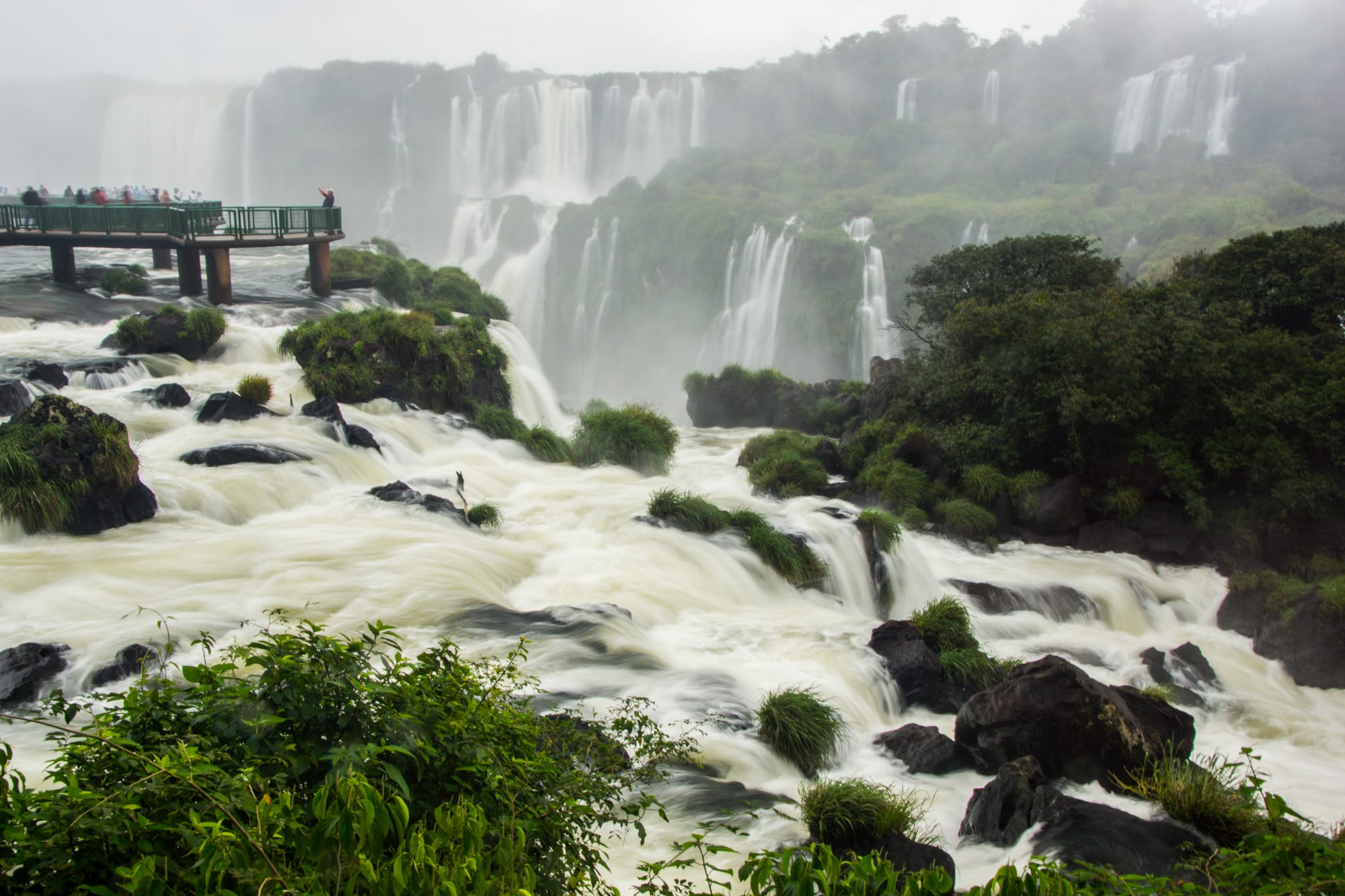
The falls can be visited all year. They carry most water after heavy rain, often in the hot, stormy summer; spring and autumn bring milder weather and clearer skies. Winter is dry and cool. The busiest periods are the Brazilian and Argentine holidays, Easter and July.
⏳ Suggested Number of Days
Two to three days cover the Brazilian side and the city's other main sights. Allow three or four to see both sides of the falls without rushing; border queues and the weather can each cost a day.
- First Visit
- 2–3 days
- With Surroundings
- 3–4 days
🚆 Transportation
Private bus companies run the city routes from a central terminal, the TTU, with lines out to the airport and the national park. Buses to Ciudad del Este and Puerto Iguazú are separate services. Taxis and app rides are widely used, and tour vans handle many border trips.
Expect queues at the border bridges, especially to Paraguay; crossing on a bus or on foot can be quicker than by car.
🛬 Airport & Station Connections
Foz do Iguaçu/Cataratas International Airport is about 13 kilometres from downtown, on the road to the falls, with flights to São Paulo and other Brazilian cities. The international bus station north-east of the centre has services to Curitiba, about 11 hours away, and São Paulo, about 15. The airport at Puerto Iguazú in Argentina is another option.
🚶 Walkability
The compact downtown is easy to walk, but the falls, the bird park, the dam and the border bridges are all a ride away. Inside the national park, the falls trail is a walk along the canyon with many steps and viewpoints.
🛡️ Safety
Brazil has high rates of crime, including violent crime, and it is the main practical concern for visitors — though very unevenly distributed. Foz do Iguaçu is a busy border town on the triple frontier with Argentina and Paraguay, known for smuggling. Visitors mainly see the tourist areas, the national park and the centre, but ordinary precautions with phones and valuables matter, especially after dark.
Keep food away from the coatis at Iguaçu, stay on the marked trails, keep valuables close in border crowds and use app rides at night. Check current official travel advice before travelling.
🌦️ Climate
Humid subtropical and low-lying, with an annual average of about 24°C. Fronts meet over the region, so the weather changes quickly and thunderstorms are frequent. Summer is December to February.
- Summer
- hot and humid — averages around 26–27°C, with highs that can reach 40°C and frequent storms
- Winter
- dry and cooler — averages around 15°C, with occasional cold snaps and frost
🤝 Local Customs
Foz is a city of many nationalities, and Spanish is widely understood alongside Portuguese. A service charge is usually added to restaurant bills. Dress modestly when visiting the mosque or the Buddhist temple, and follow any instructions on covering up or removing shoes.
Customs limits apply to goods bought in Paraguay; keep receipts. Respect the park's rules against feeding wildlife.
💳 Common Payment Methods
The currency is the Brazilian real (R$). Cards and Pix are accepted almost everywhere. Argentine pesos and Paraguayan guaraníes are used across the borders, and US dollars are common in Ciudad del Este; change only what is needed and withdraw reais by day from ATMs inside banks.