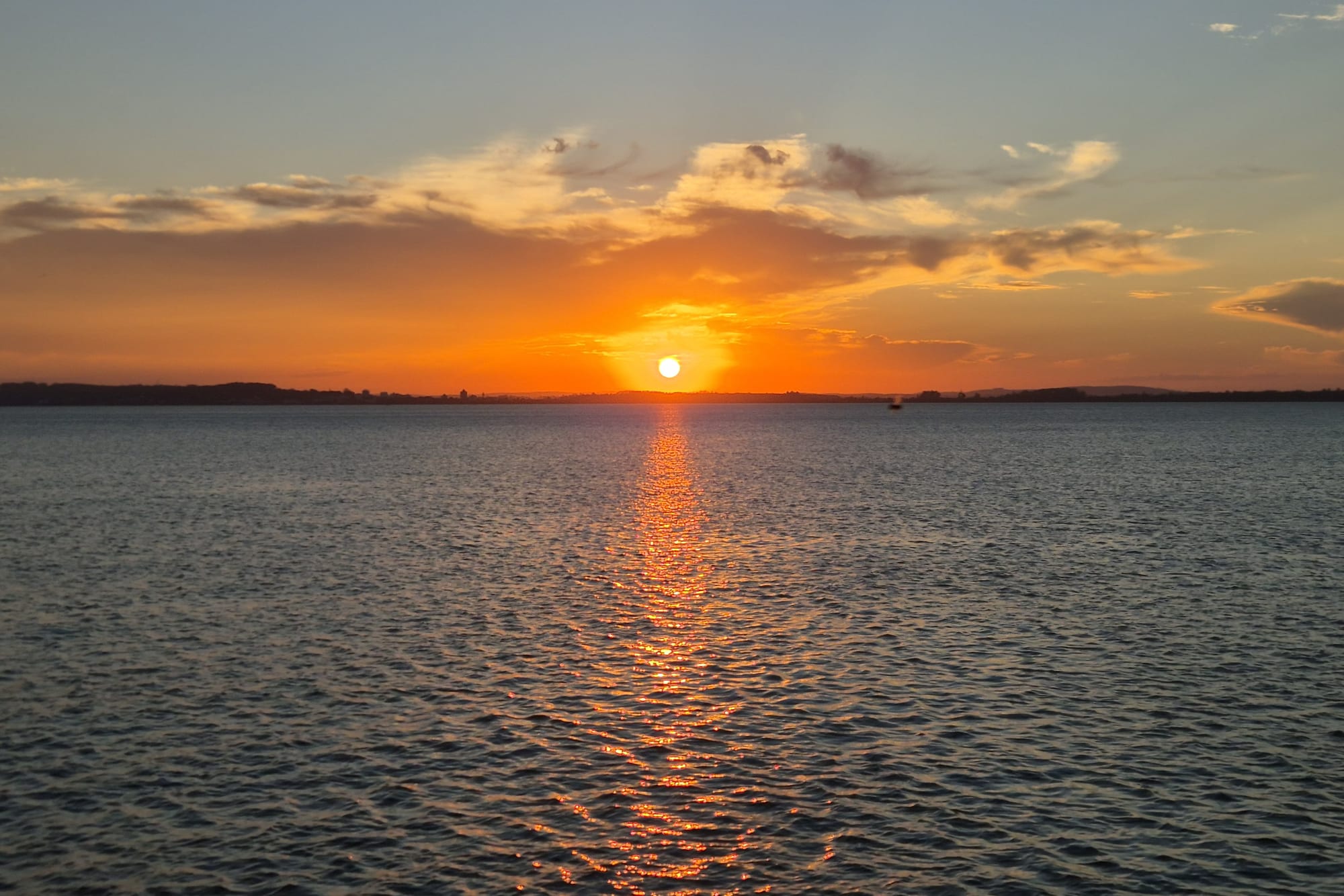
An orange sun setting over the wide, rippled water of the Guaíba, with a low line of shore on the horizon

The South, Brazil

Porto Alegre

Sunset over the Guaíba seen from a boat off Porto Alegre's waterfront. (Heylenny / Wikimedia Commons · CC BY-SA 4.0)

The capital of Rio Grande do Sul, on the eastern shore of the Guaíba where five rivers meet before flowing into the Lagoa dos Patos. Founded by Azorean settlers in the 18th century, it grew into the south's largest city, known for gaúcho traditions, football rivalry and participatory budgeting, and is still rebuilding after the floods of 2024.

Neighbourhoods

  • Centro Histórico
    • First-time visitors
    • Historic district
    • Close to public transport

    The oldest part of the city and still the seat of the city and state governments, on a ridge above the Guaíba. Praça da Matriz with the cathedral, palace and theatre, the Public Market, Alfândega Square and the old power station on the waterfront are all here, with the metro's central station beside the market. It is busy by day and quiet at night.

    Open in Maps
  • Cidade Baixa
    • Nightlife
    • Budget stays
    • Bars

    An old neighbourhood close to the centre, next to Redenção park. It is the city's best-known nightlife district, with hundreds of bars and clubs, especially along Rua General Lima e Silva, República and João Alfredo, and many hostels.

    Open in Maps
  • Bom Fim
    • Parks
    • Local life
    • Students

    A lively residential neighbourhood along Avenida Osvaldo Aranha on the north side of Redenção park, close to the university, with snack bars, cafés and easy walks into the park and its Sunday market.

    Open in Maps
  • Moinhos de Vento
    • Upmarket stays
    • Cafés and restaurants
    • Quiet and residential

    Named after the windmills Azorean families built here in the 18th century, this has been an affluent district since the 1890s. Tree-lined streets, the Parcão park, boutiques, cafés and pubs along Rua Padre Chagas make it a pleasant area to stay.

    Open in Maps
  • Quarto Distrito
    • Nightlife
    • Industrial heritage

    The Fourth District, the old industrial area north of the centre, where former factories and warehouses have been taken over by bars, studios and creative businesses — one of the city's three main nightlife areas.

    Open in Maps

Things to do

Historic centre

  • Praça da Matrizlandmark

    The historic square at the heart of the city since its early days, surrounded by the cathedral, the governor's palace, the legislative assembly and the São Pedro Theatre.

    Open in Maps
  • Metropolitan Cathedrallandmark

    The city's cathedral on Praça da Matriz, whose present building went up slowly between 1921 and 1972 on the site chosen for the parish church in 1772.

    Open in Maps
  • Piratini Palacelandmark

    The seat of the state government and official residence of Rio Grande do Sul's governors, facing Praça da Matriz.

    Open in Maps
  • São Pedro Theatrelandmark

    The oldest theatre in Porto Alegre, on Praça da Matriz, home of a chamber orchestra and a busy programme of music and drama.

    Open in Maps
  • Alfândega Squarelandmark

    A protected historic square surrounded by grand early 20th-century buildings, home since 1955 of the city's large annual book fair.

    Open in Maps
  • Casa de Cultura Mario Quintanamuseum

    A cultural centre in the former Hotel Majestic, where the poet Mário Quintana lived from 1968 to 1980, with galleries, cinemas and a rooftop café.

    Open in Maps

Museums and culture

  • Rio Grande do Sul Museum of Artmuseum

    The state art museum, known as MARGS, in one of the most notable historic buildings of the centre, on Alfândega Square.

    Open in Maps
  • Farol Santandermuseum

    A cultural centre run by a bank in a listed historic building on Alfândega Square, with changing exhibitions.

    Open in Maps
  • Iberê Camargo Foundationmuseum

    A museum of the painter Iberê Camargo in a building on the shore of the Guaíba, designed by the Portuguese architect Álvaro Siza and opened in 2008.

    Open in Maps
  • PUCRS Museum of Science and Technologymuseum

    A large hands-on science museum run by the Catholic university on Avenida Ipiranga, popular with families.

    Open in Maps

Parks and the waterfront

  • Usina do Gasômetrolandmark

    A coal-fired power station of 1928 with a tall chimney on the waterfront, saved from demolition and turned into a cultural centre in 1991; crowds gather in front of it to watch the sun set over the Guaíba.

    Open in Maps
  • Guaíba waterfrontpark

    The landscaped shore park south of the old power station, with paths, cycle lanes and viewpoints that fill at sunset, and boat trips on the lake.

    Open in Maps
  • Farroupilha Parkpark

    Redenção, the city's best-loved park, designed by Alfred Agache and opened in 1935, with a lake, an oriental garden, an auditorium and the Brique da Redenção market on Sundays.

    Open in Maps
  • Moinhos de Vento Parkpark

    Parcão, the park of the Moinhos de Vento district, built on a former racecourse, with sports grounds, a pond and a replica Azorean windmill.

    Open in Maps
  • Porto Alegre Botanical Gardenpark

    About 43 hectares of gardens and woodland holding some 3,000 plant species, about 5 km from the centre.

    Open in Maps

Markets

  • Public Marketmarket

    The city's oldest market, opened in 1869 beside the town hall, with around a hundred stalls selling meat, fish, herbs, mate and spices, and long-established bars and restaurants.

    Open in Maps
  • Brique da Redençãomarket

    A Sunday street fair along the edge of Redenção park, with antiques, crafts and gaúcho handicrafts, and one of the city's favourite weekend outings.

    Open in Maps

Football

  • Estádio Beira-Rioattraction

    Internacional's stadium beside the Guaíba, renovated for the 2014 World Cup, where it hosted five matches.

    Open in Maps
  • Arena do Grêmioattraction

    Grêmio's stadium, opened in 2012 to replace the club's old Olímpico ground.

    Open in Maps

Short trips from the city

  • Gramadoattraction

    The highland resort town of the Serra Gaúcha, known for a major film festival and the Natal Luz Christmas festival.

    Open in Maps

Seasonal events

  • Semana Farroupilhamid-September

    A festival of gaúcho culture commemorating the Farroupilha Revolution, with the Acampamento Farroupilha camp in Harmonia Park.

  • Porto Alegre Book FairOctober to November

    A large open-air book fair in Alfândega Square, with music, theatre and dance alongside the stalls.

  • CarnivalFebruary or early March

    Samba schools and street blocos in many neighbourhoods, in one of the most important carnivals in Brazil.

Eat and drink

Long-standing places and food districts in Porto Alegre. Hours, ratings and directions come from your maps app, always current.

Porto Alegre classics

  • Public Marketmarket

    The meeting place of the old city, known for the ice cream of Banca 40, the Gambrinus restaurant and the century-old Bar Naval, as well as stalls of mate herb, meat and fish.

    Open in Maps
  • Chalé da Praça XVrestaurant

    One of the city's most traditional bars and restaurants, in a pavilion on Praça XV de Novembro near the market and town hall.

    Open in Maps
  • Churrascariasneighborhood

    Gaúcho barbecue houses where beef, sausage and chicken are roasted on skewers over embers; the city has them in every price range.

    Open in Maps

Bars and nights out

  • Cidade Baixaneighborhood

    Cheap bars and the traditional xis sandwich shops along Rua General Lima e Silva, with more bars and clubs on João Alfredo.

    Open in Maps
  • Moinhos de Ventoneighborhood

    Cafés, restaurants and pubs along Rua Padre Chagas in the city's most affluent neighbourhood.

    Open in Maps

Experience Porto Alegre

History

Porto Alegre began as Porto de Viamão, a landing on the Guaíba used by the inland settlement of Viamão. From 1752 Azorean couples brought to settle the mission lands ceded by the Treaty of Madrid waited here while the borders were surveyed, and many stayed; the place became known as Porto dos Casais, the port of the couples. Its official founding date is 26 March 1772, when a parish was created, and the following year it took the name Nossa Senhora da Madre de Deus de Porto Alegre and replaced Viamão as the capital. Until the mid-19th century its people were mostly Azoreans and the Africans they enslaved.

The Farroupilha Revolution began here, near the Azenha bridge, on 20 September 1835. German and Italian immigrants arrived later in the century, the port and industry grew, and the city grew into the commercial and political centre of the far south. A great flood in 1941 led to the building of a protective wall and drainage system along the historic centre.

From 1989 the city pioneered participatory budgeting, letting residents vote on public investment, and it hosted the first World Social Forums in 2001, 2002 and 2003 and later editions in 2005 and 2010; the budgeting process has been suspended since 2017. In April and May 2024 Brazil's worst floods in more than 80 years inundated large parts of the city, closing the airport for months, and recovery continues.

Culture & Customs

Porto Alegre is the capital of the gaúcho world. Chimarrão is drunk at home, at work and in the parks, and the Semana Farroupilha each September brings the Acampamento Farroupilha camp to Harmonia Park.

Football divides the city. Grêmio, founded in 1903, and Internacional, founded in 1909, contest the Gre-Nal, one of the fiercest derbies in South America, and households, offices and families split between blue and red. Internacional's Beira-Rio was a 2014 World Cup venue; Grêmio moved to its new Arena in 2012.

The city has a strong cultural life for its size: two major orchestras, the São Pedro Theatre, the art museum and cultural centres around Alfândega Square, and a book fair held there since 1955. Its carnival is counted among the most important in Brazil. Porto Alegre's political tradition — participatory budgeting and the World Social Forum — gave it an international reputation as a laboratory of the left, and politics remains passionate.

Daily Life

The 2022 census counted about 1.33 million people in the city and more than four million in the metropolitan region, which spreads north along the metro line to Canoas, São Leopoldo and Novo Hamburgo. About three-quarters of the city's residents described themselves as white, reflecting its Azorean, German and Italian roots.

Porto Alegre is a city of services, commerce, government, universities and hospitals, several of them regarded as reference institutions in their specialities, while the metropolitan region makes shoes and cars. Residents shop in large malls, take long lunches and fill the parks at weekends, when Redenção and the waterfront are crowded with families, joggers and chimarrão circles.

The 2024 floods remain the defining recent event: the water reached the historic centre and the airport, and debates over flood defences, housing and climate risk continue. Crime, rising living costs and inequality between the central districts and the outskirts are the other everyday concerns.

Food

Churrasco is the city's food. Beef, sausage, chicken and ribs are seasoned with coarse salt and roasted on skewers over embers, at home on weekends and in churrascarias of every kind. Arroz de carreteiro, rice cooked with dried beef, recalls the ox-cart drivers of the pampas, and sagu, made with small pearls of cassava starch, is a classic gaúcho dessert.

Chimarrão, the bitter green mate drunk hot from a gourd through a metal straw, is less a drink than a social ritual, shared in circles and carried in thermos flasks. The Public Market sells mate herb by the kilo along with meat, fish, cheese and spices, and its long-established bars and ice-cream stall are part of the city's routine. The xis, Porto Alegre's take on a cheeseburger pressed flat and loaded with fillings, is the late-night snack of Cidade Baixa.

Immigrant traditions add German breads and cakes, Italian pasta and polenta, and the wines of the Serra Gaúcha, Brazil's most important wine region, served across the city. Beer is popular too, and on warm evenings people gather along the waterfront to watch the sun set over the Guaíba.

Planning tools

Budget

Porto Alegre is good value for a state capital. Hotels in the centre and Cidade Baixa are cheaper than those in Moinhos de Vento, buffet and per-kilo lunches keep daytime costs low, and the metro, buses and ride-hailing are inexpensive. Big football matches and events push hotel prices up.

Daily Budget Midrange
USD 80–160 (mid-range hotel, churrascaria dinners, ride-hailing, museum and boat trips)
Daily Budget Shoestring
USD 35–60 (hostel in Cidade Baixa, buffet lunches, metro and buses)

Many of the best things — Redenção park and its Sunday market, the waterfront at sunset, the Public Market — are free.

Best Time to Visit

Spring (September to November) and autumn (March to May) are the most comfortable. Summer is hot and humid; winter is cool and damp but brings clear days, chimarrão weather and a full cultural calendar. Semana Farroupilha in September is the most distinctive time to be in the city.

Suggested Number of Days

Two or three days are enough for the city itself. Allow four to six to add the mountain towns and wine country of the Serra Gaúcha, which are reached by road.

First Visit
2–3 days
With Surroundings
4–6 days

Transportation

Trensurb, the city's single metro line, runs north from the Public Market through the bus station and the airport station to Canoas, São Leopoldo and Novo Hamburgo. Buses cover the rest of the city, and ride-hailing apps are cheap and widely used. A tourist bus line, the Linha Turismo, tours the main sights.

Use ride-hailing rather than walking between districts at night.

Airport & Station Connections

Salgado Filho International Airport is linked by a short people mover to the metro. It was closed by the floods in May 2024 and returned to full operation in December 2024. Long-distance buses connect the city with Florianópolis, with Uruguay and Argentina, and with towns across the state.

Walkability

The historic centre, Cidade Baixa, Bom Fim and Moinhos de Vento are all walkable and linked by parks, though the centre is hilly and empties at night. A cycle route links the main parks and the waterfront. Greater distances — to the stadiums, the botanical garden or the Iberê Camargo Foundation — need a bus or a ride.

Safety

Brazil has high rates of crime, including violent crime, and it is the main practical concern for visitors — though very unevenly distributed. Porto Alegre has the usual robbery and phone-theft risks in central areas at night, while residential districts are generally calmer. The city is also exposed to extreme rain: the 2024 floods swamped much of it.

Keep phones out of sight on the street, avoid the empty centre after dark, and follow weather warnings in the rainy months. Check current official travel advice before travelling.

Climate

Humid subtropical, with four real seasons, high humidity from the Guaíba and rain spread through the year. Seasons are southern-hemisphere, so summer is December to February.

Summer
hot and humid, up to about 30°C and sometimes reaching 40°C
Winter
cool and damp, usually about 10–19°C, with occasional frost

Local Customs

Porto Alegre is the capital of gaúcho culture: chimarrão, bitter mate drunk from a gourd and passed around a circle, is carried everywhere in a thermos. Football loyalties to Grêmio or Internacional run deep. A service charge is usually added to restaurant bills.

If offered chimarrão, drink the whole gourd and hand it back to the server without stirring the straw; wear neutral colours rather than one club's shirt on derby days.

Common Payment Methods

The currency is the Brazilian real (R$). Cards and the instant Pix transfer system are accepted almost everywhere; a little cash helps at market stalls and the Sunday fair. Withdraw money inside banks or malls.