💰 Budget
Porto de Galinhas costs more than most of the northeast coast, above all in the summer holidays, over New Year and at Carnival, when the village fills with visitors from Recife and the rest of Brazil. Pousadas in and around the village are the cheaper option; the resorts of Muro Alto and Cupe are the most expensive.
- Daily Budget Midrange
- USD 100–190 (pousada near the beach, seafood dinners, a jangada trip, a buggy or boat outing)
- Daily Budget Shoestring
- USD 40–70 (hostel or simple pousada, tapioca and buffet lunches, buses and vans)
Mid-week stays outside the holidays are much cheaper, and the natural pools cost nothing to see from the beach at low tide.
📅 Best Time to Visit
September to February brings the most sunshine, with October, November and December the sunniest months. April to July is the rainy season on the Pernambuco coast, and June is the wettest month. Whatever the season, the reef pools can only be visited around low tide, best on the low spring tides near the full and new moon.
⏳ Suggested Number of Days
Two or three days are enough for the village, the pools and the neighbouring beaches, allowing for the tides. Allow four to six days to add the island and beach trips along the coast. The low tides that make the pools accessible shift each day, so a longer stay gives more choice.
- First Visit
- 2–3 days
- With Surroundings
- 4–6 days
🚆 Transportation
The village is small and easy to cover on foot. Frequent vans link it with Maracaípe, app taxis and local taxis are available, and buggies can be hired with or without a driver for the beaches up and down the coast. A car is useful for the resorts of Muro Alto and for day trips.
Buggy drivers belong to a local association; agree the route and the price before setting off.
🛬 Airport & Station Connections
Recife's Guararapes–Gilberto Freyre International Airport is about 60 km to the north. By road the village is about 80 km from central Recife, via the BR-101 and PE-60. Buses run from central Recife, stopping at the airport, and take around two to two and a half hours; a faster air-conditioned semi-express service also runs. Taxis and app taxis make the trip more quickly.
🚶 Walkability
The centre is compact, sandy and pedestrian-friendly, and the beach itself is the main path — it is possible to walk south along the sand to Maracaípe. Muro Alto and Cupe are too far to walk comfortably, and the midday sun makes long walks tiring.
🛡️ Safety
Brazil has high rates of crime, including violent crime, and it is the main practical concern for visitors — though very unevenly distributed. In Porto de Galinhas the usual care with phones and valuables on the beach is the main precaution, and the sea and sun are the other risks.
Go to the reef pools only around low tide and with the jangadas or on the marked routes, wear footwear against sharp rocks, and use repellent against dengue. Check current official travel advice before travelling.
🌦️ Climate
Hot and humid all year, with a steady sea breeze and little change in temperature. The heaviest rain falls from April to July, while September to February is drier and sunnier.
- Summer
- hot and mostly sunny, around 26–32°C on this coast, with warm water
- Winter
- warm and showery, around 22–29°C, with June the wettest month
🤝 Local Customs
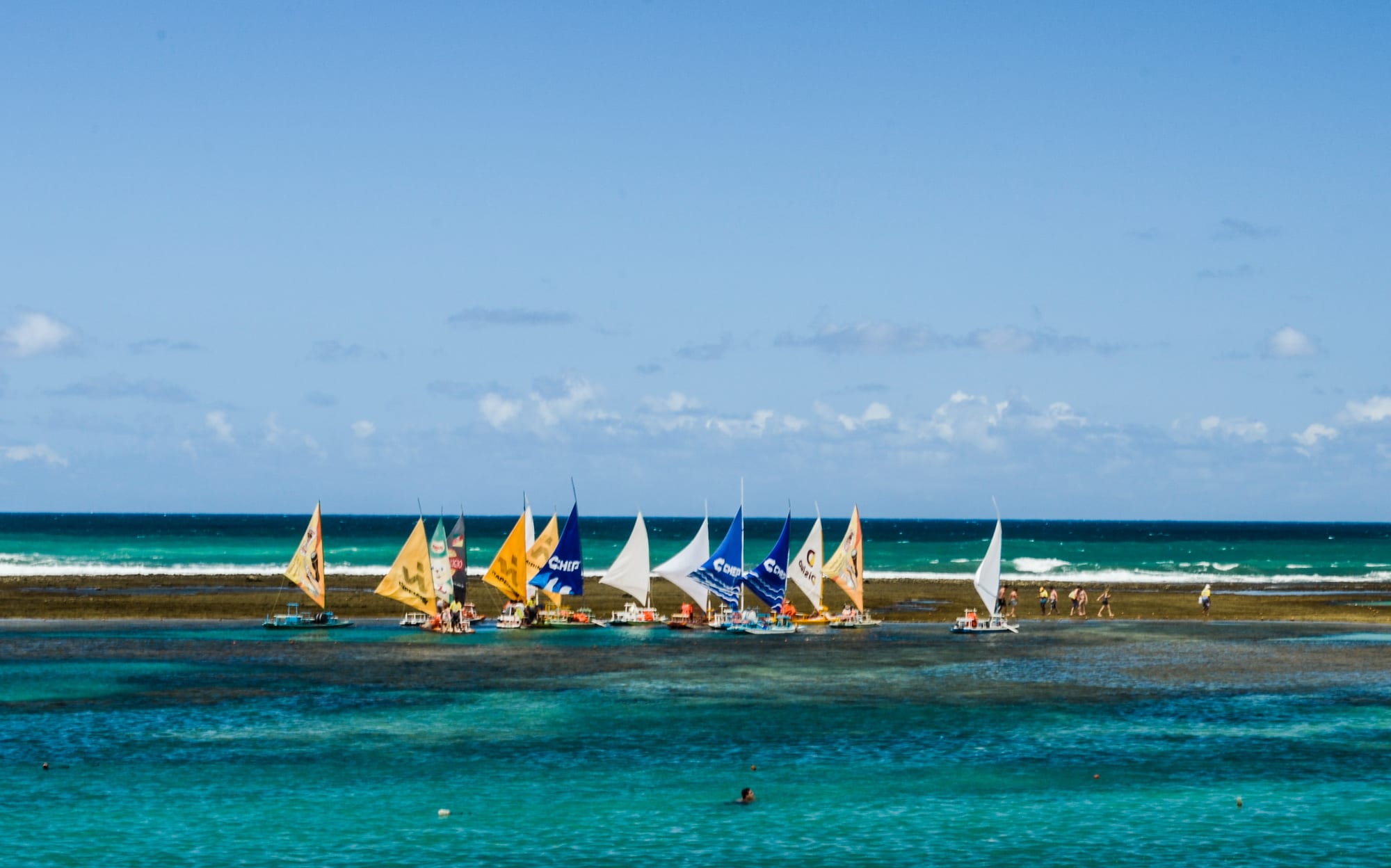
Beach vendors and jangada owners are paid directly. Beachwear is normal in the village streets near the sand. The reef pools are protected: there are rules on how visitors may use them, and walking on living coral or feeding the fish harms the reef. English is limited, so a few words of Portuguese help.
Agree prices for jangada trips, buggies and beach chairs before using them, and leave shells, coral and sea creatures where they are.
💳 Common Payment Methods
The currency is the Brazilian real. Cards are widely accepted in shops, restaurants and pousadas, but cash is handy for beach vendors, vans and small stalls. The village has cash machines, but not every bank network is represented.