History
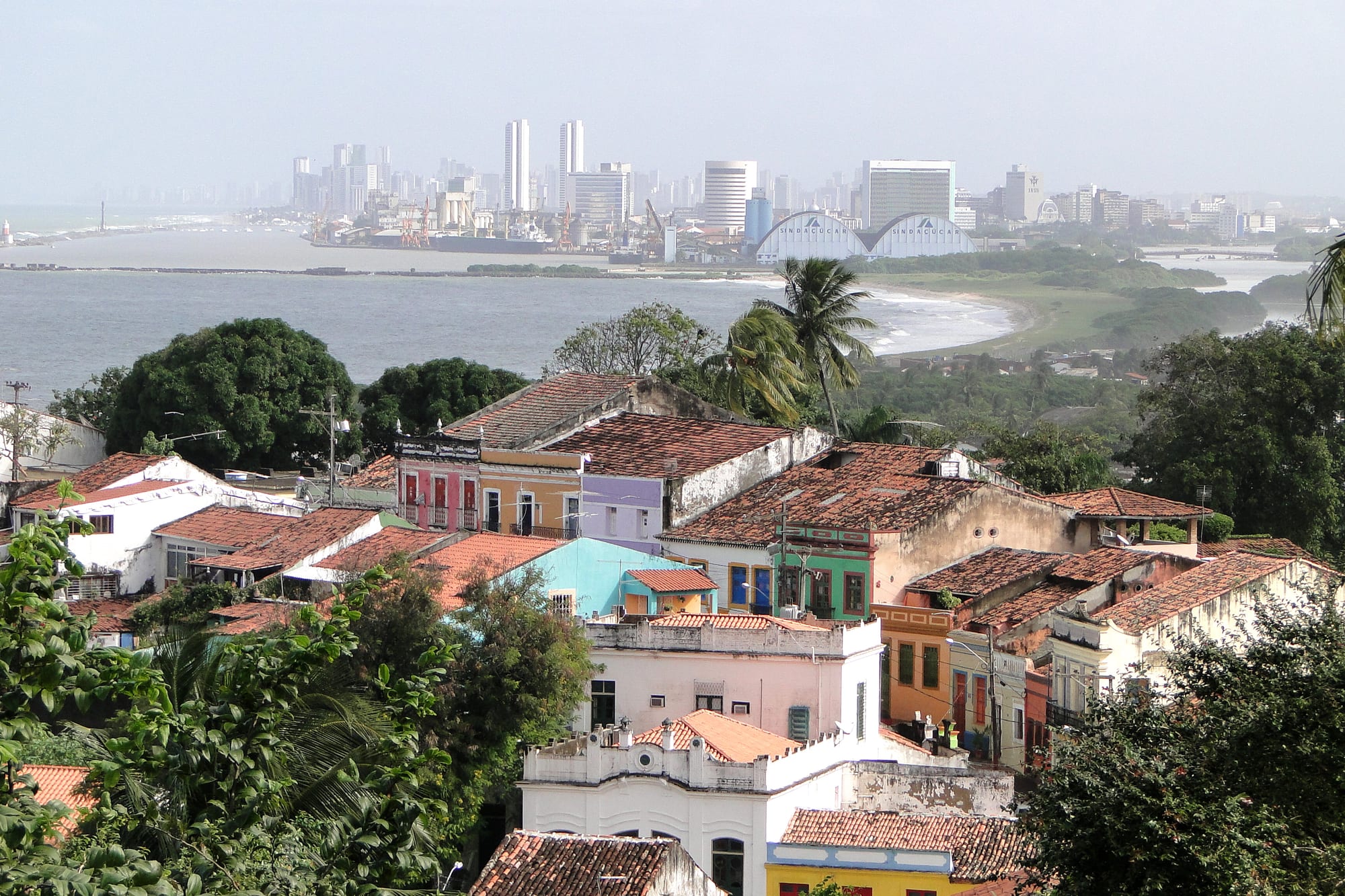
Before the Portuguese, the coast was held by Tupi-speaking peoples such as the Potiguara in the north and the Caeté further south, with Tapuia groups in the dry interior. In 1534 Pernambuco became one of the first captaincies, granted to Duarte Coelho, who founded Olinda around 1535. Sugar mills worked by enslaved Africans soon made it the richest corner of Portuguese America, and the port of Recife grew below the hill town.
In 1630 the Dutch West India Company seized Olinda and Recife, and burned Olinda the following year. Under Johan Maurits of Nassau-Siegen, governor from 1637 to 1644, Recife was rebuilt as Mauritsstad, with bridges, a palace and a Jewish community whose Kahal Zur Israel is regarded as the first synagogue in the Americas. Luso-Brazilian forces defeated the Dutch at the two battles of Guararapes in 1648 and 1649, and the last garrison surrendered in 1654. In the hills of Alagoas, meanwhile, the runaway settlement of Palmares held out for most of the 17th century until its leader Zumbi was killed in 1695.
Natal grew around the Forte dos Reis Magos after 1599, and João Pessoa, founded in 1585 and renamed Filipeia in 1588, took its present name in 1930. Pernambuco was a centre of revolt: against Portugal in 1817 and against the new empire in the Confederation of the Equator of 1824. During the Second World War United States forces shared a large air base at Parnamirim, outside Natal, as a staging post for flights to Africa. Fernando de Noronha, long a prison island, became part of Pernambuco in 1988.