History
The eastern Amazon had complex societies long before Europeans. On Marajó, the Marajoara culture flourished roughly from the 9th to the 14th century, building earth mounds above the floods and making elaborately painted funerary urns, while the Tapajó people around present-day Santarém left fine carved pottery. Rock paintings at Monte Alegre are among the oldest traces of people in the Amazon.
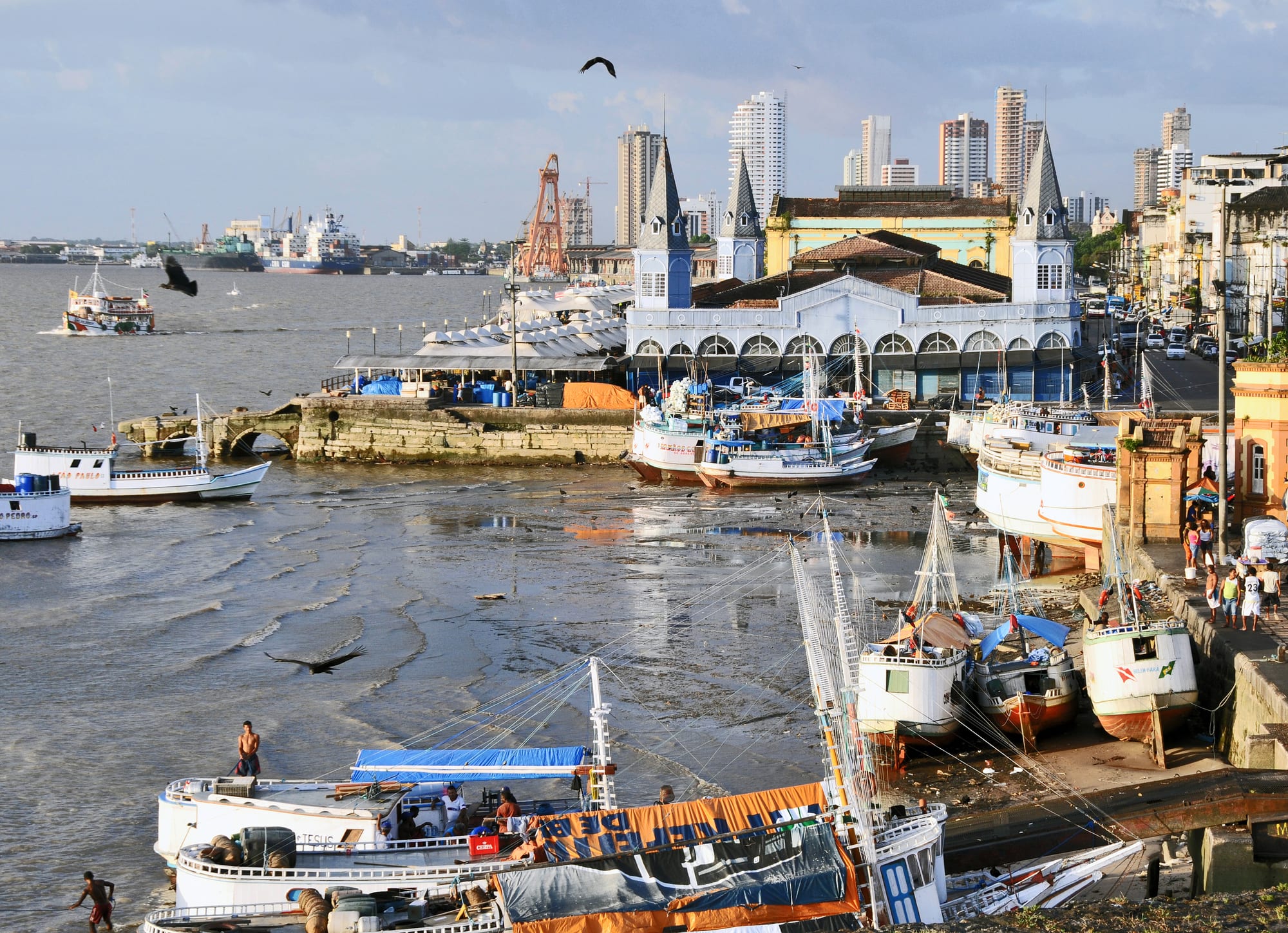
The Portuguese founded Belém in 1616 with the Forte do Presépio, to keep the French, Dutch and English out of the river mouth, and it became the base for missions, slaving raids and expeditions upstream. After independence, resentment among the poor, Indigenous and mixed-race population of Pará erupted in the Cabanagem of 1835 to 1840, a revolt that seized Belém and was crushed with enormous loss of life. The rubber boom later made Belém rich, paying for the Theatro da Paz, opened in 1878, and the iron market hall of Ver-o-Peso. In 1928 Henry Ford began a rubber plantation town, Fordlândia, on the Tapajós; it failed.
Amapá's border with French Guiana was settled in Brazil's favour by international arbitration in 1900, and the area became a federal territory in 1943 and a state in 1988. That same year Tocantins was carved out of northern Goiás, with Palmas built from 1989 as its capital. From the 1970s, roads, the Carajás iron mine, the Serra Pelada gold rush and the Tucuruí and Belo Monte dams transformed Pará, bringing settlers and violent land conflicts; in 1996 military police killed 19 landless protesters at Eldorado dos Carajás. Belém hosted the COP30 climate conference in 2025.