💰 Budget
Chengde is cheaper than Beijing for rooms and meals, but the sights are not: the Mountain Resort and each of the outer temples charge separately, and a combined ticket is usually the better value. Taxis between the temples, or a car hired for the day, are the other main cost, since the complexes are spread around the valley.
- Daily Budget Midrange
- USD 70–130 (mid-range hotel, restaurant meals, combined ticket for the resort and temples, taxis or a hired car)
- Daily Budget Shoestring
- USD 25–45 (budget hotel or guesthouse, noodle shops and street food, local buses, one or two entry tickets)
The resort is large enough to take most of a day on its own, and a combined ticket covering it and the main outer temples is sold at the gates.
📅 Best Time to Visit
May to October. The city was chosen by the Qing court precisely because its summers are cooler than Beijing's, which makes July and August pleasant here even when the capital is oppressive, though weekends are busy. Late September and October bring clear air and autumn colour in the park. Winter is cold and stark, with few visitors and some hill paths icy.
⏳ Suggested Number of Days
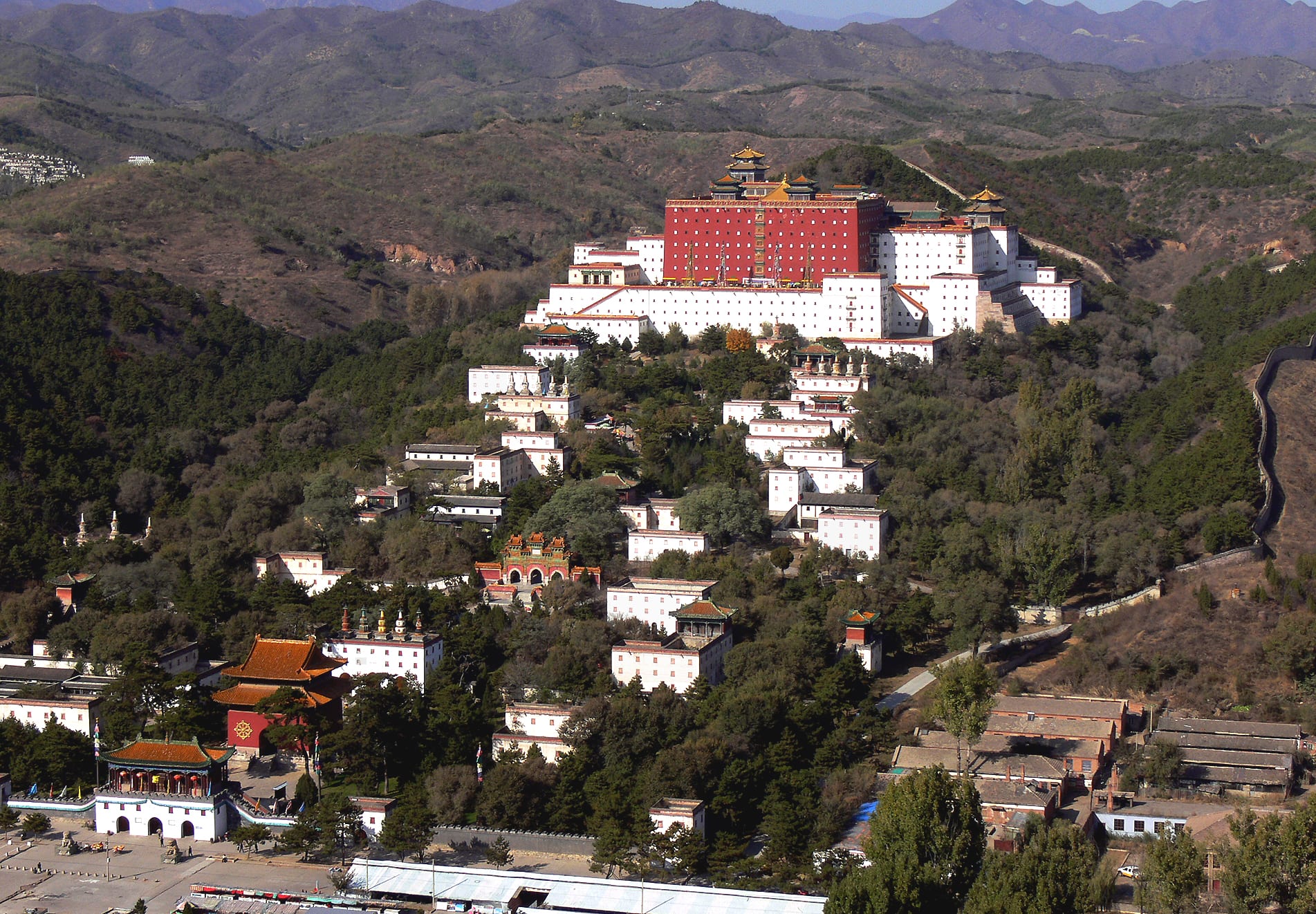
Two days suit most visits, because the walled park is very large and the outer temples are scattered around it. Three days give room for the quieter temples, the ridge above the valley or a stretch of the Great Wall on the way back towards Beijing. Holiday weeks slow everything down.
- First Visit
- 2 days
- With Surroundings
- 3 days
🚆 Transportation
The centre near the resort gate is walkable, but the temples stand on hillsides several kilometres apart and around the valley, so city buses, taxis or a hired car are needed to link them. Inside the Mountain Resort itself there are shuttle carts and boats on the lakes, which save a great deal of walking. Long-distance buses serve towns across northern Hebei.
Agree a price for a half-day or full-day taxi circuit of the temples before setting off, and allow for slow traffic in the narrow valley.
🛬 Airport & Station Connections
Chengde lies about 225 km north-east of Beijing. High-speed trains from Beijing reach the city in roughly an hour to an hour and a half, arriving at Chengde South station outside the centre, while slower trains and long-distance buses use the older station and terminals in the valley. Driving takes about three hours on the expressway; the nearest major airports are in Beijing.
🚶 Walkability
The city centre is compact and flat along the river, and the area around the resort gate is easily covered on foot. The park itself is a long walk from end to end — several kilometres from the palace to the far meadows — and the temples involve climbs on steps and ramps, some of them steep. Between districts the valley's traffic and gradients make buses or taxis the sensible choice.
🛡️ Safety
Chengde is a safe small city with little crime affecting visitors. The practical risks are traffic on narrow valley roads, steep and uneven steps at the temples and on the path to the rock pinnacle, ice in winter, and summer thunderstorms that come on quickly in the hills. Touts offering tours or tickets gather near the resort gate.
Buy tickets at official windows or the online system rather than from people approaching in the street, wear proper shoes for the temple stairs and hill paths, and start long walks early in summer. Check current official travel advice before travelling.
🌦️ Climate
A continental highland climate, drier and noticeably cooler than Beijing because of the altitude and the surrounding mountains. Most rain falls in July and August, and spring is windy with occasional dust.
- Summer
- warm rather than hot, often around 26–30°C by day and cool at night, with showers in July and August
- Winter
- cold and dry, with January averages near −9°C and hard frosts in the valley
🤝 Local Customs
Tipping is not customary. The outer temples include working Buddhist monasteries with resident monks: dress modestly, walk clockwise around shrines and stupas, do not point at or touch statues, and follow the rules on photography, which is restricted inside many halls. The resort is a protected site, so climbing on walls and ruins is not allowed.
Ask before photographing monks or worshippers, and carry a passport, which is needed for tickets at the main sites as well as for hotels and trains.
💳 Common Payment Methods
The currency is the Chinese yuan (renminbi). Mobile payment apps are used for almost everything, including buses and small stalls, and can be linked to foreign cards. International cards are accepted at some hotels but rarely elsewhere. ATMs at the main banks in the centre accept foreign cards, and it is worth carrying cash for the temples and villages.